
Over the past few months, RIL and TCS are competing with each other to claim the number one position in terms of market capitalisation.

The new entity will continue to work on technologies in areas like healthcare and education, while also looking at next-gen competencies like artificial intelligence, Blockchain, virtual and augmented reality, among others.
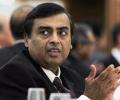
Reliance announced energy asset sales worth around $ 16 billion; end of the investment cycle in telecom; bringing net-debt to zero in 18 months; value-unlocking options for real estate and financial assets; listing of telecom and retail in five years; and focus on dividends.

Moody's said together, proceeds from these transactions will result in a $ 16 billion reduction in RIL's net debt.
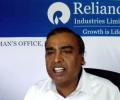
Billionaire Mukesh Ambani's Reliance Industries has announced the contours of carving out of its oil-to-chemicals (O2C) business into an independent unit with a USD 25 billion loan from the parent, as it looks to unlock value by selling stakes to global investors like Saudi Aramco.

It seems that Aamir Khan and Kiran Rao have started their Oscar campaign for Laapataa Ladies.

American refiners closed some of their production, leading to futures trade benchmarked to the West Texas Intermediate going negative.

While Mukesh Ambani-led RIL posted a 108 per cent YoY rise in profit after tax for Q4FY21 at Rs 13,227 crore, it fell short of Bloomberg estimate of Rs 13,704 crore.

Reliance Industries Ltd invested over $125 billion in the last ten years as it undertook massive expansion in hydrocarbon and telecom businesses, a report said, estimating that the conglomerate's investments in the next three years would be in relatively less capex-heavy retail and upstream new energy. Reliance is coming out of a series of long and intensive capex cycles (hydrocarbons and telecom).


The Competition Commission of India (CCI) has flagged possible anti-competitive concerns with respect to the proposed USD 8.5-billion Viacom18-Star India merger and has sought detailed responses from the parties concerned, sources said.

M&M was the top gainer in the Sensex pack, rallying around 7 per cent, followed by Bajaj Finance, Hero MotoCorp, RIL, Titan and Bajaj Auto. On the other hand, ONGC, Tech Mahindra, PowerGrid, Infosys and Kotak Bank were among the laggards.

The Securities Appellate Tribunal (SAT) on Monday set aside the penalty imposed by Sebi on Reliance Industries Ltd's chairman Mukesh Ambani and two other entities in a case related to alleged manipulative trading in the shares of erstwhile Reliance Petroleum Ltd (RPL) back in November 2007. The ruling has come after all the entities appealed before the tribunal against the order passed by the Securities and Exchange Board of India (Sebi) in January 2021. In January 2021, Sebi imposed a Rs 25 crore fine on Reliance Industries Ltd(RIL), Rs 15 crore on Ambani, who is the company's chairman and managing director, Rs 20 crore on Navi Mumbai SEZ Pvt Ltd and Rs 10 crore on Mumbai SEZ Ltd in RPL case.
Shares of RIL on Monday opened at Rs 1,206.50, then gained further ground and touched its 52-week high level of Rs 1,238.05, up 2.87 per cent over its previous closing price.

Much of the discussion is happening at a "family level, not a corporate level". That means it is an Ambani or a Goenka in direct talks with Johar.

Tata Motors, Power Grid, Larsen and Toubro, Kotak Mahindra Bank, NTPC, Titan and UltraTech Cement were the other major gainers. ITC, Infosys, JSW Steel, Tech Mahindra and Tata Consultancy Services were the laggards.
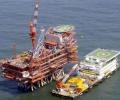
Refining major optimistic on planned investment of $16 bn for expansion and new technology to post healthy margins

Moody's Investors Service on Wednesday raised the rating outlook for 18 Indian corporates and banks, including Reliance Industries, Infosys, SBI and Axis Bank, to 'stable' from 'negative'. This follows the upgrade by the US-based rating agency in India's sovereign rating outlook to 'stable' from 'negative' on Tuesday. The agency had affirmed the sovereign rating at 'Baa3'.

Despite a massive underperformance at the bourses since the last six months, analysts are turning optimistic on Reliance Industries (RIL). Those at Jefferies, for instance, say that the company is a proxy play for India's consumption growth story. The key catalysts for the stock, according to a Jeffries note, include faster-than-expected market share gain in retail, oil-to-chemicals (O2C) stake sale, recovery in gross refining margins (GRM), potential public listing of Jio and even a possible banking licence going ahead. That apart, analysts feel any tariff hike in Reliance Jio (RJio) - its telecom venture - will also aid performance. With balance sheet adequately de-levered, proceeds from a strategic stake sale in the O2C business will create a sizeable war chest for the company, analysts say.
Given the fragmented nature of the domestic cable TV market and the need for last-mile connectivity, RIL, said sources, would have to do more to achieve its target of reaching 20 million homes and 15 million business establishments with its broadband services across 1,600 towns in the next few years.
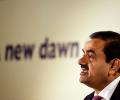
Coal-to-airports conglomerate Adani group is set to make a splash in the tech world. The group is considering the creation of customised artificial intelligence (AI) models for commercial prospects and consolidating digital services on a super app, according to people in the know. The Adani One app, part of its consumer-facing businesses, is reportedly in talks to expand into e-commerce and digital payments, according to a Financial Times report.
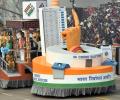
It bought Rs 410 crore of electoral bonds between financial years 2021-22 and 2023-24, but Reliance said the company is not a subsidiary of any Reliance entity.

As many as 49 players including Reliance Retail, Jindal Power Ltd and Adani group have submitted Expression of Interest (EoI) for acquiring the assets of debt-ridden Future Retail, which is currently going through insolvency resolution process. Reliance Retail Ventures Ltd, which is the holding company for retail operations of RIL and April Moon Retail Private Ltd, a joint venture between Adani Airport holdings and Flemingo group have again submitted their EOI, after the lenders of Future Retail decided to invite fresh bids after dividing FRL's assets into clusters. According to an update from FRL's Resolution Professional, the 49 players would be permitted to submit "resolution plan(s) for any/all such Clusters under Option II".

The IT major is followed by RIL (Rs 795,628.55 crore), HDFC Bank (Rs 624,362.11 crore), Hindustan Unilever (Rs 367,880.69 crore) and ITC (Rs 367,513.78 crore).
Aramco also plans to invest in building India's largest oil refinery on the country's west coast.

RIL is setting up infrastructure for a full-fledged horizontal e-commerce offering - internally called the New Commerce - to simultaneously launch pan-India by October-November.

The Bombay high court has modified the interim order on the sale of KG basin gas by Reliance Industries.

RIL subsidiary Reliance New Energy Solar, Ola Electric, Hyundai Global Motors Company and Rajesh Exports have been approved for receiving incentives under the Rs 18,100 crore Production Linked Incentive (PLI) scheme for battery manufacturing in India, sources said on Thursday. "The ministry had received bids from 10 companies with a capacity of 130 GWh. Reliance, Ola Electric, Hyundai and Rajesh Exports have qualified for ACC batteries," a source said. Other companies which had applied for the PLI scheme for Advanced Chemistry Cell (ACC) batteries were Lucas-TVS, Mahindra & Mahindra, Amara Raja Batteries, Exide Industries, Larsen & Toubro and India Power Corporation Limited.

According to the plan made by the lenders and RIL, all Future group listed companies will be merged into Future Enterprises. RIL will then invest Rs 8,500 crore in the merged entity which will include the retail business.

The ruling was made by the Securities Appellate Tribunal, an independent quasi-judicial body that rules on appeals against orders passed by the Sebi.
In the domestic m-cap ranking, TCS was at number one position followed by RIL, HDFC Bank (Rs 666,533.49 crore), HUL (Rs 400,325.83 crore) and HDFC (Rs 378,236.52 crore).
Reliance Industries shareholders will have to pay only 25 per cent for subscribing to the company's mega Rs 53,125-crore rights issue, and the balance will have to be paid in two instalments in May and November next year, the company said.

Dispute resolution provisions in the production sharing contract remained unimplemented, while the regulator faltered, points out Jyoti Mukul.

Among the Sensex firms, Power Grid, HDFC Bank, Kotak Mahindra Bank, Reliance Industries, NTPC, State Bank of India, Tata Steel and Bharti Airtel were the major gainers. Bajaj Finance, Axis Bank, HCL Tech and Mahindra & Mahindra were among the major laggards.

Banking sources said the debt recast is actually 'Plan B' to help the nation's largest retailer stay afloat.
In the list of top-five domestic firms, RIL was placed at the top of the pack followed by TCS, HDFC Bank (Rs 6,50,136.04 crore), HDFC (Rs 3,85,207.96 crore) and HUL (Rs 3,76,545.49 crore).

After subdued earnings in the first half amid global headwinds, India Inc is taking a cautious approach on their capital expenditure (capex) for the second half of the financial year ending March 2025, according to management commentary. Minutes from the October monetary policy meeting show the Reserve Bank of India's (RBI's) optimism about private investments picking up.
Reliance Industries was the biggest gainer in the Sensex pack, rising 2.69 per cent, followed by HCL Tech, ICICI Bank, Tata Motors, Wipro, IndusInd Bank, JSW Steel, Wipro, Tata Consultancy Services and Titan. In contrast, NTPC, Power Grid, UltraTech Cement, Axis Bank, Infosys and Nestle were the major laggards.

TCS had replaced RIL as the most valued firm more than four years ago but a sharp rally in the shares of the Mukesh Ambani-led firm in the recent past has helped the company close the gap.
BSE benchmark Sensex plummeted over 388 points to close at 58,576.37 on Tuesday, tracking weakness in index majors Wipro, RIL and Bharti Airtel amid a weak trend in global markets. Investors also remained cautious ahead of crucial macroeconomic data announcements -- industrial production for February and inflation rate for March -- post trading hours. The Sensex declined 388.20 points or 0.66 per cent to settle at 58,576.37. During the day, the benchmark tanked 666 points or 1.12 per cent to 58,298.57.
