
The Reserve Bank of India (RBI) has unveiled draft norms for branch authorisation and business correspondents (BCs), introducing a two-tiered classification for BCs and redefining 'banking outlets' to include BC-Banking Outlets (BC-BOs), aiming to expand formal banking presence, particularly in rural areas.

'At the end of the day, it is just another technology produced by the human mind.'

The Reserve Bank of India (RBI) is set to revise its directives for bank boards, aiming to alleviate operational burdens and enable them to concentrate on crucial policy and strategic decision-making, thereby enhancing corporate governance in the Indian banking sector.

The Reserve Bank of India (RBI) Governor Sanjay Malhotra is now confronting the classic growth-inflation tradeoff, a situation exacerbated by the West Asia war, which threatens to end the 'goldilocks period' of low inflation and robust growth.

Former IPL chairman Lalit Modi has been cleared in most of the Enforcement Directorate's findings and penalties in the 2009 IPL South Africa FEMA case by an appellate tribunal. This verdict ends a 16-year legal battle, prompting Modi to announce his plans to return to India by late this year or early next year.

A husband and wife have been arrested in Delhi for allegedly murdering a retired Reserve Bank of India employee after he refused to lend them money.

Reserve Bank of India (RBI) Governor Sanjay Malhotra stated that recent regulatory measures to address foreign exchange market volatility, such as capping banks' net open positions, are temporary and aligned with current market conditions, not signalling any structural shift in policy.

The Federation of Indian Export Organisations (FIEO) has appealed to the Reserve Bank of India (RBI) for liquidity support to Indian exporters, citing a significant increase in freight costs and extended payment cycles due to the ongoing West Asia conflict.

A recent SBI Economic Research report indicates that the significant gap between credit and deposit growth, currently over 530 basis points, is likely to persist if geopolitical risks and external supply shocks continue. However, an improvement in deposit growth is anticipated with inflows into foreign currency non-resident (bank) deposits.

S&P Global Ratings projects India's economic growth to slow to 6.6 per cent in FY27, down from 7.7 per cent in FY26, citing energy stress and a potential sub-par monsoon.

The Reserve Bank of India (RBI) has reported processing 99.9% of applications under its Citizen's Charter within the stipulated timeframe in March 2026, demonstrating a high level of efficiency.

India's wholesale price inflation (WPI) increased to 9.87 per cent in June, up from 9.68 per cent in May, primarily due to significant price increases in non-food and food products, with food inflation alone rising to 5.49 per cent.
The International Monetary Fund (IMF) has reduced India's growth forecast for FY27 to 6.4 per cent, citing the potential impact of higher energy prices offsetting the country's economic resilience. Despite this, India remains among the fastest-growing major economies.

...exceeding their 49,340 crore equity selloff.

The Reserve Bank of India (RBI) has granted approval for UAE-based Emirates NBD (ENBD) PJSC to acquire up to a 74 per cent stake in RBL Bank for $3 billion, marking the largest foreign investment ever in a domestic Indian bank.

Non-banking financial companies (NBFCs) reported encouraging results for Q4FY26 with improved asset quality and earnings, but analysts maintain a cautious near-term outlook due to geopolitical tensions, monsoon risks, and specific portfolio concerns.

Indian companies' overseas expansion plans are holding strong despite geopolitical tensions in West Asia, driven by structural factors like supply-chain diversification, free trade agreements, and market expansion, according to Ajay Sharma, managing director and head of banking at HSBC India.

The Indian rupee weakened against the US dollar due to geopolitical tensions surrounding the Strait of Hormuz and ahead of the Reserve Bank of India's monetary policy review.
Non-banking financial companies (NBFCs) in India saw their overall credit growth accelerate to 14.2 per cent year-on-year in May, primarily driven by significant increases in loans against gold jewellery and commercial real estate, according to recent Reserve Bank of India (RBI) data.

India's foreign exchange reserves saw a substantial decline of USD 9.985 billion, reaching USD 671.625 billion for the week ended June 12, primarily driven by a sharp decrease in gold reserves, according to the Reserve Bank of India (RBI).
India's foreign exchange reserves decreased by $711 million to $681.61 billion for the week ending June 5, primarily driven by a significant reduction in foreign currency assets, according to the Reserve Bank of India (RBI).
The Reserve Bank of India (RBI) has opted to keep its key interest rates unchanged at 5.25%, anticipating a global economic recovery following a ceasefire in the US/Israel-Iran conflict, despite ongoing inflationary pressures and currency fluctuations.

The Indian rupee experienced a significant surge against the US dollar following the Reserve Bank of India's measures to restrict banks from onshore forward markets. Despite this, the rupee remains under pressure from foreign capital outflows, a strong dollar, and rising crude oil prices.

The Asian Development Bank (ADB) has revised down India's GDP growth forecast for fiscal year 2026-27 (FY27) to 6.6 per cent from an earlier 6.9 per cent, primarily attributing the change to elevated energy prices stemming from the Middle East conflict. Despite this moderation, India is still expected to remain the world's fastest-growing major economy.

India's market regulator, Sebi, has approved the re-introduction of open-market share buybacks through stock exchanges, effective August 1, 2026, alongside easing debt listing norms for RBI-regulated entities and simplifying rules for mutual funds and alternative investment funds.

Meghalaya has shown significant progress in digital transactions and financial inclusion, recording 32.76 crore digital transactions and nearly 10 lakh Jan Dhan accounts by 2025-26. Efforts like the JAM Trinity and financial literacy programmes have expanded banking access, with a high percentage of bank account holders adopting digital modes. The next phase focuses on enhancing financial literacy and cyber resilience, especially in rural areas.
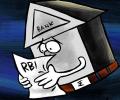
Indian banks are urging the Reserve Bank of India (RBI) to reconsider its new $100 million cap on net open foreign-exchange positions, warning that the directive could lead to significant mark-to-market (MTM) losses and force an accelerated unwinding of trades, potentially impacting FY26 earnings.

Markets will look for clear guidance on how the MPC interprets the uncertainty and what it implies for the future course of monetary policy, points out Rajeswari Sengupta.

The Reserve Bank of India has approved a three-month extension for Keki Mistry as the interim chairman of HDFC Bank, continuing his tenure until September 18, 2026, or until a regular chairman is appointed.

The Reserve Bank of India (RBI) has proposed new measures to combat financial fraud in digital payments, including lagged credit for authorised push payments and a 'kill switch' for users to disable all digital transactions.
The Indian rupee rebounded against the US dollar following intervention by the Reserve Bank of India, amidst ongoing concerns about foreign capital outflows, rising crude oil prices, and geopolitical instability.

Foreign Portfolio Investors (FPIs) withdrew Rs 49,340 crore (USD 5.16 billion) from Indian equities in June, driven by global risk aversion, a preference for developed markets, soaring US bond yields, and stretched domestic valuations, bringing total withdrawals to Rs 2.7 lakh crore so far in 2026.

The Indian corporate bond market witnessed a significant surge, with companies raising nearly Rs 16,000 crore in a single day, primarily led by state-owned financial institutions and NBFCs. This strong momentum, driven by improved borrowing conditions and investor confidence, is expected to persist.

The Reserve Bank of India (RBI) has projected that crude oil prices will average USD 85 per barrel and the rupee will weaken to 94 against the dollar by FY27, according to its bi-annual Monetary Policy report.
Outward remittances under the Reserve Bank of India's Liberalised Remittance Scheme (LRS) saw a 7.85 per cent year-on-year contraction in April 2026, primarily driven by reduced international travel spending due to global uncertainty stemming from the US-Iran conflict.

India's net foreign direct investment (FDI) surged more than fourfold to $6.58 billion in April 2026, driven by a significant increase in equity inflows and reduced repatriation by foreign investors, according to the Reserve Bank of India (RBI).
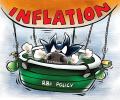
The Indian government has extended the Reserve Bank of India's (RBI) mandate to maintain retail inflation at 4 per cent, with a tolerance band of 2 per cent on either side, for another five years until March 2031.
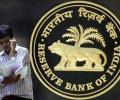
Two-factor authentication for all digital transactions, including UPI, is now mandatory in India, as per RBI guidelines, to enhance security and curb fraud.

The Reserve Bank of India (RBI) has issued a statement assuring the public of HDFC Bank's stability and sound financial position following the resignation of its chairman, Atanu Chakraborty, citing ethical concerns.
Commercial banks in India recorded their highest credit growth in two years, accelerating to 18.6 per cent year-on-year by June 27, while also mobilising nearly 7 trillion in deposits, marking the third-highest fortnightly deposit growth in 29 years.
