
The Rs 84,000 crore domestic fund of funds (FoFs) space, which was in the doldrums over the past 18 months, has now caught the attention of investors due to a change in the tax structure in Budget 2024. The broader category, which includes offerings across equity, debt and commodities, has seen a spike in the inflows over the past two months. FoFs typically deploy the pooled capital in one or multiple MF schemes rather than investing directly into equities, debt or commodities.

The Reserve Bank of India (RBI) on Monday directed banks and non-banking financial companies (NBFCs) offering gold loans to thoroughly review their policies, processes, and practices to identify any gaps. The central bank also told them to closely monitoring their gold loan portfolios amid significant growth observed in this segment vis--vis some lenders. Additionally, the RBI, through a circular, instructed these lenders to ensure adequate controls over outsourced activities and third-party service providers.

rediffGURU Dev Ashish answers your personal finance and mutual fund queries.

India's second-largest passenger vehicles firm will be valued at Rs 1.59 trillion at the top-end of the price band of Rs 1,865-Rs 1,960.

ICICI Prudential Life Insurance has become the first private insurance company to cross Rs 10,000 crore sum assured over a premium income of Rs 680 crore within 3 years of operations and plans to hike its capital further to expand the business.

'The problem is that the bubble may not only be in valuations, but also in investors' minds.'

Commissions paid to mutual fund distributors (MFDs) increased by over 20 per cent for most large fund houses in 2023-24 (FY24), driven by a sharp market rally and strong inflows. The largest fund house, SBI Mutual Fund (MF), which now manages nearly Rs 10 trillion in assets, paid Rs 2,025 crore to its major distributors - 21 per cent higher than the Rs 1,675 crore payout in 2022-23 (FY23).

Mutual funds' largecap investment universe is expected to see seven changes in the upcoming stock reclassification exercise by the Association of Mutual Funds in India (Amfi). According to a report by IIFL Securities, Hero MotoCorp, Zydus Lifesciences, JSW Energy, NHPC, Bharat Heavy Electricals, Bosch and Samvardhana Motherson are expected to earn upgrades in the revised list of largecap, midcap and smallcap stocks set to be released in the first week of July. Amfi revises the list at the start of January and July every year based on the previous six-month performance of the stock.

Out of six finals played, India have won three World titles, including two ODI World Cups (1983 and 2011) and one T20 World Cup in 2007.

Equity-focused schemes may perform better in a bull market, while debt-oriented ones may offer greater stability during volatile periods.

'It's advisable not to go overboard on a banking sector fund or any other sector fund.'

Federal Bank on Thursday said the Reserve Bank of India has accorded approval to ICICI Prudential Asset Management Company Ltd () for acquiring up to 9.95 per cent stake in the bank. RBI accorded the approval subject to conditions on Thursday, Federal Bank said in a regulatory filing.

Concerned over household savings moving towards alternative investment avenues, RBI Governor Shaktikanta Das on Thursday asked banks to mobilise deposits through innovative products and services by leveraging their vast branch network. "Banks are taking greater recourse to short-term non-retail deposits and other instruments of liability to meet the incremental credit demand. "This, as I emphasised elsewhere, may potentially expose the banking system to structural liquidity issues," he said.

'A possible post-election growth momentum may be lost.'

State-backed Life Insurance Corporation of India (LIC) recorded strong growth in the value of new business (VNB) margin in the third quarter of financial year 2023-24 (Q3FY24) while major listed private life insurers reported a weak performance. VNB refers to the profit that an insurer is likely to garner from new business, which comes from policies sold in a particular period. VNB margin is the profit margin of the insurer.

Insurance companies reported nearly 23 per cent growth in first year premium in the first quarter of financial year 2024-25, when compared to the same period last year, with market leader LIC leading the charge with 28 per cent growth. According to the data released by the Life Insurance Council, the new business premium (NBP) increased by 22.91 per cent year-on-year (Y-o-Y) to ~89,726.7 crore in Q1FY25 from ~73,004.87 crore in Q1 FY24, reflecting a robust demand for insurance policies in the country.

'We found certain banks having lakhs of such accounts with apparently no valid reason.'

'In phases when smaller stocks do well, an equal-weight index performs better than its market cap-weighted peer.'

Midcap stocks Hero MotoCorp, Zydus Lifesciences, JSW Energy, NHPC, Bharat Heavy Electricals, Bosch, and Samvardhana Motherson are expected to earn upgrades.

'The real repo rate is very high in terms of core inflation.'

India start as the big favourites in both the white ball series and it will take a Herculean effort from Sri Lanka to upset the odds.

Younger people, who usually have a longer investment horizon which allows them to handle the interim volatility, may go for them.

India's financial sector is dominated by large government-owned and private-sector banks.

The top three mutual funds (MFs) paid out 10-18 per cent higher commissions to distributors during the financial year 2022-23 (FY23) compared to FY22 as a sustained rise in flows from the systematic investment plan (SIP) route boosted distributors' share in the assets under management (AUM), according to an analysis of the disclosures by the top three fund houses. State Bank of India (SBI) MF saw its commission payout go up 18 per cent year-on-year (YoY) to Rs 1,675 crore. The payouts rose 10 per cent and 15 per cent for ICICI Prudential MF and HDFC MF, respectively.

rediffGURU Ramalingam Kalirajan answers your personal finance queries.

Unperturbed by election uncertainty, investors poured record sums into equity mutual fund (MF) schemes in May, driving India closer to a $5 trillion market capitalisation. The Rs 34,697 crore net inflows into actively managed equity funds last month surpassed the previous high of Rs 28,463 crore recorded in March 2022. In April 2024, equity schemes had garnered nearly Rs 19,000 crore.

All the four listed private life insurance companies recorded a drop in value of new business (VNB) margin in the financial year 2023-24 (FY24) as compared to FY23. This is because of a higher share of unit-linked insurance plans (Ulips) in the product mix. VNB is a measure of the economic value of profits expected to emerge from a new business.

'The structural story of India is a multi-decadal story.' 'One should stay invested in that story and avoid reacting to what is happening globally.'

'The committee has been constituted. Different government departments and FSDC members are part of it.'

Mutual funds are looking to tap into the special opportunities theme ahead of the results of the general election results and the continued uncertainty on the geo-political and interest rate fronts. Two fund houses - WhiteOak Capital and Samco - are set to launch special opportunities funds next week. Kotak MF has also filed papers with the regulator to launch a scheme in the same category.

rediffGURU Ramalingam Kalirajan answers your personal finance queries.

'Those trying to use these funds for quick gains should avoid them due to risk of being late to the party.'

'Investors should focus on largecap funds, flexicap funds, business cycle funds, or hybrid-category funds.'

'Those satisfied with returns and not expecting further rally could be booking profits and also stopping SIPs.'

'I found it unbelievable that L&T said 45,000 jobs were waiting to be filled because of unavailability of suitable skillsets.' 'So, when the Opposition sweepingly says there are no jobs, I'm sorry... I'm not saying it's raining jobs, but there are jobs. The (skill) gap has to be bridged.'

Since MAAFs invest across multiple asset classes, they offer diversification.

Despite the uncertainties created by rising bond yields and oil prices, fund managers have been proactively deploying fresh flows into the equity market. The cash available with equity fund managers, which has remained lower at around 5 per cent in the past few months, hit a 16-month low of 4.8 per cent in September, shows a Motilal Oswal Financial Services report. Cash holdings in equity schemes had topped 6 per cent in February amid subdued equity market sentiment.
The life insurance industry reported a 25.28 per cent decline in new business premium income in November 2023 to Rs 26,494.83 crore from Rs 34,588.8 crore recorded a year ago. The fall in group premium and change in taxation norms for policies with a higher ticket size dragged the premiums of the state-run Life Insurance Corporation of India (LIC) and private insurers, respectively. According to the data released by the Life Insurance Council, the premium of private insurers slipped 9.33 per cent Y-o-Y to Rs 10,360.29 crore from Rs 11,426.73 crore as a result of a change in product mix due to the measures taken to counter the impact of tax imposed on the premiums of Rs 5 lakh.

'If through growth and serving the customer we become number one, we will be very happy and very proud.'
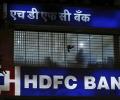
HDFC Bank's latest shareholding data showed that the room for foreign investment has fallen just 5 basis points short of the threshold set by Morgan Stanley Capital International (MSCI) to fully include the stock in its indices. Currently, the index provider has applied an adjustment factor of 0.5 since the foreign room is less than 25 per cent. Removal of the adjustment factor will result in inflows of a massive $4.8 billion (Rs 40,000 crore) into HDFC Bank, according to Brian Freitas, a New Zealand-based analyst with Periscope Analytics.
