
'If not bullish, volatility should be minimal.'

'The first time India has seen two consecutive blockbuster IPO years.'

Pre-initial public offering (IPO) allotments have fallen out of favour over the past two years amidst buoyant primary markets and increasing average float sizes. In 2023, 13 firms raised a record Rs 1,074 crore through pre-IPO placements.
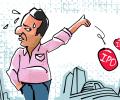
Market watchers link the pullback to underwhelming listing-day performance and the lack of big-name IPOs.

Foreign portfolio investors (FPIs) have invested Rs 25,300 crore through the anchor book for IPOs in 2024, surpassing the Rs 20,351 crore invested by domestic mutual funds (MFs). FPIs accounted for 46.6 per cent of shares sold in the anchor category, the highest share since 2021, according to PRIME Database.

Industry players said the sharp sell-off in February forced many companies to put off their listing plans
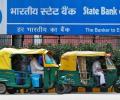
State Bank of India (SBI), the largest lender in the country, has launched a share sale to institutional investors to raise upto Rs 25,000 crore, the biggest qualified institutional placement (QIP) so far by an Indian firm, and has set a floor price of Rs 811.05, which is at a 2.5 per cent discount on Wednesday's closing price.

Fifteen companies have launched their initial public offerings (IPOs) in December 2024, making it the best month for public offerings since 1996. Collectively, they have raised Rs 25,425 crore, which also made December the best month in terms of the quantum of funds raised. In December 1996, 33 companies had raised Rs 931 crore.

With Rs 17,087 crore raised so far this calendar year, the total is already 2.4 times that of the full year of 2023, which stood at Rs 7,266 crore.

Foreign portfolio investors (FPIs) pumped in Rs 1.7 trillion into domestic stocks in 2023, one of the highest net inflows ever witnessed during a calendar year, of which 25 per cent went into the direct buying of stocks. Data provided by depository NSDL revealed that Rs 44,950 crore of the total FPI flows last year went into primary issuances. A large portion of the FPI investments through the stock exchange route went into block deals, thereby reducing the actual investments made via direct buying of stocks. Last year saw selldowns or block deals worth Rs 2 trillion.

During the first eight months of CY24, 50 IPOs mobilised Rs 53,453 crore.

The IPO filing-to-approval lapsing ratio this year is the best in three years, underscoring the improvement in the IPO market's buoyancy.

So far this year, bankers have earned Rs 1,226 crore for handling 45 IPOs, which together mobilised Rs 48,363 crore.

Fundraising through qualified institutional placement (QIP) has revived this year, led by commercial banks, after a lacklustre 2022. According to data compiled by Prime Database, Indian companies have raised Rs 53,070 crore in 2023 so far, of which seven banks - Union Bank of India, Indian Bank, Bank of India, Federal Bank, IDFC First Bank, Bank of Maharashtra, and J&K Bank - account for Rs 21,290 crore, or about 40 per cent. If other financial institutions are included, the figure surges to Rs 26,690 crore.

Equity fundraising through qualified institutional placements (QIPs) has gained traction, thanks to supportive equity markets and the need for fresh fundraising to meet capital expenditure (capex) requirements.

Water projects firm Vishnu Prakash R Punglia, the 20th company to launch its IPO in the current year, saw its shares closing at a 47 per cent gain over its issue price on Tuesday. Such a huge one-day pop is considered rare; however, it has become the norm this year. The average listing-day gain for these 20 IPOs in 2023 is 34 per cent, and their average gain to date stands at 46 per cent.
Fundraising momentum is expected to accelerate further in the New Year, potentially surpassing 2024's record figures

Such a collection of amiable characters were last seen in Panchayat. There are greedy dowry seekers, criminals, misogynists and the like, but the collective goodness of the others keep violence and male chauvinism in check, notes Deepa Gahlot.

The fees charged by investment banks to manage initial public offerings (IPOs) have increased to an average 3.23 per cent of the issue size this calendar year, the highest since 2020. The average fee is up 8 per cent compared to last year, when it stood at 2.99 per cent. The investment banking fees have increased as the average IPO size has shrunk this year.

It's not only the Indian markets that command a valuation premium over their global peers; shares of subsidiaries of India-listed multinational companies (MNCs) also trade at rich valuations compared to their parent companies. An analysis of 12-month forward price-to-earnings (P/E) and price-to-book (P/B) multiples of domestically listed MNCs shows that most quotes have a premium ranging from 2.1x to 6x that of their parent. Similarly, P/B, in most cases, is significantly higher in the domestic market.
The initial public offering (IPO) market has seen some momentum of late with robust responses to recent issues. However, only some have been able to ride the wave. So far in 2023, 23 companies have let their approval granted by the markets regulator - the Securities and Exchange Board of India (Sebi) - lapse.

The fundraising through rights issues in the first 10 months of 2022 is the lowest since 2016 during a similar period.

In the current calendar year, small and medium enterprises (SMEs) have witnessed an impressive surge in initial public offerings (IPOs), surpassing the 2018 record. Over 150 SME IPOs have been introduced to the market, breaking the previous record of 141 set in 2018. According to data from PRIME Database, a primary market tracking firm, 147 companies successfully concluded their debut share sales by the end of October, raising a cumulative Rs 3,727 crore.
As many as 31 mainboard IPOs raised a cumulative Rs 26,272 crore in this period, according to Prime Database. During the April-September 2007 bull run, 48 IPOs totalling Rs 21,243 crore were launched. The number of deals in H1FY24 was 2.2 times that of the same period of the last fiscal year, but the amount raised was 26 per cent lower.
Retail investors-those investing up to Rs 200,000-lapped up all the four initial public offerings (IPOs) that opened for subscription on Wednesday. This is the first time since 2007 that four IPOs have been launched on a single day, according to information provided by Prime Database. KFC and Pizza Hut franchisee Devyani International (size Rs 1,838 crore); Diagnostic chains Krsnaa Diagnostics (Rs 1,213 crore), pharmaceutical firm Windlas Biotech (Rs 401 crore) and vitrified tiles manufacturer Exxaro Tiles (Rs 161 crore) are the four companies whose IPOs opened on Wednesday.
Eleven companies have launched their initial public offerings (IPOs) in December 2023, making this month the second-best December for public offerings since 1996. Collectively, they are raising Rs 8,182.7 crore this month. In December 2021, 11 companies raised Rs 9,534 crore. However, excluding December 2021, this month marks the best December for IPOs since 1996.
Companies, which missed out on listing earlier, are giving it another shot but with significantly-reduced issue sizes. In the recent past, companies such as TVS Supply Chain Solutions, Suraj Estate Developers, and ESAF Small Finance Bank have re-filed their draft red herring prospectuses (DRHPs) with the Securities and Exchange Board of India (Sebi). This came after they slashed their issue sizes by 20-60 per cent.

Despite markets turning volatile, share sale activity at India Inc has surged to its highest level in five months. So far in March, promoters, strategic investors and other large shareholders have been able to offload shares worth more than Rs 33,000 crore-the most since November-defying uncertain market conditions. Both the Sensex and the Nifty are on course to post their fourth straight monthly loss amid headwinds, such as interest rate tightening by the US Federal Reserve and the global banking crisis.
The initial public offering (IPO) market has come to a grinding halt due to sharp correction in the broader markets and uncertain outlook created by the Russia-Ukraine offensive. So far this year, only three companies have managed to launch their maiden share sales. In comparison, close to 10 companies were able to come out with their IPOs during the same period last year. Investment bankers say it will be challenging to launch a single deal in March as large institutional investors have turned extremely risk-averse and don't wish to commit any capital.

Initial public offerings (IPOs) by start-ups are bringing cheer to investors and investment bankers alike. After food delivery company Zomato, Nykaa has issued the fattest pay cheque to the managers of its share sale -- Rs 148 crore, or 2.8 per cent of its issue proceeds of Rs 5,300 crore. In absolute terms, this is the second-highest amount paid to investment bankers for handling an IPO, while in percentage terms, it is the highest for large IPOs (>$300 million) in the last one year, shows an analysis of the data provided by Prime Database, a primary market tracker.

The listing day gain-to-loss ratio for FY21 was 71 per cent, the highest since FY17, when it was 85 per cent.

Experts say companies wanting to launch IPOs will have to scale back their expectations given the fall in valuations.

More cos could join the likes of Burger King and Antony Waste in giving listing another shot.
Since the beginning of 2020, i-bankers have collected nearly Rs 1,800 crore by way of IPO fees. Interestingly, the India fees this year form just 1 per cent of the global fee pool of $13.7 billion from IPOs.

Last week, govt sold shares worth Rs 220 crore in the open market without making a formal announcement. The deal came to light only this week.
It's raining IPOs, with eight issues hitting the market in a span of six days. However, the pace of new filings points to a deluge during the latter part of the year. So far this year, 58 companies have filed their draft red herring prospectus (DRHP) with the market regulator for initial public offerings (IPOs), exceeding the combined tally of 50 in the last two years. Industry participants said the filing count could cross 100 this year, setting a new benchmark in terms of amount mobilised in a calendar year.
A total of 49 companies raised Rs 81,615 crore in Samvat 2077, more than the preceding four years and almost double the amount raised in the previous year. Samvat 2078 appears even more promising with mega issues of Paytm and Life Insurance Corporation (LIC) of India. However, Paytm's record could be short-lived as state-owned LIC is planning to launch a Rs 1-trillion IPO by March 2022.

Amazon Prime Video has announced a huge number of assorted Web series and movies, and the slate sure looks interesting.

A round-up of the Ranji Trophy matches played on Monday

Round-up of the Ranji Trophy matches being played in different part of the country
