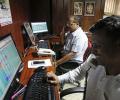
Bajaj Finance was the top gainer in the Sensex pack, rising around 2 per cent, followed by Sun Pharma, Tech Mahindra, Axis Bank, Bajaj Auto and Infosys. NSE Nifty rose 76.40 points to 15,174.80.
From the 30-share Sensex pack, Adani Ports surged 6 per cent. NTPC, HDFC Bank, Bajaj Finance, Maruti and Axis Bank were among the other gainers. In contrast, Titan, State Bank of India, Asian Paints, Tata Consultancy Services, HCL Tech, Sun Pharma, IndusInd Bank and ICICI Bank were among the laggards.

Trump's tariff threats spooks markets; Sensex down 106 points

In an affidavit filed in the top court, the SLA has given details of the steps taken by it against Patanjali and Divya Pharmacy.

From the 30-share blue-chip pack, Zomato cracked nearly 7 per cent. Power Grid, Adani Ports, Tata Steel, NTPC, Tata Motors, Tech Mahindra, Mahindra & Mahindra, Asian Paints, Sun Pharma and UltraTech Cement were the other major laggards. In contrast, Axis Bank, Hindustan Unilever, Tata Consultancy Services and IndusInd Bank were the gainers.
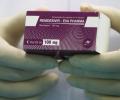
The Bharatiya Janata Party in Maharashtra objected to the pharma executive's grilling by Mumbai police, saying the Shiv Sena-led government in the state was playing politics amid the pandemic.

Ask rediffGURU and tax expert Mihir Tanna your income tax-related questions.

In contrast with their strong performance in 2020 and 2021, pharmaceutical and healthcare funds experienced a decline in 2022, with returns plummeting by an average 9.8 per cent. This trend has continued in the current year, with year-to-date return remaining in the negative (-4.9 per cent). In the past three months, pharma funds have been hit hard, experiencing a 7.9 per cent decline.

From the 30 Sensex pack, State Bank of India jumped 5 per cent, followed by ICICI Bank, Bajaj Finserv, NTPC, Adani Ports, Bajaj Finance and Larsen & Toubro. In contrast, Maruti, Tata Motors, Sun Pharma, Bharti Airtel, IndusInd Bank and Mahindra & Mahindra were among the laggards.

The 100-stock largecap basket of Mutual funds (MFs) has seen a major reshuffle in the latest semi-annual reclassification with seven midcap stocks and four new listings earning the largecap tag. According to a report from Nuvama Alternative & Quantitative Research, the midcap stocks that have been upgraded include CG Power, Rail Vikas Nigam, ICICI Prudential Life Insurance, Polycab India, Indus Towers, Cummins India, and Info Edge.

Gland Pharma, promoted by China's Fosun, has extended its gains, is up 40 per cent since its listing.

From the 30-share Sensex pack, Tata Motors, Tech Mahindra, UltraTech Cement, JSW Steel, Sun Pharma, Asian Paints, IndusInd Bank and ICICI Bank were the major losers. State Bank of India emerged as the only gainer from the pack.

'Mankind's experience, sharpness, and execution will make it happen. We are not going for short-term gains.'

Investors lost Rs 24.69 lakh crore in market valuation in the last four days of severe drubbing in the equity market. Spike in global crude prices, unabated foreign fund outflows, a strong US jobs data diminishing early rate cut expectations, and the rupee logging its steepest single-day fall in nearly two years dampened investors' sentiment.
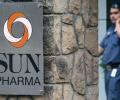
Sun Pharmaceutical Industries on Tuesday said its arm DUSA Pharmaceuticals Inc has reached settlement with Biofrontera to resolve a litigation over misappropriation of trade secrets and unfair practice, following which DUSA will receive $22.5 million (nearly Rs 170 crore). In 2018, DUSA Pharmaceuticals had filed a suit at the US District Court of Massachusetts against Biofrontera Inc Biofrontera Bioscience GmbH, Biofrontera Pharma GmbH, and Biofrontera AG (together known as Biofrontera) alleging "misappropriation of trade secrets, tortious interference of contract and unfair trade practices".

Declaring the Telangana government's support to the Telugu film industry, Chief Minister A Revanth Reddy on Thursday said the former would take steps to make Hyderabad a destination for international film shootings.

Fund managers said investors remained positive on the pharma manufacturing activity in India, which further strengthened during the Covid-19 period, on account of restrictions imposed on pharma imports from China.
From the 30-share Sensex pack, NTPC, Asian Paints, HDFC Bank, State Bank of India, Tata Motors, JSW Steel, Maruti and Power Grid were among the major laggards. On the other hand, Sun Pharma, Infosys and ICICI Bank were the gainers.

The US health regulator has pulled up drug major Sun Pharma for manufacturing lapses, including failure to follow appropriate written procedures designed to prevent microbiological contamination of drug products, at its Gujarat-based plant. In a warning letter, the US Food and Drug Administration (USFDA) pointed out various lapses at the Halol plant which produces finished pharmaceutical products. "This warning letter summarises significant violations of Current Good Manufacturing Practice (CGMP) regulations for finished pharmaceuticals... Because your methods, facilities, or controls for manufacturing, processing, packing, or holding do not conform to CGMP, your drug products are adulterated," the USFDA stated.

After two weeks of buying, FPIs turned net sellers in Indian equities this week, with a net withdrawal of Rs 976 crore amid a strengthening US dollar and steady rise in US 10-year bond yields, impacting investor sentiment. Foreign Portfolio Investors (FPIs) began the week on a positive note, investing Rs 3,126 crore in equities during the first two trading sessions (December 16-20).

From the 30 Sensex pack, ICICI Bank climbed 3 per cent after the private sector lender posted a 14.5 per cent growth in standalone profit to Rs 11,746 crore for the second quarter ended September 2024. JSW Steel, Mahindra & Mahindra, Adani Ports, Tata Steel, Sun Pharma, Hindustan Unilever, Tata Motors and State Bank of India were the other big gainers from the pack.

Equity benchmark Sensex tumbled over 273 points on Tuesday, tracking losses in index majors Reliance Industries, Dr Reddy's and Axis Bank amid a massive selloff in Chinese markets. Despite opening on a positive note, the 30-share BSE index turned red to end 273.51 points or 0.52 per cent lower at 52,578.76, while the broader NSE Nifty fell 78 points or 0.49 per cent to 15,746.45. Dr Reddy's was the top loser in the Sensex pack, plunging over 10 per cent, after the company reported s 36 per cent decline in consolidated net profit at Rs 380.4 crore for the quarter ended June 30, 2021, on account of higher expenses.

Riteish Deshmukh makes this medical drama watchable! exclaims Namrata Thakker.

Market reaction to the Union Budget was overall neutral. The income tax "gift" wasn't enough to move the needle. There was some apparent rationalisation of Customs duty structure as well as cuts on import duties of some key components for the telecom and IT industry and duty cuts on vehicle imports. Other proposals related to development of agriculture and rural economy and renewables seem to be generally positive.

All the three companies that made their stock market debut on Wednesday delivered huge day-one gains for investors. Shares of digital payment major One Mobikwik Systems surged 90 per cent, while that of fashion retailer Vishal Mega Mart and pharma firm Sai Life Sciences gained around 40 per cent each. These stellar debuts came despite the benchmark indices logging continuous declines since their initial public offerings (IPOs) closed on Friday.
From the 30-share Sensex pack, Tata Consultancy Services, Infosys, NTPC, HCL Technologies, Axis Bank, Tech Mahindra, Bajaj Finserv, Sun Pharma, IndusInd Bank and Reliance Industries were the major laggards. Tata Steel, Hindustan Unilever, Mahindra & Mahindra, Nestle and State Bank of India were among the gainers.

From the 30-share Sensex pack, Tata Consultancy Services and Infosys jumped over 4 per cent each. HCL Technologies, Tech Mahindra, Adani Ports, Larsen & Toubro, Maruti and Reliance Industries were also among big gainers. Titan, IndusInd Bank, Hindustan Unilever, Axis Bank and HDFC Bank were the laggards.

He also said that it was wrong to suggest that India stopped foreign made vaccines like that made by Moderna and Pfizer from coming to India.

A sharp fall in the equity market made investors poorer by Rs 5.29 lakh crore on Tuesday when the BSE benchmark Sensex tumbled over 800 points. A host of negative triggers -- muted quarterly earnings, continuous foreign fund outflows and weak trends in Asian and European markets -- dragged the benchmark indices lower. The BSE benchmark gauge tumbled 820.97 points or 1.03 per cent to settle at 78,675.18.

From the 30-share Sensex pack, Tech Mahindra, HCL Technologies, Tata Consultancy Services, Asian Paints, Infosys and Maruti Suzuki were the biggest laggards.
From the 30 Sensex pack, IndusInd Bank plunged over 18.50 per cent after the firm reported a 40 per cent decline in September quarter net profit at Rs 1,331 crore, pulled down by concerns over its asset quality. Mahindra & Mahindra, Larsen & Toubro, NTPC, Adani Ports, Tata Steel, Maruti, Bajaj Finance and Titan were also among the laggards.

'2025 is the year to build a portfolio for the future. Focus this year should be on valuations and visible growth.'
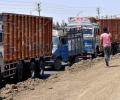
With the government asking the companies to operate with only 50 per cent staff strength, and exports dipping to almost zero, the truck and bus drivers idling at the petrol pump say they hardly have any work now. At a petrol pump on the deserted Bavla-Changodar highway near Ahmedabad in Gujarat, several trucks and buses are neatly parked in a row.

Dr Reddy's Laboratories (DRL) share price plunged 6.66 per cent to Rs 1,203.50 per share on the NSE during Friday after analysts remained cautious on the company's Q3 performance and differed on its growth outlook. DRL's Q3 performance was viewed as subdued by some analysts when they adjusted it for one-time grants and incomes that the company received during the quarter.
From the 30-share Sensex pack, Sun Pharma, Reliance Industries, Infosys, Tata Motors, Infosys, Titan, Maruti and NTPC were among the major laggards. Mahindra & Mahindra, Tech Mahindra, HCL Technologies and IndusInd Bank were the gainers.
Investors' wealth eroded by a whopping Rs 7.15 lakh crore during the morning trade on Friday as equity markets tumbled, driven by sharp fall in IndusInd Bank shares and unabated foreign fund outflows. The BSE Sensex tanked 708.69 points to 79,356.47 and the NSE Nifty plunged 286.35 points to 24,113.05. Tracking the weak trend in equities, the market capitalisation of BSE-listed firms tumbled Rs 715,739.19 crore to Rs 4,36,63,565.73 crore ($5.19 trillion) during the morning trade.

It is not just the secondary market that is witnessing a revival in fortunes. Even the initial public offering (IPO) market have roared back to life, with investors submitting bids worth over Rs 2.2 trillion on the three IPOs that wrapped up on Friday. Fashion retailer Vishal Mega Mart (VMM)'s IPO (fifth largest of the year) garnered 27.3x subscription, with bids exceeding Rs 1.6 trillion.

Ambani and Adani account for a fifth of the net worth of all billionaire promoters in the country and half the combined net worth of the top 10.

Investors' wealth on Monday surged Rs 4.21 lakh crore as markets bounced back after five days of fall. The BSE Sensex jumped 602.75 points or 0.76 per cent to settle at 80,005.04. During the day, it surged 1,137.52 points or 1.43 per cent to 80,539.81.
The pharmaceutical and the consumer durables sectors, which depend on China for imports, have not been impacted yet due to unrest in China with people protesting against lockdowns. But the lockdown could have an impact on the supply of components used in consumer durables if it continues for the next fortnight. In the pharmaceutical industry, Indian players import 66-70 per cent of their bulk drug requirements from China.
