
While the likelihood of these states going the Lanka or Greece way may be an alarming assessment, the financial situation of some states such as Punjab and West Bengal is indeed quite weak.

Without naming the Prime Minister or using his 'andolanjivi' phrase, Tikait said, "In Parliament, they are saying these are parjivis (parasites). Was Bhagat Singh who sacrificed his life for this nation a parjivi? What about 150 farmers who died during this agitation? Were they parjivis too? Had they gone to Delhi to agitate and die?"

The supplementary nutrition programme and the Poshan Abhiyaan under the Women and Child Development Ministry has been merged to launch Mission Poshan 2.0 to strengthen nutritional content, delivery, outreach, and outcome, according to the Union Budget announced on Monday.

'The price increases, particularly in respect of cooking gas, that is domestic LPG and PDS kerosene, have been quite minimal.'

Concerned over rising food prices, planning commission deputy chairman Montek Singh Ahluwalia on Monday pitched for increasing supplies through imports and better use of the public distribution system.

The ministry has asked the oil marketing companies to further step up their efforts to curb adulteration of petroleum products.

The annual under-recoveries of state-run oil marketing companies have been estimated at Rs 1.1 lakh crore, the government told the Lok Sabha on Thursday.

'We will do a holistic review of the entire act and the policy at the state level and I need to be convinced that not a single Jharkhandi is uprooted from his or her home due to this law'

Expanding its commitment to provide subsidised foodgrain to the poor, the Manmohan Singh government is looking at a host of social sector initiatives along with its soon-to-be-unveiled Food Security Bill.

State fuel retailers IOC, Bharat Petroleum and Hindustan Petroleum sell diesel, domestic LPG and kerosene at government dictated rates which are lower than cost of production.

According to the food ministry, about 142 lakh migrants will benefit in Uttar Pradesh and in Bihar (86.45 lakh), Maharasthra (70 lakh), West Bengal (60.1 lakh), Madhya Pradesh (54.64 lakh), Rajasthan (44.66 lakh), Karnataka (40.19 lakh), Gujarat (38.25 lakh), Tamil Nadu (35.73 lakh), Jharkhand (26.37 lakh), Andhra Pradesh (26.82 lakh) and Assam (25.15 lakh).

After natural gas prices, the government looks set to bite the bullet on auto fuel prices, with a panel of ministers scheduled to meet on June 7 to decide on freeing petrol and diesel prices.

On reforms in pipeline, she said the government is for universal right to minimum wages and wants to remove regional disparity through a national floor wage.

OMCs are currently incurring daily under-recovery of Rs 230 crore.

Talking to reporters Khatkar Kalan, he also suggested that Pakistan's spy agency Inter-Services Intelligence will use farmers' unrest over the new farm laws and will try to foment trouble in the border state of Punjab.
The report noted that the value of food coupons needs to be indexed to food inflation. Public distribution system is a major initiative of the government to ensure food security for the poor.

State-run Indian Oil Corp is losing Rs 92 crore (Rs 920 million) per day on sale of petrol, diesel, domestic LPG and kerosene as government has not allowed it to revise rates in line with firming international oil prices.

It was supposed to be a panacea against corruption, leakage and a magic wand for financial inclusion. But everywhere you look are people who enrolled, only to fall through the cracks again.
The meeting is likely to focus on removing impediments which are hampering implementation of the announced projects and policies which have been on the drawing board for long, official sources said. The social sector agenda of the prime minister includes pushing the Aam Admi Bima Yojana and Old Age Pension for the labour class, besides revamping Integrated Child Development Scheme and strengthening the public distribution system.
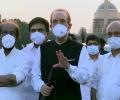
A day before the start of the Budget session of Parliament, as many as 18 opposition parties, led by the Congress, the Nationalist Congress Party, the Shiv Sena and the Trinamool Congress, decided on Thursday to boycott the President's address to the joint sitting of both Houses in solidarity with the farmers protesting against the new farm laws.

After a spike, losses on sale of diesel have fallen by nearly a rupee to Rs 2.49 per litre as international oil rates have moderated.
The ministerial group is to look into pricing of some essential commodities, including petrol, diesel, domestic cooking gas and PDS kerosene. The GoM also includes Defence Minister A K Antony, Finance Minister P Chidambaram, Railway Minister Lalu Prasad, Road Transport, Highways and Shipping Minister T R Baalu and Consumer Affairs Minister Sharad Pawar.

This is the seventh consecutive day when COVID-19 cases increased by more than 30,000.

A day ahead of former Congress chief Rahul Gandhi's visit to Rajasthan to raise the voice of the farmers against the farm laws, he said that the Centre should withdraw the laws and after thorough consultation with farmers and states, come up with a new set of legislations which the tillers would themselves want and is not something that is forced upon them.
Indian Oil Corporation sought an increase in prices of petrol, diesel, domestic LPG and PDS kerosene on Tuesday as spiralling global oil prices had put "enormous" burden and may result in a revenue loss of over Rs 8,500 crore (Rs 85 billion) this fiscal. While the government and oil companies were bearing their share of the burden, the consumers have so far been spared from any hike in fuel prices despite crude oil touching a historic high of $93 per barrel.

Profit on sale of diesel swelled to Rs 1.90 per litre as oil ministry awaits return of Prime Minister Narendra Modi to cut rates.

Implementing the Food Ordinance is the bigger challenge and there are many provisions of the National Food Security Bill which need to be expanded and strengthened.
Indian Oil Corp, the nation's largest oil firm, today said it is losing Rs 320 crore (Rs 3.20 billion) a day on fuel sales and may see future projects getting impacted if the current situations continues in 2009. "We are losing about Rs 320 crore a day on sale of petrol, diesel, domestic LPG and PDS kerosene," IOC Chairman Sarthak Behuria told reporters on the sidelines of 5th Asia Gas Partnership Summit in New Delhi.
Petroleum Minister Murli Deora is likely to meet Finance Minister P Chidambaram later this week to seek greater compensation for oil companies, who are currently losing about Rs 450 crore (Rs 4.5 billion) a day on fuel sales. Indian Oil, Bharat Petroleum and Hindustan Petroleum are likely to see doubling of revenue loss on sale of petrol, diesel, domestic LPG and PDS kerosene to Rs 150,000 crore. The three fuel retailers together lost Rs 77,304.50 cr on fuel sale in 2007-08.
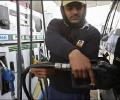
Fuel retailers sell diesel, domestic LPG and kerosene at government controlled rates which are below market price. The loss they thus incur is made good through cash subsidy from the government and dole from upstream firms like Oil and Natural Gas Corporation.
The average price of Indian basket of crude oil during 2007-08 (upto August) has increased to $68.34 per barrel as compared to 62.46 dollars a barrel during 2006-07.
The Group of Ministers are scheduled to meet this month to decide upon the issue of petro price system.
This is a formidable task which the Centre may find hard to shoulder without substantial involvement of the states.
Petroleum ministry has suggested extending government subsidy on domestic LPG and kerosene for an indefinite period as the gap between domestic retail price and current international prices was too large to be bridged through a price hike.
The extension has been given as the government wanted to ensure that genuine beneficiaries who do not have an Aadhaar number are not denied benefits for the lack of the biometric identifier
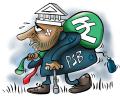
As of December 2018, a total amount of Rs 51,513 crore has been infused into PSBs.

Attributing price rise to global factors and higher Minimum Support Price (MSP), Prime Minister Manmohan Singh on Wednesday said the government has tried to protect the interest of poor people by maintaining supply through the PDS system.
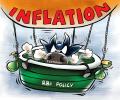
RBI Governor Shaktikanta Das on Friday said that inflation is on a declining trajectory, as it has fallen by 170 basis points from its January 2020 peak. Retail inflation fell to four-month low of 5.91 per cent in March over the previous month, mainly due to easing food prices.

PDS: Smart ration cards need to be smarter
