
India's biggest non-bank finance company, Bajaj Finance (BAF), is set to raise capital after a gap of four years. On October 5, the board of directors will meet to approve the fund raise by way of preferential issue and/or qualified institutional placement (QIP) subject to regulatory and shareholder approvals. The move, analysts said, comes ahead of expectations, and could be in the wake of simmering competition in the consumer lending space, especially with the launch of Jio Financial Services (Jio Fin). "While we still do not have finer details on the game-plan of Jio Financial, it has plans to initially foray into consumer and merchant lending.

We must stop stigmatising business failures. Particularly when startups are mushrooming all around, the financial system, backed by the RBI and the government, can explore ways of extending support to restart the journey of a failed entrepreneur by finance as well as counselling, recommends Tamal Bandyopadhyay.

India should become a middle-income country and then push to make INR (rupee) a hard currency, and till then, it must promote the settlement of global trade in the local currency, think tank GTRI said on Sunday. Global Trade Research Initiative (GTRI) said that transforming a currency into a hard currency is a complex process that hinges on several pivotal factors. Firstly, economic stability is paramount; a country must exhibit low and stable inflation, consistent growth, and a balanced trade environment.

'To the believers of crypto regulations, I have only one question to ask, how will you regulate it?'

'If through growth and serving the customer we become number one, we will be very happy and very proud.'

The growth in personal loans for fintech major Paytm may remain muted in the future and not replicate a three-digit year-on-year (Y-o-Y) growth that it recorded in the previous years, a person familiar with the matter said. Sources said the personal loans book may grow in the range of 30 to 40 per cent Y-o-Y on its current base. On a quarter-on-quarter (Q-o-Q) basis, the number of personal loans the Noida-based fintech company disbursed has dropped 20 per cent from 0.3 million in the first quarter of this financial year (Q1FY24) to 0.24 million in Q2FY24, according to regulatory filings.

While the RBI's guidelines aim to streamline the loan closure process, borrowers must remain proactive.

India's corporate sector is likely to report a slowdown in revenue growth and earnings for the July-September 2023 period (Q2FY24), according to earnings estimates by brokerages, after the country's top listed companies posted higher than expected profits for the first quarter. The combined net profit of Nifty50 companies, based on brokerage estimates, is expected to have grown by 19.6 per cent year-on-year (Y-o-Y) to Rs 1.75 trillion in Q2FY24 - a sharp deceleration from 37.6 per cent Y-o-Y growth in the combined earnings of index companies in the April-June 2023 period. According to estimates, the combined earnings in the second quarter would be down 8.8 per cent on a quarter-on-quarter (Q-o-Q) basis and the lowest in the past three quarters.

Lenders of debt-ridden Reliance Capital have voted in favour of a resolution plan submitted by Hinduja Group firm IndusInd International Holdings Ltd (IIHL) which made the highest cash offer of Rs 9,661 crore in the second round of bidding. As much as 99 per cent votes were in favour of IIHL as lenders expected to recover cash upfront of Rs 9,661 crore from the Hinduja Group entity, sources said. Besides, sources said cash balance with Reliance Capital (RCAP) of over Rs 500 crore would also go to lenders. So, in all lenders are expected to receive about Rs 10,200 crore for distribution as against Rs 16,000 crore principal secured debt, resulting in 65 per cent recovery for the lenders, sources said.

10 non-bank and non-finance stocks from the BSE500 Index universe that offer an optimal blend of low valuation, reasonably robust revenue and earnings growth in recent quarters, a strong balance sheet, and most importantly, positive cash flow from their operations.

In August, the Reserve Bank of India Governor Shaktikanta Das held a meeting with chief executive officers/ managing directors (CEOs/ MDs) of large non-banking financial corporations (NBFCs). The discussions included diversifying borrowing sources for NBFCs and housing finance companies (HFCs) to contain increasing reliance on bank borrowing, risks associated with high credit growth in retail segment in unsecured loans, prioritising IT upgrades and cyber-security, improving provisioning, monitoring of stressed exposures and slippages, ensuring robust liquidity and asset-liability management, ensuring transparency in pricing, creating robust grievance redress mechanisms.

The finance ministry on Thursday sought to clarify that there was no distress in household savings and the data indicated that changing consumer preference for different financial products was the real reason for the change in the pattern of household savings. The clarification comes in the backdrop of Reserve Bank of India data showing that household net financial savings rate is at its lowest in decades, at 5.1 per cent of GDP in FY23 compared to 7.2 per cent of GDP in FY22. The divergence in the data for household gross financial assets and liabilities is not a cause for concern for the government, as the loans have largely been taken to buy real assets or automobiles, the finance ministry said.

'We have a plan to plough back a 'This year in the first half we had profits of more than Rs 31,000 crore.' significant amount of profits this financial year.' 'We have seen this organic plough back of profit is one of best ways to support the equity of the bank.'
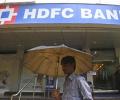
In a mixed bag for HDFC Bank ahead of the parent HDFC's merger with itself, the Reserve Bank of India has declined to make exceptions on certain aspects, and has offered some leeway on others. The country's largest private sector lender, which is aiming to conclude the merger with the home finance major by July, had written to the central bank seeking certain forbearances after announcing the $40-billion merger in April last year. In an exchange filing this evening, HDFC Bank said it received a response from RBI on Thursday and also said that there are a few pending issues.

'Building a credit history is a gradual process that requires at least 6-12 months of consistent credit activity.'

The governor made it clear that the RBI is aware of what's happening and acts accordingly, but doesn't make a noise about that, points out Tamal Bandyopadhyay.

Edelweiss ARC, in a statement, denied that any undue pressure was brought to bear on Desai for loan recovery.

The recent surge in crude oil prices could shave off the gains made by India Inc in profit margins in the past few quarters. Worse, it comes at a time when consumer demand in the country is slipping and major global economies are witnessing a slowdown. A back-of-the-envelope calculation suggests that the margin expansion accounted for three-fourths of the rise in the listed firms' operating profit between the April-June quarter (Q1) of FY23 and Q1FY24, and only a quarter of profits gains came from revenue growth.

The Reserve Bank of India (RBI) has given HDFC Bank six months to migrate HDFC's home loan customers to external benchmark linked lending rate (EBLR), top sources in the bank told Business Standard. Almost half of HDFC's 5.4 million customers are home loan customers. It is mandatory for banks to link retail loans and loans to micro, medium and small enterprises to an external benchmark. Non-banking financial companies do not have such a mandate.

"We will raise Rs 300 crore via bonds of two-, three- and five-year tenures. This will be our maiden bond issuance and is part of our effort to widen funding sources," says Vimal Bhandari, executive vice-chairman and chief executive officer (CEO), Arka Fincap. The firm, a subsidiary of Kirloskar Oil, is only five years old and small (assets of around Rs 5,000 crore with an "AA" rating), but the response to this float will be closely watched: It would be the first by a non-banking finance company (NBFC) after Mint Road upped the risk weights on bank exposures to them by 25 percentage points. The move by the Reserve Bank of India (RBI) has caught NBFCs off guard even though the issue had been flagged by Governor Shaktikanta Das with their corner-room occupants (and that of banks) in July and August 2023 - on consumer credit and the dependency on bank borrowings.
MMFS is looking at a compounded annual growth rate (CAGR) of 18 per cent in assets under management (AUM) during FY23 to FY26 on the back of the strong recovery. The company has initiated risk-mitigating initiatives, including diversification into non-vehicle loans, building digital capacity and re-classification of customer profiles into affluent and mass-affluent in semi-urban segments to better target marketing.

The Enforcement Directorate on Thursday said it has frozen assets worth Rs 143 crore of prominent Kerala-based NBFC Manappuram Finance Ltd's MD and CEO V P Nandakumar after it conducted raids as part of a money laundering investigation. A total of six premises in Thrissur, where the company is headquartered, were covered during the searches that were launched on Wednesday. The case pertains to allegations of money laundering through "illegal" collection of deposits from the public, the agency said in a statement.

In the June quarter of FY24, 51 per cent of consumers who took small-ticket personal loans already had more than four credit products at the time of accessing yet another new loan, compared with just 17 per cent in the June quarter of FY20, points out Tamal Bandyopadhyay.

The story of Sahara India Pariwar founder Subrata Roy, who died in Mumbai on November 14 aged 75, is the stuff of movies - of a spectacular rise and an equally spectacular fall. Born in Araria, Bihar, Roy was 30 when he set up Sahara in 1978. He started with a capital of about Rs 2,000, a peon, a clerk and his father's Lambretta scooter in Gorakhpur, eastern Uttar Pradesh, writes Tamal Bandyopadhyay in his 2014 book, Sahara: The Untold Story. Sahara was not his first venture.

Lenders and shareholders of Reliance Industries Ltd (RIL) will meet on May 2 to demerge the firm's financial services business. This is expected to create a big player in segments including the NBFC (non-banking financial company) space with net worth of Rs 25,851 crore as of March 2022. According to the plan, RIL shareholders will get a share in the demerged entity for each one held in the company.

Jio Financial Services, a unit of Mukesh Ambani's Reliance Industries (RIL), got valued at Rs 1.66 trillion ($20 billion) following an hour-long special trading session conducted by stock exchanges on Thursday. Shares of RIL's unit got priced at Rs 261.85 apiece - higher than analysts' expectations of Rs 134-224 per share. The price was arrived at after calculating the difference between RIL's Wednesday (July 19) close of Rs 2,840 and Rs 2,580, the price discovered during the first-of-its-kind pre-trade session.
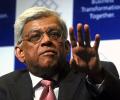
HDFC chairman Deepak Parekh on Monday said harmonisation of rules between banks and non-banks which reduces the regulatory arbitrage was one of the key factors which influenced the decision for merger between the largest home financier and HDFC Bank. Parekh, who said the merger discussions have happened over the last three weeks, noted that requirements like non performing asset recognition being at par and size-based regulations for non-bank finance companies are among the changes in landscape. Addressing a press conference after the surprise announcement earlier in the day, Parekh said the last three years have seen harmonisation in the regulations which reduce the "regulatory arbitrage" of running a separate home finance company.

After a sharp outperformance in the mid-and small-cap segments in the first half of calendar year 2023 (H1-CY23), analysts are now turning cautious on these two market segments and suggest investors stay selective and look for valuation comfort and earnings visibility before investing. The S&P BSE Midcap index has surged 13.7 per cent in H1-CY23, and the S&P BSE Small-cap index gained 12.7 per cent during this period, data shows. The S&P BSE Sensex, in comparison, has moved up 6.4 per cent.

'The India which was all about glamour and razzmatazz through which he could earn the trust of people of the other India, which was Bharat.'

Shelar demanded that Desai's death should not be treated just as a case of accidental death, but must be dealt with from a larger perspective.

The headline for corporate profit growth has been very encouraging in the July-September quarter (Q2) of 2023-24 (FY24), with the combined net profit of listed companies up by 38 per cent year-on-year. However, the earnings distribution has been very lopsided, with most of the growth coming from public-sector oil-marketing companies (OMCs), banks, non-bank lenders, automobile (auto) companies, and cement producers. By comparison, companies from information technology services, fast-moving consumer goods (FMCG), retail, and consumer durables were disappointed, experiencing a sharp slowdown in net sales growth and a relatively muted increase in reported net profit.

Go First chief executive officer Kaushik Khona and tribunal-appointed interim resolution professional Abhilash Lal on Thursday reached out to the airline's staff, seeking their support for revival. While Khona said the company had taken all steps for the airline's revival, Lal put forward the view it would have to raise funds. Employee engagement took place a day after the National Company Law Tribunal (NCLT) admitted the airline's insolvency plea on Wednesday and ordered a moratorium on recoveries.
In one of these clips or voice notes, he is heard stating that his company could not come out of the financial crisis it was facing because of the procedure adopted by the financial services firm.

'The impact of CEO transition is fairly even for stocks, with about half (53 per cent) of the events not producing any change in the relative performance of the stock.'

A plea that the banking regulator's stress should be on the strategic role of boards and an increase in the remuneration of independent directors were among the issues put forward to the Reserve Bank of India's (RBI's) top brass in its interaction with the full boards of state-run banks held on Monday. The meeting, the first leg of first-of-its-kind interactions with the boards of state-run banks, will now be followed by those of private banks in Mumbai on May 29. The RBI's press release, issued late on Monday, did not refer to the specific points that found mention in the deliberations, but top sources told Business Standard the twin concerns were taken up in the open-house interaction with the banking regulator's brass.

India has a huge untapped population which doesn't have facilities for financial aid and insurance, and it is perhaps plausible to look at the option of having niche players catering to smaller sectors akin to non-banks and microfinance institutions in lending, said Rakesh Joshi, member (Finance & Investment), Insurance Regulatory and Development Authority of India (Irdai). Speaking at the Business Standard BFSI Insight Summit, Joshi said, "Today, most of our insurance companies operate at a national level. There is arguably a case for having differentiated operations, which cater to niche sectors the same way we have non-banking financial companies (NBFC) and microfinance institutions in lending." "The capital requirement for niche players may not be as large as those having national ambitions. "Enabling these niche players, which require lower capital, will enhance the penetration in areas which hitherto had not seen traction from large players," he said.
But the industry's chief executives remain confident of the long-term growth potential of NBFCs in India, given their specialised lending on the asset side, last-mile reach, and a well-capitalised balance sheet. "Over the years, NBFCs have faced many crises.

A Hinduja Group firm on Wednesday emerged as the highest bidder with an offer of Rs 9,650 crore to take over debt-ridden Reliance Capital in the second round of auction, sources said. The bid by IndusInd International Holdings Ltd (IIHL) is higher than Rs 8,640 crore offer made by Torrent Investments in the first round of auction held in December last year. The other two suitors -- Torrent Investments and Oaktree -- did not participate in the second round of auction, sources said.
Corporate earnings grew in double digits during the April-June 2022 (Q1FY23) quarter but the momentum waned. Overall corporate earnings in the quarter were down sharply from their highs in FY22. The combined net profit of 2,981 listed companies across sectors in the Business Standard sample was up 22.4 per cent YoY to Rs 2.24 trillion in the June quarter, driven by a big jump in the earnings of banks, non-banking lenders, oil & producers, and FMCG companies. Also, earnings in the corresponding quarter a year ago were affected because of the second wave of the Covid pandemic, even though the numbers were a lot better than Q1FY21 when there was a nationwide lockdown.
The government and Life Insurance Corporation's (LIC's) strategic stake sale in IDBI Bank is expected to move to the second stage by the first quarter of FY24, said two people in the know. They added that considering the progress of the ongoing deal, financial bids are expected to come in by June this year. The proposed IDBI Bank stake sale is divided into two sequential stages.
