
The top 50 exposures, amounting to Rs 7.8 trillion, of government-registered non-banking financial companies (G-NBFCs) constitute about 40 per cent of corporate credit within the NBFC sector, indicating concentration risk, according to the Reserve Bank of India's report "Trend and Progress of Banking in India 2022-23". Notably, all the 50 are tied to the power sector, a domain fraught with inherent challenges, the report said. The report highlighted recognising the escalating systemic importance of G-NBFCs, the Prompt Corrective Action (PCA) framework had been expanded to include G-NBFCs excluding those falling within the base layer.

Co-lending deals between non-banking financial companies (NBFCs) and banks are likely to rise after the Reserve Bank of India's (RBI's) decision to increase the risk weight on consumer credit, industry leaders and experts say. Smaller NBFCs, they add, may increasingly opt for co-lending as capital markets could become costlier for them. "Smaller NBFCs will be more comfortable with co-lending because they are geography-specific in terms of industry or customers.

'We need to be far more careful given the fact that while this is group lending, it's essentially unsecured.'

'For the first time ever it has come below 1 per cent, at 0.97 per cent.'

'.. if you do not want to take the asset allocation call.'' 'This category of funds can offer optimum risk-adjusted returns.'

Loan against gold as a product is catching on fast. Let's keep the momentum going, but aim for sustainable growth. A few bad apples should not ruin the brunch, argues Tamal Bandyopadhyay.

The banking regulator was uncomfortable with the runaway pace at which consumer credit was growing.

The Reserve Bank on Thursday tightened norms for consumer credit as it asked banks and NBFCs to assign a higher risk weight for unsecured personal loans, a move aimed at making the lenders more cautious on such advances. The risk weight on unsecured consumer loans has been raised by 25 percentage points. The new regulations, however, will not be applicable on housing loans, education loans, vehicle loans and loans secured by gold and gold jewellery, the Reserve Bank said in a circular.

Concerned over the practice of banks and Non-Banking Financial Companies (NBFCs) using penal interest as a revenue enhancement tool, the Reserve Bank on Friday came out with modified norms, under which lenders would be able to levy only "reasonable" penal charges in case of default in repayment of loans. The banks and other lending institutions will not be allowed to levy penal interest with effect from January 1, 2024, the RBI said in its notification on 'Fair Lending Practice-Penal Charges in Loan Accounts'. "Penalty, if charged, for non-compliance of material terms and conditions of loan contract by the borrower shall be treated as 'penal charges' and shall not be levied in the form of 'penal interest' that is added to the rate of interest charged on the advances," RBI said in a notification.

Diwali fireworks are expected to continue on Dalal Street next week, with four companies collectively seeking to mobilise over Rs 6,600 crore through initial public offerings (IPOs). In terms of the amount raised, this is poised to be the busiest week of calendar year 2023. Tata Technologies (Tata Tech), a subsidiary of Tata Motors, could lead the charge with an IPO projected to be over Rs 2,900 crore. This will mark the first maiden share sale by a Tata Group firm in nearly two decades.

This is a good opportunity for long-term investors to pick quality small and midcap stocks at reasonable valuations.

Shares of Bajaj Finance sprinted 4.7 per cent to Rs 7,732 per share on the BSE in Thursday's (January 4) intra-day trade as the non-bank finance company's (NBFC's) December quarter business update reflected minimal impact of the Reserve Bank of India's ban on two of its lending products. The shares, eventually, ended 4.4 per cent higher at Rs 7,710 per share as against 0.69 per cent gain in the benchmark S&P BSE Sensex. The NBFC's asset under management (AUM) topped the Rs 3-trillion-mark at the end of December 2023, swelling by roughly Rs 20,700 crore (35 per cent year-on-year) to hit Rs 3.11 trillion-mark.
For five consecutive policy reviews in 2023, the Reserve Bank of India (RBI) chose to hold rates, citing inflation threat. And when the prices did cool off a bit, it reminded all about the target to get the headline consumer price inflation at 4 per cent and the risks from food inflation. Heading into the new year, all eyes are on when RBI will cut the rates, especially after one of the Monetary Policy Committee (MPC) members stressed on the need for such an action in the face of the US Federal Reserve's guidance for easing rates.
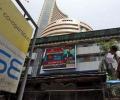
Leading stock exchange BSE on Tuesday postponed the removal of Jio Financial Services Ltd, the demerged non-banking financial services unit of Mukesh Ambani-led Reliance group, from all the S&P BSE Indices to August 29. Earlier, the stock was scheduled to be removed from the indices on August 24. Jio Financial Services Ltd (JFSL) got listed on the bourses on Monday and hit the lower circuit for the second day in a row on Tuesday.

Longer-tenure FDs generally give higher returns. Nonetheless, going for a tenure higher than two to three years is not advisable.

The decision by the Reserve Bank of India to introduce a unified regulatory framework on connected lending for all the regulated entities (RE) is expected to reduce the influence of business conglomerates in the Indian lending space, said bankers and experts. "Connected lending pertains to lending to related parties within the same business group. "While the RBI might appear more agreeable to allowing business conglomerates to own banking licenses, it deems it crucial to bolster regulations that would prevent conglomerate-owned banks from gaming the system," said Shivaji Thapliyal, head of research and lead analyst, YES Securities.

Brokerages expect Nifty50 companies to have cumulatively witnessed strong double-digit growth in their earnings in the first quarter of FY24 (Q1FY24). This growth in the combined earnings is expected to have been driven by banks, automakers, and oil & gas companies. Other sectors may report muted profit growth.

'Das is friendly, but he finally does what he does. The quality of engagement is very good.'

The Reserve Bank of India's (RBI's) latest order on unsecured loans is set to hit the banking sector's growth in the near-term, cautioned analysts, as they see banks slowing down on aggressive retail lending. Besides, cost of funds for non-banking finance companies (NBFC) is expected to inch up as banks will pass on higher capital charge to NBFCs. "We believe the fallout of the RBI action will be mainly on growth, given the rising dependence on unsecured retail loans and lending to NBFCs for growth.
People are availing far more of certain kinds of unsecured loans than was the case before the pandemic. Bank lending for buying consumer durables and funding of credit cards and other personal loans have risen by Rs 6.9 trillion between August 2019 and August 2023, shows a Business Standard analysis of data from the Reserve Bank of India (RBI). These loans are typically unsecured, which means they are provided without collateral.

The bulk of an investor's portfolio should be in shorter-duration funds of up to one year portfolio duration.

Over 100,000 small and medium-sized businesses are non-compliant with e-invoicing norms under the goods and services tax (GST) regime, a mandatory requirement for businesses with an annual turnover of over Rs 5 crore. E-invoicing provides real-time access to invoices that are prepared by the supplier on the purchase of goods, allowing faster accessibility to input tax credit, thereby limiting the manipulation of fake credit as it has to be generated before the transaction. "The default has been reported mainly in businesses with a turnover between Rs 5 crore and Rs 20 crore," a senior official informed

The top three mutual funds (MFs) paid out 10-18 per cent higher commissions to distributors during the financial year 2022-23 (FY23) compared to FY22 as a sustained rise in flows from the systematic investment plan (SIP) route boosted distributors' share in the assets under management (AUM), according to an analysis of the disclosures by the top three fund houses. State Bank of India (SBI) MF saw its commission payout go up 18 per cent year-on-year (YoY) to Rs 1,675 crore. The payouts rose 10 per cent and 15 per cent for ICICI Prudential MF and HDFC MF, respectively.

Understand the pros and cons of SGBs before rushing to invest in them based on past returns.

To tackle increasing demand, the Union Ministry of Power has urged central and state public-sector power-generating companies (gencos) and state power and energy departments to pick projects that are undergoing insolvency proceedings. The power ministry is looking at a quicker turnaround of these stressed power plants and enhancing power supply. Increasing demand is pushing states to scout for more power sources. "It is requested that state-owned gencos may be encouraged to participate in the corporate insolvency resolution process (CIRP) of stressed power assets, which are of strategic and commercial significance to the capacity addition plans of the states concerned.

Despite multiple headwinds at the start of 2023, the Indian markets delivered a strong performance, posting 19-20 per cent growth for the year. Even as new records were set, investor sentiment remains strong going into 2024, given the lower inflation, expectations of steady to lower interest rates, higher economic growth, and strong inflows. However, the overriding concern for most brokerages is valuations.

The banking sector emerged as an outlier when the rest of India Inc witnessed a slowdown in earnings in FY23. The combined net profit of listed public and private sector banks was up 39.4 per cent year-on-year (YoY) last financial year and their share in India's gross value added (GVA) or gross domestic product (GDP) at factor cost rose to a record high of nearly 1 per cent up, from 0.8 per cent a year ago. Listed banks' combined net profit grew to Rs 2.36 trillion in FY23, from Rs 1.69 trillion a year ago. In comparison, India GVA at current prices was up 15.2 per cent YoY at Rs 247 trillion in FY23; it was around Rs 214 trillion a year ago.

'Try to obtain a secured personal loan or credit card by offering some collateral, such as a fixed deposit or gold.' 'Not only will this improve your eligibility, but the lender may even offer a lower interest rate.'

In the first such collaboration for India, the country's flagship payments platform, the Unified Payments Interface (UPI), and Singapore's PayNow payment system have launched a real-time cross-border payment linkage system. The linkage, which was launched by Prime Minister (PM) Narendra Modi and Singapore's PM Lee Hsien Loong on Tuesday, was kicked off by a live cross-border transaction between Reserve Bank of India Governor Shaktikanta Das and Monetary Authority of Singapore managing director Ravi Menon, using mobile phones.

'We started affordable housing loans that has good traction and the books have grown to Rs 750 crore as of the end of last quarter.'

The Reserve Bank of India (RBI) on Wednesday allowed payment system providers, prepaid card issuers, card networks and white label ATM operators access to its Centralised Payment Systems (CPS), such as real time gross settlement (RTGS) and National Electronic Fund Transfer (NEFT) systems in the first phase of its plan bring non-banks in the same platform. "Direct access for non-banks to CPS lowers the overall risk in the payments ecosystem.

The Reserve Bank of India's latest order prohibiting Bajaj Finance from sanctioning and disbursing loans under its 'eCOM' and 'Insta EMI Card' products may not have serious implications on the non-banking finance company's profitability, provided the ban is lifted within six to eight weeks, analysts said. "In a surprise move, the RBI has asked Bajaj Finance to stop sanction and disbursal under two of its digital lending products. "While the move is negative, the speed of correction will be key to reinstate products," global brokerage Jefferies said in a report.
Fintech companies believe that the impact of Reserve Bank of India's order last week on unsecured loans will be visible in six to 12 months and prompt them to diversify and strengthen their secured portfolio. Fintechs which source funds through banks or non-banking finance companies (NBFCs) are looking at quickly building their secured portfolio options to at least 40 per cent of their total portfolio. "Over the medium to long term, as part of our product strategy, we are evaluating secured products which can be enabled over a digital platform" said Yogi Sadana, the founder of Zype, a lending-focussed fintech.

Diversified business conglomerate Mahindra and Mahindra (M&M) has picked up a 3.53 per cent stake in private sector lender RBL Bank for Rs. 417 crore. "We may consider further investment, subject to pricing, regulatory approvals, and required procedures. However, in no circumstance will it exceed 9.9 per cent," M&M said in an exchange notification on Wednesday. Shares of RBL Bank jumped 7.1 per cent to settle at Rs. 238.8 apiece on the BSE on Wednesday, close to their 52-week high of Rs. 242.1.

The pace of lending to the infrastructure sector, including power and roads, fell sharply to 1.8 per cent year-on-year (YoY) in May, 2023 compared to 9.8 per cent in May, 2022. Within the segment, the growth in loans to the power sector was at 0.3 per cent YoY in May 2023, down from 9.3 per cent in May 2022. The RBI data showed that outstanding credit to power sector stood at Rs 6.17 trillion in May.

For the time being, digital lending remains a grey area, notes Tamal Bandyopadhyay.

'With NPA under control, we should be able to post better profits.'

'The focus needs to shift towards the ability to collect payments, particularly in tier-3 to tier-4 areas where acceptance is still lacking.'

Between March 2022 and September 2023, HDFC Bank added 56,310 employees.

Fundraising activity in the debt market is gaining momentum ahead of the festival season. Several non-banking financial companies (NBFCs) and the National Bank for Agriculture and Rural Development (Nabard) are planning to raise at least Rs 5,560 crore in the next two days by issuing bonds, with a greenshoe size of Rs 6,370 crore. Ajay Malglunia, managing director and head of investment grade group at JM Financial, said, "The market likes certainty, the market will gain clarity after the US Federal Reserve's (Fed's) policy.
