The National Payments Corporation of India (NPCI) has deferred the implementation of a 0.4 per cent Merchant Discount Rate (MDR) on Person-to-Merchant UPI transactions above Rs 2,000. Originally set for October 15, the new date will be announced after Diwali, providing relief to users and merchants, especially during the festive season. The decision came amidst opposition concerns about the levy burdening consumers.
NPCI chief Dilip Asbe stated that only about 10 per cent of the total value of UPI transactions might see charges passed to consumers under the merchant discount rate (MDR). He clarified that large corporates are expected to absorb most costs, and a significant portion of transactions will remain charge-free. A new fund from MDR collection is also proposed to boost UPI acceptance among small merchants.

NPCI chief Dilip Asbe stated that only about 10% of UPI transaction value might see charges passed to consumers, primarily from large corporates already absorbing credit card fees. He highlighted that 80% of Merchant Discount Rate (MDR) would come from businesses with over Rs 1,000 crore turnover, and a significant portion of transactions will remain charge-free. A new fund, potentially Rs 3,000 crore, will also be created from MDR collection to support small merchants and accelerate UPI acceptance.

The National Payments Corporation of India (NPCI) has informed the Supreme Court that merchants are prohibited from passing on Merchant Discount Rate (MDR) charges to customers under the new UPI pricing framework. This clarification comes in response to a petition challenging the imposition of MDR on UPI person-to-merchant transactions exceeding Rs 2,000, with NPCI defending the revised framework as crucial for the sustainability of the UPI ecosystem.

Internet firm Rediff.com India Ltd has filed updated draft papers with Sebi for an IPO to raise up to Rs 600 crore. The fresh issue will fund expansion of its platforms like Rediff One, Rediff Pay, and Rediff TV, along with marketing, acquisitions, and general corporate purposes. The company had received Sebi approval in August.

Indian tourists can now use the Unified Payments Interface (UPI) to book tickets online for Dubai's Burj Khalifa and major attractions in Singapore, including Universal Studios. This initiative, facilitated by NPCI International Payments Ltd (NIPL) through strategic partnerships, aims to simplify international travel payments for Indians and strengthen digital and economic links with these countries.

The Reserve Bank of India has issued new master guidelines requiring non-bank payment system operators to report cyberattacks, system outages, and settlement delays within six hours. This directive aims to enhance cybersecurity, combat digital fraud, and ensure a more resilient digital payment ecosystem in India, with experts welcoming the proactive measures.

NPCI BHIM Services Ltd is expanding the BHIM app to feature phones to increase financial inclusion and diversify revenue through financial product distribution. The app aims to double its market share and is focusing on partnerships with banks and new features like UPI Circle.
A report by IIT Bombay suggests that the proposed Merchant Discount Rate (MDR) framework for Unified Payments Interface (UPI) transactions needs rationalisation before implementation to safeguard public trust in the digital payments system, highlighting that UPI's long-term economic benefits outweigh potential incremental income from merchant fees.
The National Payments Corporation of India (NPCI) has deferred the implementation of a 0.4 per cent Merchant Discount Rate (MDR) on Person-to-Merchant (P2M) UPI payments above Rs 2,000, originally set for October 15, until after Diwali.

A report by IIT-Bombay professors recommends reducing the Merchant Discount Rate (MDR) on UPI transactions from 0.40 per cent to 0.08 per cent. It suggests that banks should fund the UPI ecosystem using their net interest margins from CASA deposits, rather than relying on MDR. The report also addresses transaction costs, credit card MDR, and ATM withdrawal allowances, aiming to ensure UPI's long-term sustainability and public trust by proposing remuneration only from large merchants.

75% of India's 60 million digital-payment merchants have never recorded a transaction above 2,000.
An Indian School of Business professor highlights the lack of precise data on losses from free UPI transactions, arguing that the benefits, such as user data generation, are often overlooked in the debate over implementing a Merchant Discount Rate (MDR). A recent ISB survey suggests that charging MDR could lead street vendors to revert to cash, despite the government's allowance for MDR on transactions above Rs 2,000 and NPCI's deferral of its implementation.

The Reserve Bank of India (RBI) has introduced new features for India's digital payment ecosystem, including UPI tap-to-pay for PIN-less transactions up to 5,000 and multi-currency capabilities for forex on Bharat Connect, supporting Euro, British Pound, and other major currencies.
The Finance Ministry has refuted allegations that US pressure influenced the decision to levy a 0.4% Merchant Discount Rate (MDR) on select UPI payments. It clarified that NPCI guidelines prioritise RuPay credit cards on UPI to foster a domestic payment ecosystem and that the MDR introduction aims to create a sustainable revenue model for smaller domestic companies, thereby protecting India's sovereignty in digital payments.

Delhi Police have dismantled a cyber-fraud network that operated from a moving SUV to avoid detection, arresting three individuals. The fraudsters allegedly cheated a victim of Rs 65,000 by posing as insurance refund processors and used mule bank accounts. The operation involved sophisticated methods to evade law enforcement.

The Finance Ministry has refuted allegations that US pressure influenced the decision to levy a 0.4 per cent Merchant Discount Rate (MDR) on select UPI payments. The ministry clarified that the NPCI guidelines prioritise RuPay credit cards on UPI to promote domestic alternatives and ensure a self-sustaining revenue model for smaller domestic companies, countering claims of favouring foreign payment providers.
Haryana has rolled out UPI-based digital payment systems and expanded online OPD pre-registration facilities across 610 public healthcare institutions. This initiative aims to reduce queues, simplify registration, and enhance patient convenience, while still retaining traditional cash and walk-in options for those not using digital methods.
The Kerala Legislative Assembly has passed a motion urging the central government to completely withdraw the proposed Merchant Discount Rate (MDR) on UPI transactions exceeding Rs 2,000. Chief Minister V D Satheesan and CPI MLA K Rajan highlighted concerns that the MDR would increase business costs, harm small businesses, and reduce the appeal of digital payments, while the BJP argued it would not affect general public or small merchants.

The Finance Ministry has dismissed allegations of US pressure influencing the 0.4% Merchant Discount Rate (MDR) on select UPI transactions. It clarified that NPCI guidelines prioritise RuPay credit cards on UPI and do not favour international cards. The ministry also asserted that the MDR, applicable to person-to-merchant transactions above Rs 2,000, is unlikely to increase cash transactions or cause inflation, with measures in place to prevent burdening consumers.
The All India Mobile Retailers Association (AIMRA) has announced a nationwide 'No UPI Day' protest on October 2 against the proposed 0.4 per cent Merchant Discount Rate (MDR) on UPI transactions exceeding Rs 2,000. Retailers argue that this charge will burden small businesses and impact their already thin profit margins, urging policymakers to withdraw the proposal.
The NCP (SP) has demanded a complete rollback of the 0.4 per cent Merchant Discount Rate (MDR) on UPI transactions above Rs 2,000, effective October 15. The party termed the move a "direct assault" on small traders and shopkeepers, accusing the Modi government of "double standards" by burdening small merchants while large industrialists benefit from loan write-offs.

UPI processed an average 802 million transactions a day in September, about 1 per cent more than the 792 million a day over the same period in August.

Finance Minister Nirmala Sitharaman clarified that the proposed Merchant Discount Rate (MDR) on select high-value UPI transactions is not a tax or cess, and its collections will not go to the government. She explained that MDR is a charge within the digital payments ecosystem, shared among participants to maintain infrastructure, and will not be passed on to consumers. The NPCI's new framework, effective October 15, applies a 0.4% MDR on person-to-merchant UPI transactions above Rs 2,000, with most transactions remaining free and small merchants exempt.

A new Merchant Discount Rate (MDR) on UPI transactions above Rs 2,000, effective October 15, could force small merchants and price-sensitive consumers to revert to cash, according to economic think tank GTRI. The move, which introduces a 0.4 per cent MDR with a Rs 300 cap and concessional rates for specific categories, is questioned by GTRI founder Ajay Srivastava, who suggests it's not a revenue issue for the government but potentially a response to US pressure regarding UPI and RuPay's preferential market position.

BJD MP Santrupt Misra has voiced strong concerns over the Centre's decision to impose a 0.4 per cent Merchant Discount Rate (MDR) on UPI transactions above Rs 2,000, arguing that the government or large financial institutions could easily absorb the costs of maintaining the digital payment network instead of burdening merchants and consumers.

India's markets regulator Sebi has launched 'Demat 2.0', a pilot project for tokenisation of corporate bonds, enabling atomic settlement through integration with RBI's wholesale CBDC. This new market infrastructure uses Distributed Ledger Technology (DLT) to make bond issuance, trading, and settlement faster and more efficient. India is the first country to issue corporate bonds natively on a distributed ledger with central bank digital currency settlement. Additionally, RBI Governor announced new UPI innovations: 'Tap & Pay' for faster POS transactions and MyUPI, an AI-powered customer support solution.
NPCI International and Uzbekistan's NIPC have partnered to enable UPI payments across Uzbekistan, allowing Indian tourists, business travellers, and students to make instant merchant payments using the UZQR code. This agreement, approved by RBI and CBU, integrates UPI with Uzbekistan's national payment system, HUMO, facilitating direct P2M payments from Indian bank accounts and reducing reliance on foreign exchange or international cards.

The Supreme Court has refused to grant an interim stay on the imposition of Merchant Discount Rate (MDR) on UPI person-to-merchant transactions exceeding Rs 2,000, which is set to take effect from October 15. The court has agreed to examine the challenge to this new fee and has issued notices to the Centre, RBI, and NPCI, seeking their responses within four weeks. A Public Interest Litigation (PIL) argues that the levy lacks statutory safeguards, transparency, and public consultation, and could adversely affect merchants and consumers.
The Indian government has mandated that banks and payment providers cannot levy charges on UPI transactions up to Rs 2,000 or on payments made via RuPay debit cards. This directive follows an amendment to the Payment and Settlement Systems Act, 2007, aiming to sustain and expand the digital payments ecosystem.
The Congress party has questioned the Modi government's decision to defer the Merchant Discount Rate (MDR) on UPI transactions, alleging a potential "U-turn on the U-turn." Congress general secretary Jairam Ramesh highlighted previous denials by the finance minister regarding MDR imposition, only for it to be announced later and now deferred. He expressed concerns about future charges on UPI transactions.
UPI transactions saw a 27% volume increase and 20% value increase in the first half of the current fiscal year. Despite a slight moderation in September, the digital payment system is set to implement a 0.4% merchant discount rate on transactions over Rs 2,000, aiming for a sustainable revenue model. Small merchants and person-to-person payments remain exempt, and UPI's global presence continues to expand.
Finance Minister Nirmala Sitharaman has strongly refuted Opposition allegations that the decision to levy a 0.4 per cent Merchant Discount Rate (MDR) on specific UPI transactions above Rs 2,000 was influenced by external pressure. She clarified that the decision was a professional one made by the payment ecosystem, not a government imposition or a tax on consumers, with collected funds distributed among banks and UPI entities to ensure a sustainable digital payments framework.

Digital money is gradually starting to behave like software. It's no longer inert -- sitting passively in accounts. In the not-so-distant future, your money could become 'smart' and 'active,' understanding your preferences, paying your bills automatically, optimising your returns, and managing your risks -- all without you having to manage the details.

The Unique Identification Authority of India (UIDAI) is actively working on plans to expand Aadhaar's reach globally, particularly to benefit non-resident Indians (NRIs) and overseas citizens of India (OCIs). This initiative aims to enhance interoperability, attract investment, and streamline digital identification processes, with new guidelines for merchants and products like Aadhaar Lite also in development.

Moving beyond digital payments, the National Payments Corporation of India (NPCI), the operator of Unified Payments Interface, is planning to add more muscle to the country's digital infrastructure by setting up a fourth subsidiary, NPCI Tech Solutions Ltd (NTSL).
The National Payments Corporation of India (NPCI) stated that the Merchant Discount Rate (MDR) "is distributed only amongst the UPI ecosystem, to further invest into infrastructure resilience, innovation, cybersecurity (protecting the UPI infrastructure with banks and non-banks) and customer service."
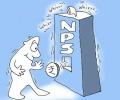
PFRDA Chairperson S Ramann announced an ambitious target to add 2-3 crore new subscribers to the National Pension System (NPS) within the next two years. This growth will be significantly driven by the new 'NPS Tatkal' scheme, which enables direct enrolment and contributions via UPI applications, making the pension system more accessible, especially in tier 2 and tier 3 cities and for the informal sector.

The Finance Ministry has clarified that the 0.4 per cent Merchant Discount Rate (MDR) on UPI transactions above Rs 2,000, effective October 15, is not expected to increase cash transactions or cause inflation. The ministry also dismissed allegations of US pressure influencing the decision, asserting that the policy aims to promote RuPay credit cards within the UPI ecosystem, and a monitoring mechanism will ensure the MDR burden is not passed on to consumers.
Punjab & Sind Bank MD and CEO Swarup Kumar Saha clarified that merchants cannot pass on Merchant Discount Rate (MDR) charges to customers for UPI payments, ensuring consumers only pay the displayed price. The new MDR structure, effective October 15, applies a 0.4% charge on P2M transactions above Rs 2,000, with specific flat rates for certain sectors, but small-value transactions remain free.
