
The details of the transition from defined rays in the corona, the Sun's upper atmosphere, to the solar wind have been, until now, a mystery.

"We have been able to detect NASA's Lunar Reconnaissance Orbiter (LRO) and the Indian Space Research Organisation's Chandrayaan-1 spacecraft in lunar orbit with ground-based radar," said Marina Brozovic, a radar scientist at JPL and principal investigator for the test project.

'I like to sell a dream. I like to tell stories. I'm a very good storyteller. I can convert the most boring topic into a riveting tale.'

Roscosmos Cosmonauts Sergey Prokopyev and Dmitry Petelin and NASA Astronaut Frank Rubio -- crew members on the International Space Station -- landed in a Soyuz MS-23 space capsule in a remote area near Zhezkazgan, Kazakhstan, September 27, 2023.

An analysis of rock samples collected by the Curiosity rover indicates that Mars could have supported living microbes, the American space agency NASA has said.
The space agency officials said that its operations were not interrupted by the incident. NASA employees watched the drama on television as they were locked down.

From Star Wars to Santa to Alia Bhatt, OTT has a variety of entertainment to offer for all ages this week. Sukanya Verma lists her recommendations.

Members of the International Space Station Expedition 44 crew are undertaking a first for humanity: tucking into greens grown right there on the space station, in zero-gravity.
Organic molecules essential for life have been detected in another hot gas planet outside the solar system, within a year by scientists from the National Aeronautics and Space Administration.
'Two nations would continue to pursue shared interests in space that includes collaboration on safety and security in space'

If all goes on well, the NISAR satellite will be launched in 2021 from India using the Geo-synchronous Satellite Launch Vehicle (GSLV).
Mars rover Opportunity has found evidence indicating that the planet had water. But no signs of life have been found far.

The solar-powered spacecraft which left Earth five years ago finally reached its destination and entered into Jupiter's orbit.

Globally averaged temperatures in 2017 were 0.90 degree Celsius warmer than the 1951 to 1980 mean, according to scientists at NASA's Goddard Institute for Space Studies in New York. That is second only to global temperatures in 2016.

Ahead of this momentous event, learn why the spacecraft won't be stopping at the dwarf planet and much more.

NASA has released new global maps of Earth at night.
Cassini has become the first to orbit Saturn, the second-largest planet in the solar system.
Saatvik Agarwal, a standard X student at Amity International School in South Delhi, is among the 16 students selected from all over the world through a global contest.

As India celebrated its success in testing an unmanned space crew module on Thursday, over 1.7 lakh Indians had another reason to be happy as a similar National Aeronautics and Space Administration spacecraft carrying a microchip containing their names was brought back safely to the Kennedy Space Center in Florida, United States, on the same day after a space odyssey.

Group Captain Shubhanshu Shukla Shukla says Wing Commander Rakesh Sharma -- the first Indian to travel to space --has been advising him about the space flight.
A six-and-a-half tonne defunct climate satellite that has been circling the Earth for the past 20 years will make a fiery death plunge this week, NASA officials have warned.
Sainudeen Pattazhy, who teaches in a local college, was informed on Wednesday by Jet Propulsions Laboratory of the California Institute of Technology under NASA that minor planet '5178 No CD4' had been named after him. The planet was discovered by US-based scientist Rajmohan in 1989, Sainudeen said.

NASA's Kepler mission has confirmed the discovery of its first rocky planet, which measures 1.4 times the size of Earth and is the smallest planet ever discovered outside the solar system.
As it cruises toward the comet, Deep Impact will observe five nearby stars with 'transiting exosolar planets,' so named because the planet transits, or passes in front of, its star.

A preliminary analysis of the image shows two distinct layers of haze.
Having conquered the moon long time ago, the NASA now plans to send astronauts to Mars -- in what is called a journey which will cover hundreds of millions of miles and no less than two-and-a-half years of roundtrip.The way to Mars, it seems, is through the moon, says a report in CBS News.

Started in August 2013 as a technology development project at NASA's Jet Propulsion Laboratory, the Mars Helicopter had to prove that big things could come in small packages.

For the two month project, 12 men and 12 women will spend their days and nights in beds angled downward by six degrees, propped up with their feet at an incline above their heads.

Located in Titan's stratosphere, the cloud is made of a compound of carbon and nitrogen known as dicyanoacetylene (C4N2), an ingredient in the chemical cocktail that colours the giant moon's hazy, brownish-orange atmosphere.
Take a look at these absolutely superb pictures from space, as seen by NASA.

Scientists have recorded haunting sounds cast by Jupiter's auroras, captured by NASA's solar-powered Juno spacecraft during its first full orbit around the king of planets.

A Haryana student has been selected for a three-year astronaut training programme of National Aeronautics and Space Administration in the United States.
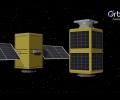
'It is our duty to keep space sustainable and free of debris.'

The reddish polar region on Pluto's largest moon, Charon, is an effect of methane gas escaping from the icy dwarf planet's atmosphere, say scientists who solved the mystery behind the coloured region first spotted by NASA's New Horizons spacecraft last year.
Using Instagram, NASA posted some out-of-the-world images. Here's a look.


The much-hyped moon show that had been expected to accompany the impact, however, turned out to be a flop, as no billowing plumes of dust and ice were visible through backyard telescopes or on NASA TV.
"Blanketing around 100 million people, primarily in the Ganges Valley, the pollution levels are about five times larger than those typically found over Los Angeles," NASA said in a release.

A National Aeronautics and Space Administration astronaut has taken an incredible selfie from space with Earth in the background while performing repairs on the International Space Station on Christmas Eve.
