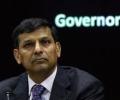
Experts applaud RBI governor RAghuram Rajan for his good work.

For a long time, the Indian economy has been drifting without a credible monetary anchor.

The government on Tuesday attributed higher economic growth projected in the mid-year economic analysis for this fiscal than the Economic Survey to robust economic expansion in the first half.It, however, cautioned against the impact of fragile European recovery on Indian economy.
The government on Monday lowered the growth projection for the current financial year to 5.7-5.9 per cent from 7.6 per cent estimated earlier, while pitching for supportive monetary and fiscal policies to improve investor confidence.

Public investment is very crucial for GDP growth, says finance ministry.

The government has last month significantly liberalised the FDI regime, putting most of the sectors on the automatic route

Economy showing mixed signals, outlook challenging: FinMin

The government on Friday lowered its economic growth forecast.

Noted economist Arvind Subramanian is favoured as the choice for the government's Chief Economic Advisor (CEA).

Assocham said even if an investment revival were to happen, it would be a time lag of at least 18 months before it reflects in the manufacturing sector.

The Analysis lists a number of steps taken by the government that have contributed to both positive short-term outcomes, such as lower food inflation, and the capacity for more equitable growth, through financial inclusion.

The government was exploring options to secure higher dividend payment from state-run companies.

In December, govt had lowered its growth forecast for 2015-16 to 7-7.5%

Jaitley's team presents a quintessential mix of foreign-educated, intellectual technocrats and seasoned bureaucrats

Economists have cautioned that any deferment of the government's fiscal goals would prove counter-productive and raise the interest payment burden.

An asset swap can simultaneously boost public investment, reduce the fiscal deficit and keep fiscal policy from being pro-cyclical.
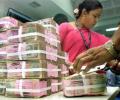
Capex for next year expected to be up 25% to Rs 3 lakh crore

Chief economic advisor Arvind Subramanian discusses the Budget, goods and services tax, Centre-state relationship and larger issues facing the economy

The road ministry has put forward two proposals before the Prime Minister's Office and the finance ministry.

In 2014-15, capital expenditure in the April-September period was Rs 99,100 crore.

The government has retained Arvind Subramanian as its chief economic advisor, unlike other American professors Dr Raghuram Rajan and Arvind Panagariya, who quit their jobs as RBI governor and NITI deputy chairman respectively.
He used an old rule to cut the expenditure allotted to various ministries.

The government had committed to increasing spending in infrastructure

For PPP projects, clause on consent requirement could be abolished or brought down to 50% of land owners, against the current 70%

India said its economy grew 7.3 percent in the October-December quarter.
Modi govt faces extra spending burden due to policies like 7th Pay Commission and OROP
In its mid-year analysis of Indian economy, the government said high inflation, which was a major concern, has started declining and hoped that it may fall to 6 per cent by March, 2011 from over 8 per cent now.
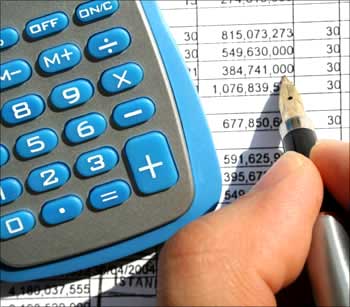
Credibility of fiscal promises is a virtue that no finance minister can afford to lose.

The Budget chose to stick to an ambitious disinvestment programme for 2016-17.

He was most recently credited as one of the brains behind labour law reforms in Rajasthan

The outgoing Chief Economic Advisor will always be remembered for his remarkable passion, his large imprint on policymaking and the high level of public debate he fostered
.jpg)
The rupee and equity turmoil seem over, with interest shifting to key personnel changes and 2014 polls.

Room for rise of up to 2 percentage points, move to help meet higher expenditure need in FY17

'There are two pre-conditions for big reforms. One, a sense of crisis and second, fairly concentrated levers of power.' 'India is growing at 7.5 per cent or something close to that.' 'Our levers of power are decentralised, not just between the Centre and states. Power is dispersed and there is no sense of crisis.'

Taxpayer satisfaction is a part of the matrix of key performance indicators of the administration.
 © 2026 Rediff.com - Advertise with us - Disclaimer - Privacy Policy - Sitemap - Feedback - About us - Terms of use - Grievances