Its says reconsider lower reserve price, uniform usage charges; GSM players to bear the brunt.

Raises cap of market share for merged entity to 50%, spectrum trading allowed, with riders.
These circles account for 23 per cent of Bharti's revenues and armed with additional spectrum, it will eat into rivals' share

The author examines whether government levies on these critical inputs are beneficial or detrimental.

The Department of Telecom has put on block around 385 MHz of radiowaves in the 1800 MHz band, and 46 MHz in the 900 MHz band.

Government's resolution on the contentious issue of spectrum usage fee seems to have found favour with telecom operators with none of them withdrawing their application from airways auction on the last day on Monday.

Move to help India export hi-end vehicles.
Company now plans to use 1800 MHz band spectrum as the primary wave while the 2300 Mhz wave will be supplementary for enterprise customers.
The auctions for spectrum in the 900 MHz and 1800 MHz bands came to an end on Thursday after 10 days of aggressive bidding by the country's major telecom operators.

RIL has signed an infrastructure sharing agreement with Reliance Communications (RCom, of the Dhirubhai Ambani group) to launch its services.

Airtel rolls out fourth-generation (4G) data service across 296 cities.
Operators with more than 6.2 MHz of spectrum in GSM will have to cough up more if the Telecom Regulatory Authority of India has its way. Trai is recommending sweeping changes in the country's telecom landscape by replacing the current subscriber-based allocation of 2G spectrum.
.jpg)
TC at its meeting here recommended to an Empowered Group of Ministers that reserve price for pan-India 1800 MHz spectrum be fixed 15 per cent higher than Trai suggested rates.

RJio is targeting the existing base of high-value customers.

About Rs 52,500 crore (Rs 525 billion) has been offered as of the fourth day of the ongoing wireless spectrum auction on Thursday, with metros like Delhi seeing renewed demand for airwaves.
The Department of Telecom has asked the Group of Ministers on telecom spectrum to direct the Ministry of Defence to immediately release 20 Mhz spectrum in the 1,800 Mhz band for mobile phone operators.
A recent note based on the audit said telecom companies such as Bharti Airtel and Idea Cellular had demanded additional spectrum, based on subscriber-linked criteria for meeting the quality parameters of the Telecom Regulatory Authority of India before the spectrum auction decision was taken.

In what could be one of the largest launches in the telecom services space, Reliance Jio Infocomm is set to roll out its 4G LTE services in 800 Indian cities between April and June next year.

The Jio-Bharti battle will not just be limited to mobile telephony but will extend to the fibre to home space too.
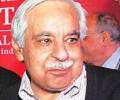
Within a week of the Telecom Regulatory Authority of India giving its final recommendations on the valuation and pricing of spectrum, Chairman Rahul Khullar speaks to Business Standard on the process the regulator followed in finalising the much-debated issue.

The government has 97 blocks of 1.25 MHz spectrum each, which DoT can put on the block in the third round.

Airtel already offers services in Sri Lanka, Bangladesh and 17 African countries apart from India.
The government has held back allocating additional spectrum to Bharti Airtel in Orissa, in view of the telecom tribunal's recent judgment that GSM operators have no vested right to get airwaves beyond 6.2 MHz.

Idea may have to shell out Rs 4,500 crore in cash
The government is expecting Rs 20,000 crore (Rs 200 billion) from the second round of spectrum auction later this fiscal,

Today is the last date for submitting the applications and companies have the option to withdraw them by January 27.

The Big Two telecom companies have accelerated their moves towards this next-gen technology, though they have chosen very different routes to getting there.

The government on Friday said it would be able to meet the budgeted target of earning Rs 40,000 crore from the telecom sector this financial year, even as the response to the recently concluded auction of 1,800-MHz band spectrum was lukewarm.
The second round of spectrum auction will begin in March after the Cabinet decides on reducing reserve price of 800 MHz band, used for offering CDMA-based mobile services.
The government is learnt to be preparing fresh plans to auction telecom spectrum that can fetch around Rs 39,895 crore.

A presentation by the CBI to a Joint Parliamentary Committee last week said the decision led to a loss of Rs 508 crore to the exchequer.
.jpg)
The inter-ministerial body will take the final decision on October 29 taking into account Trai's reply.

TRAI may recommend the DoT to levy one-time non-refundable fee of Rs 50,000 per operator for each service area in which they opt for spectrum sharing.

Multiple disputes to ensue; auction begins today, but will do little to quell uncertainty.

Cabinet defers decision on fee for additional spectrum with CDMA players.

To revive the two state-run telecom operators, Bharat Sanchar Nigam Limited (BSNL) and Mahanagar Telephone Nigam Ltd (MTNL), the government is likely to waive the one-time fee these telcos need to pay for retaining additional spectrum.
Foreign operators may fail to provide quality 3G services, unlike their Indian counterparts, as the Department of Telecommunications is offering spectrum in tranches of 5 MHz, which is insufficient for starting operations.
Operators say no option but to challenge it in court, decision on refarming deferred
The empowered group of ministers (EGoM) on telecom headed by Finance Minister P Chidambaram on Monday decided to impose a one-time fee on incumbent operators prospectively for spectrum beyond 4.4 MHz in GSM and 2.5 MHz in CDMA.

The Department of Telecom (DoT) has recommended levying a one-time fee on existing mobile operators for spectrum they may hold in excess of 6.2 Mhz limit to garner at least Rs 22,640 crore.
