
India's organised gold jewellery retail sector is projected to experience a 13-15 per cent year-on-year decline in sales volumes this fiscal, following an 8 per cent drop last year, due to elevated gold prices and a recent import duty hike, according to a Crisil report.

The Reserve Bank of India's Monetary Policy Committee (MPC) has commenced its three-day meeting, with a majority of economists and bankers anticipating a 25 basis point rate hike to counter escalating inflation risks, particularly from West Asia conflicts.

India's economy in FY26 saw significant momentum from investment demand, with gross fixed capital formation (GFCF) accelerating to 8.2 per cent, while private final consumption expenditure (PFCE) also grew steadily, according to provisional estimates.

Companies are already diversifying sourcing, raising prices, and reworking operating models as the disruption drags on.

India's retail inflation, measured by the Consumer Price Index (CPI), increased to 3.48 per cent in April, up from 3.40 per cent in March, primarily due to a surge in prices of gold and silver jewellery, as well as certain kitchen staples like tomatoes and cauliflower.

Supported by strong buoyancy in public sector capital expenditure (capex), growth in infrastructure investment is expected to accelerate in 2025-26 (FY26) compared to 2024-25 (FY25), according to the First Advance Estimates of gross domestic product (GDP) for FY26 released by the National Statistics Office (NSO) on Wednesday.

The sweeping tariffs proposed across sectors by US President Donald Trump are scheduled to be imposed starting April 2, with most analysts worried about their impact on companies, and in turn the financial markets. Recently, the US administration signaled that it will impose sectoral tariffs on energy, pharmaceuticals, semiconductors, agriculture, copper, and lumber.

India's top cement producers delivered a solid July-September quarter (Q2) in 2025-26 (FY26), lifted by firmer prices, higher sales volumes, and a favourable base. Seasonal weakness and maintenance outages did dent sequential performance, but the overall picture remained positive - and the road ahead looks steady.

Revenues from Bangladeshi patients have declined by 30% to 35% in 2024-2025. Bangladesh typically accounts for 70% to 75% of all medical visas issued by India.

India's consumer price index (CPI)-based retail inflation rate is likely to have cooled further in June, thus remaining below the 4 per cent target of the Reserve Bank of India (RBI) for a fifth consecutive month, giving the central bank wiggle room to focus on growth. Economists reckon that the decline is on account of easing prices in various categories of goods, especially food items, and a favourable base effect.
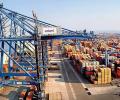
State-owned Life Insurance Corporation (LIC) on Thursday entirely subscribed to the Rs 5,000 crore bond issue of Adani Ports and Special Economic Zone (APSEZ) at a coupon rate of 7.75 per cent, said sources privy to the development.

Despite the benefits of hybrid technology, a lack of government backing and few launches have kept the segment from gaining ground.
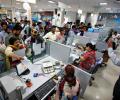
In 2025 banks are in for challenges such as pressure on margins and slowing credit growth. With the likelihood of a repo rate cut in February or April, external benchmark-linked loans of banks will be repriced immediately. However, deposit rates are expected to adjust more gradually, which could impact the net interest margin (NIM) - a key measure of profitability for banks.

The revenue growth of Indian companies for the July-September quarter is estimated to be 5-7 per cent year-on-year (Y-o-Y), marking the slowest growth in 16 quarters, rating agency CRISIL said on Thursday.


Corporate India's credit quality showed a sharp improvement in the second half of FY22, but high input prices and withdrawal of pandemic-related relief measures can pose pressures in the new year, rating agencies said on Friday. Crisil Ratings, which rates a large number of financial sector entities, reported an improvement in the credit ratio -- the number of upgrades to downgrade -- to 5.04 times in the second half of this financial year, from the 2.96 per cent in the first half of the fiscal. It attributed the improvement to a sustained rebound in demand, which lifted revenues of most sectors to pre-pandemic levels and proactive relief measures by the government that cushioned the pandemic blow.

Amid low growth elsewhere, gross value added (GVA) growth in agriculture and allied activities recovered during the second quarter of the current financial year (Q2FY25) to 3.5 per cent year-on-year (Y-o-Y) due to strong monsoon. Experts feel that the rains have laid the foundation of an even better GVA performance in subsequent quarters. GVA growth in the first quarter of FY25 was 2.0 per cent.

The cost of a representative home-cooked vegetarian thali has witnessed a 5 per cent on-year increase in January, while that of the non-veg thali declined 13 per cent, a report said on Wednesday. According to Crisil Market Intelligence and Analytics (MI&A) Research 'Rice Roti Rate' estimates, the rise in prices of ingredients like pulses, rice, onion and tomato made home-cooked veg thali costlier in January, while decline in poultry rates helped in the fall in non-veg thali rates.
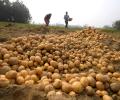
Amid the political blame game over Bengal's potato ban, which led to shortages in Jharkhand and Odisha, Uttar Pradesh farmers are the unlikely winners.

Crisil Research expects retail inflation to rise 60 basis points to 4 per cent this fiscal from 3.4 per cent in 2018-19.

Revenue from divestment has fetched Rs 40,000-50,000 crore against target of Rs 2.10 trillion.

The Department of Investment and Public Asset Management (Dipam) has asked ministries, government departments, and public sector undertakings (PSUs) to send a list of assets that can be monetised under the proposed National Monetisation Pipeline. The list will be used for creation of an asset monetisation dashboard, which will keep a track of such assets. The government, meanwhile, has asked CRISIL to prepare a road map for monetising assets of PSUs and government departments.

Real estate development on Mumbai airport land and the work on Navi Mumbai airport have been inordinately delayed, which have prompted rating downgrades and raised questions on its financial capabilities. It is also trying to stave off Adani group's entry as a shareholder in the Mumbai airport project.

In spite of a severe second wave of the coronavirus pandemic, and a widespread disruption in public life therefore, India's fast-moving consumer goods (FMGC) sector seems to have emerged as one of the most resilient segments of the economy. The early numbers and estimates for the April-June quarter indicate a steady recovery in FMCG players' business, which is now set to exceed the pre-pandemic level. Amid nationwide lockdowns because of the first Covid wave, FMCG revenues had been severely affected in mid-2020.

Even as the semiconductor shortage has limited the demand for new cars, the pre-owned car segment is seeing a surge. A preference for personal mobility, availability of multiple organised online platforms, including e-commerce channels, aggregators, and classifieds, have been fuelling growth. The growth rate of the pre-owned car market is expected to be 1.5x that of the new car market over the next five years.

Ace investor Rakesh Jhunjhunwala on Thursday said real estate developers are afflicted with very low return on capital as compared to bluechip stocks. Jhunjhunwala, who runs RARE Enterprises and is set to be a major shareholder in an upcoming airliner, said only the affordable housing developers can look at listing because of the volumes which they can deliver. It can be noted that very few developers like Macrotech Developers formerly Lodha, and DLF are listed on the bourses. Jhunjhunwala cited the case of DLF, saying the stock price plummeted to Rs 80 from Rs 1,300 per piece to illustrate the risks associated.

'The levy proposed to be charged on air tickets for regional connectivity fund would marginally increase cost.'

A digital economy can only work with uninterrupted electricity supply. So, states now face the unpleasant task of telling their citizens that electricity rates need to be hiked. Subhomoy Bhattacharjee reports.

The RBI governor's assurance should give investors enough confidence to start believing in the NBFC sector again, say bankers.

Rogue lending under political influence was rife in the Congress-led regime and is not happening in the Modi regime, certainly not on that scale. But if PSBs cannot lend as indiscriminately as they did last time in the name of 'credit expansion', how well will these banks do, asks Debashis Basu.

Metals bucked the trend and shone across the board.

Bharti Airtel called the prices exorbitant while Vodafone Idea wants the auctions take place in 2020. The auctions need to happen when the infrastructure is ready for the roll out, be it in terms of fiberisation levels, or optimisation of equipment and software etc. Spending a hefty amount on a technology (airwaves) that at present offers limited returns is not going to be a priority for the incumbent telcos.

HDFC twins, Axis Bank, ICICI Bank and SBI from the financial space gained between 1-2.7%.

The government will release the Index of Industrial Production for July 2015 on Friday, September 11, 2015.

The revision of the consumer price index and GDP base years from 2011-12 and 2012, respectively, were dependent on the outcomes of the consumer expenditure survey of 2017-18 that the government decided to junk recently.

The BSE Midcap and the BSE Smallcap indices pared all intraday gains to end 0.3% and 0.5% lower

The GDP slumped to a three-year low lagging China for the second straight quarter -- as manufacturing slowed ahead of the GST launch amid demonetisation effect.

Participants are keenly waiting for the January IIP.

Tata Motors was the top gainer on better-than-expected June quarter revenues

The S&P BSE Sensex ended up 28 points at 25,844 and the Nifty50 ended flat at 7,915.
