
The Nikkei Markit India Manufacturing Purchasing Managers' Index (PMI) -- a gauge of manufacturing performance -- fell to 52.3, down from October's 22-month high of 54.4.

Services companies continued to raise prices, though the rate of change was the weakest since April

'Some of the launches may get deferred due to the semiconductor shortage, which is unlikely to get resolved before the second half of 2022.'

During March, the rate of inflation slowed to the weakest in four months and was below the long-run survey average

First-time buyers of cars and sport utility vehicles (SUVs) have made a comeback, shows last year's data from top passenger vehicle (PV) makers. If the trend persists, it may move the needle on the overall car penetration ratio. India's car penetration ratio is 32 per 1,000 people - one of the lowest, compared to mature car markets like the US and Europe.

For automakers, the festive season is about raking it in through ramped up sales and attractive consumer offers. However, despite the robust demand, what may spoil the party this year is a global shortage of semiconductors.

Through a combination of local manufacture and imported CBU models, the company makes and sells four SUVs, one hatchback, and one sedan.

India's services sector activity expanded at a slower pace in December as rates of growth in sales eased to a three-month low and staff hiring came to a halt amid weak business optimism, a monthly survey said on Wednesday. The seasonally adjusted India Services Business Activity Index fell from 53.7 in November to 52.3 in December. The index was above the critical 50 mark that separates growth from contraction for the third month in a row during December, but pointed to the slowest pace of expansion in the three-month sequence.
Services sector slowed down in May on weak economic factors.
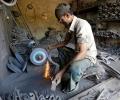
Supported by greater demand from both domestic and external markets, total new business rose at the fastest pace since March

Bolstered by improved domestic demand, India's services sector expanded for the fourth consecutive month in January as business activities quickened and rising business optimism is set to sustain the growth momentum, a monthly survey said on Wednesday. The seasonally-adjusted India Services Business Activity Index rose from 52.3 in December to 52.8 in January, pointing to a quicker expansion in output. The index was above the critical 50 mark that separates growth from contraction for the fourth month in a row during January.

A reading above 50 denotes expansion while one below means contraction.

The 30-share Sensex ended up 106 points at 20,898 and the 50-share Nifty ended up 42 points at 6,217.

NSE Nifty finished higher by 46.05 points, or 0.39 per cent, at 11,707.90. Asian Paints was the top gainer in the Sensex pack, rallying 6.32 per cent, followed by Nestle India, HUL, Bajaj Auto, IndusInd Bank, Tata Steel, Maruti and PowerGrid.
After contracting for 3 consecutive months, manufacturing activity saw an uptick in November, latest data from the HSBC Purchasing Managers' Index shows.

The recovery in the Indian services sector was sustained in November as new work orders supported business activity growth and the first rise in employment in nine months, a monthly survey said on Thursday.

The HSBC Manufacturing Purchasing Managers' Index fell to 51.3 in April from March's 52.1

Companies are also worried about inflationary pressures building up.
Global manufacturing contracted in June for the second consecutive month.

With only a handful of models by a few manufacturers including Tata Nexon, MG ZS, Hyundai Kona, among others, the segment has remained under tapped.
The improvement, coupled with the positive findings of Monday's survey on Indian manufacturing, augurs well for Asia's third-largest economy, which grew at a higher-than-expected 4.8 per cent annual rate in the three months through September.

Although the country's manufacturing growth rate fell to its lowest in over four years last month, the export orders picked up and both input and output inflation eased, as per a monthly Purchasing Manager survey conducted by HSBC India and financial information provider Markit.

Audi's strategy seems to point to pushing technology to directly connect with consumers using digital platforms and marketing to synchromesh into one seamless experience, says Pavan Lall.
European Commission charges follow a two-year investigation.

If one leaves aside 2016, when sales declined 4.68 per cent, the pace of growth in 2018 is the slowest in a decade, according to IHS Markit, a sales forecast and market research firm.
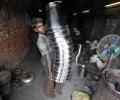
Factory growth picked up in May.
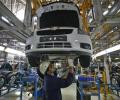
The pace of economic growth in emerging markets continued to revive from the stagnation seen earlier in the year.

Close to half a dozen more three-row premium mid-size models are expected to hit the road over the next two years.

Firms seem to have adopted a wait-and-see approach on their plans until public policies become clearer upon the formation of a government.
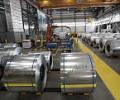
Recent reform measures announced by the government expected to boost the sector.

Cars priced above Rs 25 lakh account for 1 per cent in India's 3 million-car market and the share has remained unchanged over the last five years.

It also retained its position among the 'Big 4' most valuable IT services brand worldwide -- in the ranking carried out by Brand Finance, the world leading brand valuation firm.

India's services sector activity expanded in May and the pace was the fastest in three months, driven by uptick in new orders, an HSBC survey said on Wednesday.
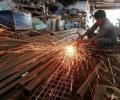
Reflecting a loss of "growth momentum", manufacturing activities in the country slowed down to a six-month low in March amid softer increases in new orders, production and employment, according to a survey.


Close to 50 models were launched in India in the past 12 months, but companies have not been able to realise their potential due to the pandemic.
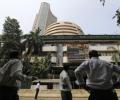
Top gainers in the Sensex pack included IndusInd Bank, ITC, L&T, M&M, PowerGrid, Asian Paints and SBI, ending up to 3.79 per cent higher.
Time was when you turned on your car's ignition, all that happened was that the mechanical system fired up your engine and made it run. Today, the moment you do so, your stereo system probably lights up, connects to the Bluetooth on your smartphone, and lets you make calls through an audio assistant or play music from your phone, which you can hear on the car's speakers. All these smart features in a car are powered by semiconductors, or chips, as they are commonly called.

The new tax regime has also been fuelling sale of SUVs, particularly the compact SUVs

This is the 22nd consecutive month that the manufacturing PMI has remained above the 50-point mark.
