
Factory growth picked up in May.
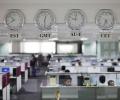
Strong new business growth was the primary factor.
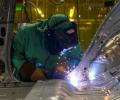
The headline seasonally adjusted IHS Markit India Manufacturing Purchasing Managers' Index (PMI) fell to a two-year low of 50.6 in October from 51.4 in September.

Currency scarcity weighed on manufacturing performance where growth of new work flows slowed
Broadly stagnant sales causes the first drop in business activity in over a year.

India's services sector activity surged to a seven-year high in January driven by sharp increase in new business orders, leading to job creation and business optimism amid favourable market conditions, a monthly survey said on Wednesday. The IHS Markit India Services Business Activity Index rose from 53.3 in December to 55.5 in January, signalling the strongest upturn in output in seven years.

India's manufacturing sector activities improved in September as companies benefited from strengthening demand conditions amid the easing of COVID-19 restrictions, a monthly survey said on Friday. The seasonally adjusted IHS Markit India Manufacturing Purchasing Managers' Index (PMI) improved from 52.3 in August to 53.7 in September, indicating a stronger expansion in overall business conditions across the sector. The September PMI data pointed to an improvement in overall operating conditions for the third straight month. In PMI parlance, a print above 50 means expansion while a score below 50 denotes contraction.

The IHS Markit India Services Business Activity Index improved from 52.7 in November to 53.3 in December, highlighting the second-strongest rate of increase in output in over a year, after July. However, the overall level of positive sentiment remained below its long-run average.

The main factor boosting production was a sustained rise in new work inflows.
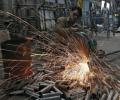
Manufacturing growth in India lost momentum in February.

The Nikkei Markit India Manufacturing Purchasing Managers' Index increased to 50.7 in February

According to the IHS Markit India Business Outlook, predictions of softer activity growth underpin the downward revisions of profit outlook, subdued hiring plans and relatively muted capital expenditure.

The Nikkei Markit India Manufacturing Purchasing Managers' Index (PMI) -- an indicator of manufacturing activity -- fell to 49.6, down from 52.3 in November, coming below the crucial 50 threshold which separates contraction from expansion.
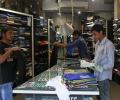
Firms said subdued demand conditions, unfair pricing among competitors and economic woes affected the sector.

New businesses have been secured from the public and private sectors, as well as domestic and international markets.

The IHS Markit India Manufacturing PMI rose from 51.2 in November to 52.7 in December. Factories benefited from a rebound in demand, and responded by scaling up production to the greatest extent since May. As per the survey, new work orders witnessed marked improvement, with the pace of expansion picking up to the fastest since July.

The main factors contributing to the above-50.0 PMI reading were growth of both new orders and output as market conditions returned to normal and led to subsequent improvement in demand.

The Nikkei Markit India Manufacturing Purchasing Managers' Index (PMI) -- a gauge of manufacturing performance -- fell to 52.3, down from October's 22-month high of 54.4.

A reading above 50 denotes expansion while one below means contraction.
Marking its quickest rise in over seven years, India's services sector activity expanded for the fifth successive month in February, tracking spike in business orders, renewed export demand and strengthening business confidence, a monthly survey showed on Wednesday. The IHS Markit India Services Business Activity Index rose from 55.5 in January to 57.5 in February. This is the fastest expansion in services output since January 2013.

The Nikkei Markit India Manufacturing Purchasing Managers' Index (PMI) -- an indicator of manufacturing activity -- declined from 52.5 in April to a three-month low of 51.6 in May.
Firms seem to have adopted a wait-and-see approach on their plans until public policies become clearer upon the formation of a government.
The coronavirus outbreak has brought a large part of the world's second-largest economy China to a standstill and its impact has been felt across industries.
Supported by greater demand from both domestic and external markets, total new business rose at the fastest pace since March

The Reserve Bank of India is expected to keep policy unchanged this week as it looks to control inflation.

During March, the rate of inflation slowed to the weakest in four months and was below the long-run survey average

Services sector slowed down in May on weak economic factors.

Services growth at 5-month low in Nov as confidence slumps.

Growth in India's manufacturing sector cooled to its slowest in 22 months in October.

A reading above 50 represents expansion while one below means contraction.

Companies are also worried about inflationary pressures building up.

Reflecting a loss of "growth momentum", manufacturing activities in the country slowed down to a six-month low in March amid softer increases in new orders, production and employment, according to a survey.
The index monitoring new business fell to a six-month low of 51.6 from March's 53.5, prompting some firms to cut jobs.

On the job front, Indian service providers continued to add to their payrolls and the sector witnessed the second-strongest increase in employment since March 2011.
The seasonally adjusted Nikkei India Services Business Activity Index fell to 50.2 in May, from 51.0 in April, pointing to the slowest growth rate in the current 12-month stretch of expansion.

India's services industry expanded at its fastest pace in eight months in October as new business rose with discounting probably stoking demand, a survey showed on Wednesday.

The Nikkei India Services Purchasing Managers' Index (PMI), which tracks services sector firms on a monthly basis, stood at 48.7 in January, as against 46.8 in December 2016.
However, predictions that economic conditions will normalise after the elections underpinned optimism regarding the outlook and supported a stronger upturn in employment.
.jpg)
The subdued labour market is likely to recover.
A reading above 50 indicates expansion while a one below this level means contraction.
 © 2026 Rediff.com - Advertise with us - Disclaimer - Privacy Policy - Sitemap - Feedback - About us - Terms of use - Grievances