
Petrol price on Thursday was cut by Rs 6.07 per litre and diesel price by Rs 11.75 in Delhi as oil companies passed on a record reduction in excise duty rates to consumers. Buckling under pressure, the government had on Wednesday cut excise duty on petrol by Rs 5 per litre and that on diesel by Rs 10 a litre to give reprieve to consumers battered by record high retail fuel prices. Since states charge local sales tax or VAT not just on the base price but also on the excise duty levied by the centre, the total incidence of price reduction is higher.

Sukanya Verma shows you some indoor games you could try out.

The SME segment has been grappling with lack of liquidity and lacklustre institutional participation.

Reliance Mutual Fund has collected Rs 1,773.5 crore through the Initial Public Offering for its Equity Opportunities Fund.

Since the beginning of 2020, i-bankers have collected nearly Rs 1,800 crore by way of IPO fees. Interestingly, the India fees this year form just 1 per cent of the global fee pool of $13.7 billion from IPOs.

According to officials in the know, the government might cut the fertiliser subsidy in the next financial year. The international spot and contract prices of di-ammonium phosphate and muriate of potash (MOP) have come down in recent months.

Pace bowler James Anderson equalled an Ian Botham record when he took five wickets as England dismissed West Indies for 289 in the first innings of the first Test in Barbados on Thursday.

GST mop-up likely to fall in May, June after touching record levels in April and March.

E-way bill generation, which is related to paying Goods and Services Tax (GST) and a key high-frequency indicator of economic activity, may have fallen to a five-month low in April as more cities experience lockdowns due to a surge in Covid-19 cases. In April e-way bill generation may decline to 55-58 million, which is the lowest since at least November. On the higher side, it is a 17 per cent decline over March.


Faced with a problem of suitable brides, Thamizhnadu Brahmin Association to cast net in UP and Bihar.

As per the data released by the Central Board of Direct Taxes today, the growth in corporate income tax logged in a healthy 21 per cent growth to Rs 51,627 crore (Rs 516.27 billion) as against Rs 42,685 crore (Rs 426.85 billion) in year-ago period.

GST revenue for the month of June stood at Rs 92,849 crore, a 2 per cent increase over the same month a year ago, the Finance Ministry said on Tuesday. The gross GST revenue collected in the month of June 2021 stands at Rs 92,849 crore of which central GST is Rs 16,424 crore, state GST Rs 20,397, Integrated GST Rs 49,079 crore (including Rs 25,762 crore collected on import of goods) and cess is Rs 6,949 crore (including Rs 809 crore collected on import of goods), the ministry said. The GST revenues for the month of June 2021 are 2 per cent higher than Rs 90,917 crore collected in June 2020.
Riding on a buoyant economy and better tax compliance, gross tax revenue collections are likely to surpass the Rs 6,00,000 crore (Rs 6000 billion) mark in 2007-08. In other words, tax revenue is expected to double compared with Rs 3,04,958 crore (Rs 3049.58 billion) in 2004-05.

Following the success of the Rs 4,050-crore Wadala land deal in central Mumbai, at least three government agencies are planning to sell plots worth at least Rs 60 billion (Rs 6,000 crore) in the next two months.

India witnessed 22 initial public offers worth over $2.5 billion in the first three months of 2021 amid "high momentum" in the country's capital markets and the trend is likely to stay bullish in the current quarter also, according to a report. Leading consultancy EY India's IPO (Initial Public Offer) report released on Wednesday showed that consumer products and retail, diversified industrial products, automotive and transportation were the most active sectors in terms of the number of IPOs in the 2021 first quarter. The IPOs include both in the main as well as SME (Small and Medium Enterprise) markets.

CBDT has been given a collection target of Rs 5.69 trillion in personal income tax in the fiscal year 2019-20 - 19.2 per cent more than the Rs 4.77-crore collection in the previous year.

Will 2022 be a year of contrasting narratives -- one filled with caution and the other with continued optimism?

Kerala Finance Minister K N Balagopal has sought systemic changes in the GST structure, saying every state and consumer has lost because of its basically flawed architecture that has also led to rampant revenue leakage for the states. The Goods and Services Tax (GST) regime came into force in July 2017. Even though the framework is focused on having a one-nation-one-tax model, quite a few items, including petroleum products and liquor are still out of the GST purview.
Divestment Minister Arun Shourie informed the Lok Sabha on Wednesday that during April 1991 and March 2003, Rs 29,487 crore (Rs 294.87 billion) have been realised as divestment proceeds.
'The kind of tax which will be generated from the second pillar may far outweigh what we may be losing in the first pillar.'
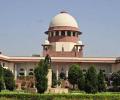
The Centre expressed its inability before the SC in formulating the draft Memorandum of Procedure for appointment of judges.

The QIP route was a big hit.

The government has revised its divestment target downwards from Rs 2.1 trillion, as its ambitious privatisation programme has been deferred to next year.

Stating that the fight against COVID-19 is at the final stage, Union Health Minister Mansukh Mandaviya on Thursday cautioned against letting the guard down before it is completely over and requested states to enhance the vaccination coverage and motivate the over 12 crore beneficiaries who are due for their second dose to take it.
The Finance Ministry on Friday said indirect tax collections are likely to cross Rs 2,00,000 crore (Rs 2000 billion) this fiscal, well above the target of Rs 1,92,215 crore (Rs 1922.15 billion).

The Supreme Court is likely to pronounce on Wednesday the verdict on bringing transparency in the collegium system of appointing judges in higher judiciary.

While divestment through IPOs saw an over 90 per cent drop as compared to the previous financial year, the exchange traded fund (ETF) route proved to be a shot in the arm for the government, reports Sundar Sethuraman.

Headline inflation will come down under the 6 per cent mark in July itself but will stay at an elevated level of over 5 per cent for some time, Chief Economic Advisor K V Subramanian said on Thursday. Such an outcome will get the price rise back into the upper-end of the target band given to RBI, he said, adding that consumer price inflation had breached the mark for three consecutive quarters last fiscal because of supply side issues like challenges in movement of goods. "With reasonable probability, I expect this month the (inflation) print to come less than 6 per cent," Subramanian told a conference organised by industry lobby Ficci. Right after data for May showing inflation at 6.4 per cent had come out, Subramanian said he had predicted it will cool down in internal meetings and also during "deliberations with the regulator".

The activation of diplomatic channels is likely to yield better results than a simmering hostility, recommends Ajai Shukla.

For the first time, consumers, including those at the so-called bottom of the pyramid, are monetising gold by taking loans from banks, offering the yellow metal as collateral, says Tamal Bandyopadhyay.

The sudden movement of the rupee - post the monetary policy - is not a reason to panic, said currency dealers. According to them, a correction was overdue for the rupee that remained the best performing currency in the region for well over a month. The rupee closed at 74.72 a dollar on Friday from its previous close of 74.60. It had dropped 1.52 per cent against the dollar on April 7 after the Reserve Bank of India (RBI) announced its monetary policy, committing to buy Rs 1 trillion of bonds in the June quarter. A weak rupee goes well with the export narrative of the government, and is consistent with the RBI's intervention strategy that prevented an appreciation.
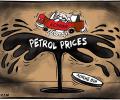
Petrol and diesel prices on Thursday climbed to fresh highs in the country as rates were hiked by the most in recent times, even as fuel retailers said the government can cut taxes to ease consumer burden. Petrol and diesel price was hiked by 35 paise per litre each after a gap of a week, according to price notification of state-owned fuel retailers. The increase took petrol prices to a fresh high of Rs 86.65 a litre in Delhi and to Rs 93.20 in Mumbai.

The government on Monday budgeted Rs 1.75 lakh crore from stake sale in public sector companies and financial institutions, including 2 PSU banks and one general insurance company, in the next fiscal year beginning April 1. The amount is lower than the record Rs 2.10 lakh crore which was budgeted to be raised from CPSE disinvestment in the current fiscal year. However, the COVID-19 pandemic impacted the government's CPSE stake sale programme, and the target has been lowered to Rs 32,000 crore in the Revised Estimates.

The vacancies are learnt to be impacting the I-T department's day-to-day functioning.

Under the GST law, states were guaranteed to be paid for any loss of revenue in the first five years of the GST implementation from July 1, 2017.
Industry body Assocham on Monday said service tax is likely to fetch Rs 60,000 crore (Rs 600 billion) by 2010 if government doubles the existing service tax list of 72 items.
India could attract as much as Rs 4,000 crore (Rs 40 billion) in foreign direct investment in real estate by 2010 if certain Acts pertaining to Urban Land Ceiling, Rent Control and Land Acquisition were repealed.
