
The Barack Obama administration's Coordinator for Counterterrorism at the Department of State Daniel Benjamin, in an interaction with rediff.com on Wednesday, has admitted that the social services the Lashkar-e-Tayiba delivers through its front organisations like Jamat-ud-Dawah make the terror outfit even more insidious and dangerous.

All the four were found guilty of "conspiracy" to wage war against the government of India and sentenced to 10 years rigorous imprisonment.
Bangladesh has handed over three suspected Lashkar-e-Tayiba operatives to Pakistan, a year after they were arrested on suspicion of plotting attacks on Indian and American embassies in Dhaka, officials said.
Lashkar-e-Tayiba operative and 26/11 handler Sayed Ansari alias Abu Jundal has revealed that the terror organisation has plans to carry out at least 10 more attacks across India, for which, he had expressed his willingness to participate, police said on Friday.
At least six suspected 'masterminds' of the Mumbai terror attacks are still at large in Pakistan and there is mounting evidence of the Inter Services Intelligence's strong links to the 2008 strikes, an investigative report said on Monday.
Although three years have gone by since the National Investigation Agency was formed, the report card for India's premier agency probing cases of terror does not look all that good. But the bigger question that we must ask is whether the agency has been allowed to function in a manner that it ought to have, reports Vicky Nanjappa.
Lawyers defending seven suspects, including Lashkar-e-Tayiba commander Zakiur Rehman Lakhvi, accused of involvement in the Mumbai attacks are causing "unnecessary hindrances" in their trial by filing petitions in court, a Pakistani prosecutor has said.
Afghanistan intelligence officials believe that terror outfit Lashkar-e-Tayiba planned and carried out the terror attack in Kabul last week that killed 16 people, including six Indians.The Afghan Taliban have already claimed responsibility for the attack, during which a car bomb was triggered off and terrorists wearing suicide vests raided hotels frequented by Indians and foreigners, targeting the visitors.
Security experts wonder if the home ministry's outburst against the US is directed at seeking David Headley's extradition.
Pakistan spy agency Inter-Services Intelligence was planning recruitment of retired Indian military personnel to penetrate into the system and then use them for its anti-India activities, according to Lashkar-e-Tayiba operative David Headley.
Lashkar-e-Tayiba operative David Coleman Headley, who has pleaded guilty to charges of his involvement in the Mumbai terror attacks, would testify against his Pakistani handlers Illyas Kashmiri and Sajid Mir, a United States attorney has said.
According to a military intelligence report, it appears that the Lashkar-e-Tayiba is readying itself to carry out an all-women attack in India. Vicky Nanjappa reports.
The Lashkar-e-Tayiba is raising a group of 21 female terrorists at its training camps in Pakistan-occupied Kashmir for carrying out sabotage activities in India, army sources said on Tuesday.
NIA's investigations cover more aspects as compared to the US probe. The investigation in the US dealt with the broader role, which is alleged to have been played by Rana for the 26/11 attack. However, since it was a crime that was committed in India, the NIA has been dealing with the finer aspects of the case.
The 12-member jury of a federal court in Chicago on Wednesday began deliberations against Tahawwur Rana, charged with involvement in the Mumbai terror attacks, planning of a similar strike in Denmark and providing material support to Pakistan-based terror group Lashkar-e-Tayiba.
Hamza, wanted for his role in the attack on the Indian Institute of Science in Bengaluru and who was among those present in the control room in Karachi, Pakistan when the 26/11 attacks were being carried out in Mumbai, has been off the radar for a while now.
The Indian establishment may get a leverage while talking to American officials on bilateral efforts of counter-terrorism while the media splashes scary details about what Headley did in India, points out Sheela Bhatt
The National Investigation Agency on Friday told a Delhi court that it has been unable to get the custody of 26/11 key handler Abu Jundal, whom it wanted to interrogate for unearthing the conspiracy hatched by the Lashkar-e-Tayiba for terror strikes across India.
Pakistan's Inter-Services Intelligence had chalked out a "low-profile routine proxy operation" in India through the Lashkar-e-Tayiba but the plan was "hijacked" and turned into Mumbai attacks by an ex-Pakistan army major and terrorist Ilyas Kashmiri's men with Al Qaeda's blessings, according to a book written by slain journalist Syed Saleem Shahzad.
The NIA said it was making the plea to get the custody of Jundal alias Syed Zaibuddin from the Delhi Police, as it had registered a case on June 8 on the orders of the Ministry of Home Affairs about the alleged conspiracy hatched by the deported terrorist and others to wage war against India.
Lashkar-e-Tayiba operative David Headley has told a jury in the Tahawwur Rana trial that Pakistan Prime Minister Yousuf Raza Gilani attended his father's funeral, but the latter's office rubbished the claim.
India believes that Lashkar-e-Tayiba founder Hafiz Saeed was with 26/11 key handler Abu Jundal in the control room set up in Pakistan with some kind of 'state support', Home Minister P Chidambaram said on New Delhi.
Senior analyst B Raman on how India should react to 26/11 accused David Headley's testimony in co-accused Tahawwur Hussain Rana's ongoing trial in a Chicago court.
Against the backdrop of reports that Pakistan-based Lashkar-e-Tayiba is eyeing isolated islands in Maldives, India will soon ink an agreement with the southern neighbour to combat terror threats jointly.
Apparently gloating over the mayhem the Pakistani attackers were creating in Mumbai, Tahawwur Rana, a co-accused had proposed that nine of the ten Lashkar-e-Tayiba militants who carried out the carnage should be decorated with Pakistan's highest military award, Nishan-e-Haider.
The District court conducting the Mumbai attack trial in the United States on Wednesday ordered that some of the over dozen sealed documents presented in the court as key evidences be made public.
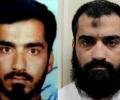
Apart from being a top ranking terrorist in the Lashkar-e-Tayiba circles, Abu Jundal is giving investigators a tough time with the speed at which he talks. Investigators say that he speaks so fast and continuously that they are finding it difficult to grasp what he says.
Security forces gunned down a Lashkar-e-Toiba militant in a fierce gun battle in the border district of Poonch in Jammu and Kashmir.
Pakistan's spy agency Inter Services Intelligence helped terror group Lashkar-e-Tayiba to execute the Mumbai terror attacks, David Coleman Headley, a key 26/11 accused who pleaded guilty to laying the groundwork for the 2008 strikes, told a court in Chicago on Monday.
A senior Maharashtra minister on Tuesday denied any links with arrested Lashkar-e-Tayiba terrorist Abu Jundal, and said she is ready to face any probe. Nationalist Congress Party leader and Minister of State for Education Fauzia Khan said, "I am not aware of who he is, where he is from. If he is a terrorist and is working against the country, it is good news that he has been arrested".
The Pakistan government presented evidence against Lashkar-e-Tayiba operations chief Zakiur Rehman Lakhvi and six other suspects before an anti-terrorism court for their involvement in the Mumbai attacks.
The confession of Lashkar-e-Tayiba operative Abu Jundal is expected to open up a can of worms regarding the Indian link to the 26/11 attacks. A source said that he has told the Delhi police that he was indeed in that dreaded control room which guided the attack.
Bringing Lashkar-e-Tayiba terrorist Hamza to India would not have been possible, had India not had the support of both the Saudi Arabia and Nepal police.
The arrest of Lashkar-e-Tayiba operative Abu Hamza may provide investigators with a lot of information about the planning and execution of the 26/11 terror strike. Hamza played a very crucial role in coordinating the attack and was instrumental in guiding the ten attackers who killed over 160 people when they struck Mumbai on November 26, 2008.
From a low level operative to one of the most dreaded Lashkar-e-Tayiba operatives. That is Abu Hamza, the man who is today finally in the custody of the Delhi Police.
Pakistani prosecutors have failed to provide 'concrete evidence' linking Lashkar-e-Tayiba commander Zakiur Rehman Lakhvi to the 2008 Mumbai attacks even after a lapse of nearly two years since the terror siege, one of the lawyers defending Lakhvi has said. The Federal Investigation Agency, which probed the Mumbai terror attacks and arrested Lakhvi, has "failed to furnish concrete evidence against" him, lawyer Shahbaz Ahmed Janjua told the media in Rawalpindi on Monday.
Did Pakistani-American terror suspect David Headley try to eliminate his woman 'friend' -- a former woman hotel executive -- who could provide vital evidence to investigators?
The trial of Pakistani-Canadian Tahawwur Hussain Rana who is accused with David Coleman Headley for the 2008 Mumbai terror attacks began in Chicago on Tuesday.
While disposing of the application, Lahore High Court Chief Justice Khwaja Muhammad Sharif directed the federal and Punjab governments to ensure that foolproof security is provided to Lakhvi and his counsel Khwaja Sultan.
A young Pakistani national living in a suburb of Washington has pleaded guilty to providing material support to terror outfit Lashkar-e-Tayiba by making a propaganda video.
