
He said that "the state of the border will determine the state of the relationship, that's natural".

External Affairs Ministry spokesperson Randhir Jaiswal said India is closely monitoring the security situation in that country.

China has chosen to keep New Delhi guessing, while retaining for itself the option of constantly changing facts on the ground and shifting the LAC westwards -- the strategy called 'salami slicing', notes Ajai Shukla.

China, which claims Arunachal Pradesh as South Tibet, routinely objects to Indian leaders' visits to the state to highlight its claims. Beijing has also named the area Zangnan.
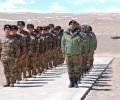
The two sides agreed that the next round of military dialogue should be held at an early date.

Rejecting the criticism of the CAA, Jaishankar said, "There are people who publicly said on record that because of CAA, a million Muslims will lose their citizenship in this country."

US's terrible political and economic leadership will ultimately cost the dollar its value. India must act early to avoid being dragged down, suggests R Jagannathan.
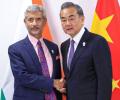
The joint statement said Jaishankar and Wang agreed that both sides should take guidance from the series of consensus reached between leaders of the two countries on developing India-China relations, including not allowing differences to become disputes.
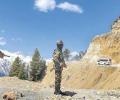
One hopes the new Lok Sabha will mark a break from a dismal tradition -- lack of interest in defence and security policies, argues Colonel Anil A Athale.

In the last five years, imports from HK have more than tripled -- from $5.6 billion in FY15 to $17.1 billion in FY20. In the same period, exports declined by 20 per cent -- from $13.6 billion in FY15 to $10.8 billion (annualised) in FY20.

Greeting the jawans on the occasion, the prime minister said their devotion to duty in the remote icy heights, is enabling the strength of the nation, and securing the future and the dreams of 125 crore Indians,

The enhancement of combat capability by the two armies in the region came even as both the countries continued their efforts to resolve the dispute through talks at military and diplomatic levels.
The sources said both sides held extensive deliberations on modalities for disengagement of troops from all the friction points in eastern Ladakh at the talks.
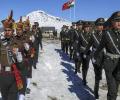
The disengagement plan was discussed between the two sides during the 8th Corps Commander-level talks which were held on November 6 in Chushul.
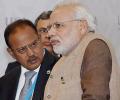
The US has all along interfered in India-China issues. The objective is clear: Bring the Sino-Indian standoff to a flashpoint that would compel Modi government to take shelter under an American umbrella, argues Ambassador M K Bhadrakumar.
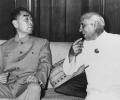
'Unquestionably, the spirit behind the Panchsheel agreement and the 'Hindi Chini bhai bhai' slogan were thrown overboard by the Chinese, and a trust deficit was injected between the two nations.' A revealing excerpt from General J J Singh's The McMahon Line: A Century Of Discord.

'China will do everything to hamper our ability to be a competitor.' 'China wants every country in the region to be subservient and we are the biggest stumbling block.'

India and China on Tuesday discussed the recent spate of incursions and ways to maintain peace and tranquility along the Line of Actual Control in the border areas.

Chinese foreign ministry spokesman Geng Shuang told a media briefing in Beijing that "at the moment the situation in the boundary region between China and India is overall stable and controllable".

As the military standoff between India and China drags on along the Line of Actual Control (LAC) in eastern Ladakh, Defence Minister Rajnath Singh said the talks between the two sides are going on well and indicated hope for a resolution of the lingering row.

He said both sides reaffirmed to sincerely work towards complete disengagement of the troops along the LAC.

The ministry of home affairs has identified around 1,700 km of fencing that needs to be done, BRO's additional director general (East) PKH Singh said.
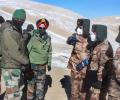
In the fresh round of talks, the Indian side is expected to press for disengagement of troops as soon as possible in all the remaining friction points besides seeking resolution of issues in Depsang Bulge and Demchok.

The two sides held diplomatic talks through video conference on the border standoff in midst of fresh details emerging that China has strengthened its position in several areas in eastern Ladakh including Galwan Valley where a violent clash on June 15 left 20 Indian soldiers dead.
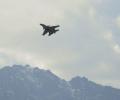
The DG of the ITBP said his troops have been provided with special winter clothing and nutritious food as they brave the severe chill in eastern Ladakh where the armies of India and China are locked in a tense standoff for over six months. He said 'strains in bilateral relations are already evident but we are confident these will be sorted out peacefully very shortly'.
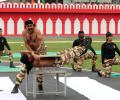
The 62nd Raising Day of the Indo-Tibetan Border Police Force was commemorated with great enthusiasm at the Seema Dwar in Dehradun.


In his conversation with Prime Minister Narendra Modi, President Xi Jinping stressed that improving China-India relations serves common interests and is conducive to peace and stability of the region and the world.
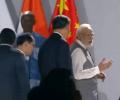
Prime Minister Narendra Modi conveyed to Chinese President Xi Jinping India's concerns on the "unresolved" issues along Line of Actual Control (LAC) in eastern Ladakh during a conversation on the sidelines of the BRICS summit, Foreign Secretary Vinay Mohan Kwatra said on Thursday.
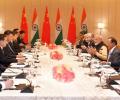
China had been trying hard to enter the Indian market, without opening its own to Indian products. There is an economic crisis in India-China relations that the Chennai Connect barely scratched the surface, points out Srikanth Kondapalli.
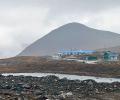
The move bears significance in view of the increased Chinese activities along the border and transgressions by China's People's Liberation Army (PLA).

Sources said the Indian delegation was warmly greeted by senior officials of the Chinese Army before the talks began.
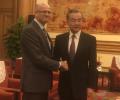
Gokhale's visit for bilateral consultations is taking place amid renewed optimism that the vexed issue of listing of Pakistan-based Jaish-e-Muhammed chief Masood Azhar as a global terrorist by the United Nations, which has been stalled by China, is headed for a resolution in the coming weeks
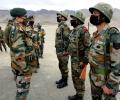
The seventh round of military talks between India and China held on Monday was "positive and constructive", and both sides agreed to earnestly implement the understanding reached by their leaders to not turn differences into disputes, a joint statement by the two armies said on Tuesday.
As per the sources, the discussions between the two sides include pulling back tanks and armoured vehicles from their present positions, and some development in this regard is likely to take place in the next few days.

'The Ladakh clashes are mere warning signals of the storm to come on May 22 when the Chinese parliament meets,' observes Colonel Anil A Athale (retd).
'After more than 20 years of understanding, nothing much seems to have been achieved. What the two countries have been trying to do is to manage the recurrence of border incursions. The two sides must address the disease, and not the symptom of the disease,' says Rup Narayan Das.

The sources said the situation in eastern Ladakh remained 'tense' and that around 30-40 soldiers of China's People's Liberation Army (PLA) are holding up at a position close to an Indian post in the Rezang-La ridgeline in eastern Ladakh.

Engagement with neighbours is a strategic imperative, and not an option, asserts Rup Narayan Das.
'Some observers say India and China are bound to be strategic adversaries. I find such determinism misplaced,' says National Security Advisor Shiv Shankar Menon.
