
Household indebtedness is higher in the southern states as compared to the other parts of the country, a report said on Tuesday. Citing the All India Debt and Investment Survey (AIDIS) data from 2013-2019, domestic agency India Ratings said household indebtedness both in rural and urban areas was higher in southern states than rest of India. In 2019, Telangana with 67.2 per cent had the highest proportion of its rural households indebted and Nagaland with 6.6 per cent had the lowest proportion of its rural households indebted.
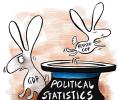
India Ratings and Research on Friday revised down India's FY22 real GDP growth forecast to 10.1 per cent, from earlier projection of 10.4 per cent, citing the second wave of COVID-19 infections and slower pace of vaccination. At a time when large parts of the country are experiencing tremendous pressure on medical infrastructure, the agency said it expects the second wave to start subsiding by mid-May. Earlier this month, the Reserve Bank maintained its 10.5 per cent GDP growth estimate, but Governor Shaktikanta Das has flagged the rising cases as the biggest impediment to recovery.

Dollar debt and higher import cost might impact earnings by up to 30%.

Gold is currently trading at Rs 25,200 for 10 grams.

Better-than-expected financial results in Q3 due to higher revenue growth and margins in key markets fuel the rally

However, the budget arithmetic is slightly optimistic.

Home Minister Rajnath Singh said that the decision could cost the government roughly Rs 15,000 crore.

The long-term growth perspective or potential for India is one of the highest in the Asia Pacific region.

RBI will now increasingly shift focus to domestic parameters

The economy is likely to grow at about 5.6 per cent in 2014-15 and fiscal and current account deficits no longer pose a threat to macroeconomic stability, India Ratings said on Friday.

In fact, India's investment activity growth is also estimated to touch a 17-year low in FY20. With overall demand not showing signs of revival, investment activity may take longer to recover, economists said.

RRBs were formed under an Act to provide credit to small farmers, agricultural labourers and businesses in rural areas.

RBI Governor has been under pressure from Finance Ministry.

Gold is often considered a 'hedge' against an economic uncertainty.

Despite the 3 per cent gain in September 2019, the FPI sell-off during the quarter has seen the benchmark indices - the S&P BSE Sensex and the Nifty 50 register negative returns in Q3CY19.

The country's current account deficit is likely to decline to 1.1-1.2 per cent of the gross domestic product in the third quarter, say rating agencies.

Declining vegetable prices brought down the retail inflation to a 15-month low of 4.59 per cent in December and within the comfort zone of the Reserve Bank, government data showed on Tuesday. It is for the first time during the current fiscal that the Consumer Price Index (CPI) based inflation print is below 6 per cent or in the RBI's target range of 2 to 6 per cent. The central bank factors in the CPI-based inflation while arriving at its monetary policy. The inflation in December 2020 came down from 6.93 per cent in November, mainly on account of 10.41 per cent decline in vegetable prices over the year-ago period.

The Bank suggested reforms in infrastructure sector.

RBI had asked banks to price fixed rate loans of up to three years based on marginal cost of funds from April 1

Going forward, the February factory output may be impacted as several industries such as automobiles, technology, pharma and fashion have some exposure to imports of raw and intermediate materials from China.

Economic affairs secretary S C Garg said that all macroeconomic parameters are performing well.

'It is a worrying trend as we are not seeing too much fresh capital being raised for new projects, plants, expansion or diversification. It's just private equity or venture capital or promoters cashing out.'

The reduction in natural gas prices would mean lower raw material cost for compressed natural gas (CNG) and natural gas piped to households (PNG).
Analysts said the higher capex by PSUs, along with government spending, could trigger a capex revival for the corporate sector by the second half of FY17
The depreciation in the yuan has led to a decline in all emerging market currencies

RE of GDP for 2015-16 show that the economy grew 7.9% in 2015-16, rather than the earlier estimate of 7.6 per cent.
 © 2026 Rediff.com - Advertise with us - Disclaimer - Privacy Policy - Sitemap - Feedback - About us - Terms of use - Grievances