
A total of 635 companies have declared their third-quarter results and reported 22 per cent rise in revenue and 47.3 per cent growth in net profit on an average.


The government on Tuesday extended till March 15 the deadline for corporate to file Income Tax returns for the fiscal ended March 2021. The deadline to file tax audit report and transfer pricing audit report for 2020-21 fiscal too has been extended till February 15. This is the third extension given to corporate for filing the income tax return for 2020-21 fiscal.

With the rupee showing a freefall and hitting a 28-month low against the dollar, India Inc has yet another headache.

The issue regarding remuneration of company CEOs will be debated by the parliamentary standing committee.

The drop in growth rate is subsequent to the corporate sector cutting investments by nearly Rs 90,000 crore (Rs 900 billion) in 2011-12 compared to 2010-11, according to the pre-Budget Economic Survey tabled by Finance Minister P Chidambaram in Parliament on Wednesday.
India Inc is unfazed by the sharp fall of the rupee against the greenback as most big firms have already hedged their foreign exchange exposures.

Major Indian automobile companies like Tata Motors, Bajaj Auto and Mahindra & Mahindra seem to have put up a robust performance in Q3 FY 10, paying advance tax of Rs 100 crore (Rs 1 billion), Rs 320 crore (Rs 3.2 billion) and Rs 195 crore (Rs 1.95 billion), respectively.

Green shoots evident, but worries remain.
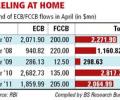
Around $1.54 billion was raised by 60 companies through the automatic approval route, which does not require the approval of RBI or the government, while $520 million was raised by the Exim Bank under the approval route, to meet its lending requirements abroad.
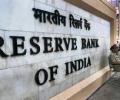
Industry body Confederation of Indian Industry said with the government having announced a clear road map for fiscal consolidation and non-food inflation demonstrating a secular decline, conditions are conducive for RBI to have intervened with a repo and cash reserve ratio reduction.
India Inc seems to be doing a good job of protecting investors' interests following a crackdown by the market regulator earlier this year, as the number of complaints relating to non-receipt of refunds and allotment letters have nearly halved.

Glenmark Pharmaceuticals Ltd on Tuesday said it has acquired the approved generic versions of certain over-the-counter drugs from Wockhardt Ltd in the US. The acquisition by the company's fully-owned subsidiary Glenmark Pharmaceuticals Inc, USA includes the approved abbreviated new drug applications (ANDAs) for famotidine tablets, 10 mg and 20 mg used to treat and prevent ulcers in the stomach and intestine, the company said in a statement. The company, however, did not disclose the financial details.

'He doesn't need to play eye candy or a boy next door. He has found his mark.' 'Brands like him because he understands them and he emotes appropriately for them.'
India Inc's initiative to adopt Industrial Training Institutes (ITIs) across the country is facing problems because of low level of cooperation on the field as well as red-tapism, industry lobby groups have claimed.
The resurgence in confidence in Indian manufacturing was borne out by many examples of Indian companies going global.

The manufacturing sector (excluding petroleum sector) would report a 24.3 per cent PAT growth mainly on account of low raw material prices and soft interest rates, CMIE said, adding PAT of the financial and non-financial services would rise by 32.2 per cent and 20.4 per cent, respectively.
Business jets and chartered flights have been an unlikely victim of the recent corruption scandals involving India Inc.

Jobs are back and India Inc is witnessing an upsurge of 15 per cent in hiring trend, thanks to the improving economic climate. However, experts say it is too early to say that the situation has returned back to 'normalcy'.

That's because India does not have a serious venture capital industry with an appetite for risk, observes T N Ninan.
Even as India Inc talks of increasing corporate governance norms after the Satyam scam, a study by global consultancy firm Ernst & Young has said that more than half of the companies surveyed do not take into account risk of frauds in their annual audit plans.

M&As are back on the radar for Indian companies, but with two vital changes. First, the average size of the deals are much smaller compared to the earlier years; and second, overseas acquisitions have taken a backseat.
Average salary of the 100 best-paid directors is 1% of their companies' net profit.

It plans an investment Rs 20 crore.
Some companies say they will pass on the cost to customers.
An unstable government is the worst thing that can happen to the Indian economy grappling with the global downturn, say business leaders.

In peace and at war, firms remain tethered to promoter families in a uniquely Indian way.
The Ficci Survey for the second quarter of 2008-09, which was carried out during November and December 2008, revealed 52 per cent of companies feel that the overall economic conditions would weaken further in the coming six months. Further nearly 90 per cent of the 412 companies surveyed in the report feel that the economic situation has deteriorated over the last six months.
India Inc is likely to witness a continuing surge in merger and acquisition activities after a record number of M&A deals in the first half of 2006 -- aggregating to more than $25 billion.\n\n
As India Inc steps up the gas to expand in the global arena, it faces the risk of stumbling on frauds, the levels of which were far higher compared to global levels, according to international consulting firm Ernst and Young.
"Outsourcing is also a concern and I hope it will be addressed soon," Godrej Group Chairman Adi Godrej told reporters on the sidelines of the World Economic Forum on India in Gurgaon.

Akshay Kumar showed off his dedicated-to-Bruce Lee fashion chops.
The private security industry expects to grow manifold in the next five years, with India Inc enhancing the protective measures after the Mumbai attacks.
Data with the Department of Industrial Policy and Promotion reveals that between April 2005 and July 2008, Japan Inc pumped in 50 per cent of the total investments inflows between April 2000 and July 2008. In fact, between June and October this year, Japanese companies said they would pump in $8 billion. Experts say this is not a knee-jerk reaction by the Japanese, who are known to be very meticulous with their investments.
