
Indian benchmark indices, Sensex and Nifty, opened lower on Tuesday, driven by a surge in global crude oil prices and continued outflows by Foreign Institutional Investors (FIIs), reflecting fragile market sentiment influenced by external factors.
The Indian rupee rebounded 50 paise from its all-time closing low to settle at 96.36 against the US dollar, driven by retreating crude oil prices, signs of easing geopolitical friction, and likely central bank intervention.

India's private sector activity saw a significant recovery in April, driven primarily by robust growth in manufacturing output and sales, following a three-year low in March attributed to the West Asia conflict.

The Indian rupee plummeted to an all-time low of 95.80 against the US dollar, settling at 95.66, driven by elevated crude oil prices and escalating geopolitical tensions in West Asia, despite potential RBI intervention and import curbs on gold.

Indian benchmark stock indices Sensex and Nifty rebounded nearly 1 per cent, snapping a three-day decline, driven by rallies in Reliance Industries and Sun Pharma, alongside positive global market trends and easing geopolitical tensions.
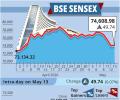
Indian benchmark equity indices, Sensex and Nifty, closed marginally higher, breaking a four-day losing streak, despite elevated crude oil prices and ongoing geopolitical uncertainties. The market saw a temporary pause in panic selling, though cautious sentiment persists.
The quarterly manufacturing index by the industry body Federation of Indian Chambers of Commerce & Industry (Ficci) rose to an all-time high in the third quarter of financial year 2025-26 (Q3FY26), with 91 per cent of respondents reporting either higher or same production levels, against 87 per cent in the previous quarter.

Indian benchmark indices Sensex and Nifty experienced a significant tumble in early trade, driven by surging global oil prices, continuous outflows by Foreign Institutional Investors (FIIs), and persistent geopolitical uncertainties, particularly in West Asia.

Indian equity benchmark indices Sensex and Nifty rebounded in early trade, driven by buying in blue-chip stocks and a positive trend in Asian markets, with domestic institutional investors providing crucial support.
Sensex gains over 400 points while Nifty trades above 23,800 amid strong IT sector buying.

A new study reveals that obesity-related changes in body fat can disrupt brain signals and immune function, potentially worsening Alzheimer's disease.

Indian benchmark indices, Sensex and Nifty, rallied significantly following a sharp decline in crude oil prices. This decline was triggered by US President Donald Trump's announcement of progress in negotiations with Iran towards a peace agreement, which led to renewed optimism in global markets.
India Ratings and Research predicts the Reserve Bank of India (RBI) will maintain the repo rate at 5.25 per cent throughout FY27, despite potential inflationary pressures from higher fuel prices, with inflation expected to remain within the central bank's tolerance band.

India's retail inflation, measured by the Consumer Price Index (CPI), increased to 3.48 per cent in April, up from 3.40 per cent in March, primarily due to a surge in prices of gold and silver jewellery, as well as certain kitchen staples like tomatoes and cauliflower.

Indian benchmark equity indices, Sensex and Nifty, experienced a decline in early trade, ending a three-day rally, primarily due to heavy selling in IT stocks and concerns over prolonged instability in West Asia.

Abhishek Sharma continues to lead the IPL 2026 MVPI table, highlighting a worrying trend where batters overwhelmingly dominate the top positions and only one bowler features in the top 20. Purnendu Maji and Srinivas Bhogle present Rediff's Most Valuable Player Index of IPL 2026 after Game 54.

Indian benchmark indices, Sensex and Nifty, closed almost unchanged in a volatile session as investors reacted cautiously to mounting geopolitical headwinds and a significant jump in crude oil prices, with Brent crude surging to USD 94.68 per barrel.

Indian stock markets experienced a second consecutive day of losses, with the Sensex tumbling 852 points, as crude oil prices surpassed USD 100 per barrel due to stalled US-Iran negotiations and escalating geopolitical tensions in West Asia.
Indian equities on Dalal Street saw volatility as global market trends and oil price hike impacted investor sentiment. Track Sensex, Nifty50 movement and key market drivers for Apr 23, 2026.
The Indian rupee gained 2 paise to settle at 93.33 against the US dollar, driven by positive sentiment in domestic equity markets and renewed hopes for US-Iran talks, despite rising WPI and CPI inflation.
Indian benchmark equity indices, Sensex and Nifty, snapped a three-day rally, tumbling nearly 1 per cent due to heavy selling in IT stocks, a jump in crude oil prices, foreign fund outflows, and fears of prolonged instability in West Asia.

Global index provider MSCI has announced the addition of four Indian companies-including Fortis Healthcare and Paytm - to its Global Standard indices. According to Nuvama Alternative & Quantitative Research, each of these companies is expected to see passive inflows exceeding $400 million. Shares of Paytm rose 4.3 per cent on Thursday, while Fortis Healthcare dipped 1.1 per cent.
Indian equity benchmark indices Sensex and Nifty rallied in early trade, driven by reports of a second round of talks between the US and Iran, which are fostering hopes for a resolution to the West Asia conflict, coupled with Brent crude oil prices trading below the USD 100 per barrel mark.

Petrol and diesel prices in India have been increased for the second time in a week, following a long freeze on revisions. The increase comes as global crude prices surge and state-run oil firms look to recoup losses.
Indian stock markets extended their gains for a third consecutive day, with the Sensex climbing 753 points and the Nifty closing above 24,550, driven by a drop in crude oil prices and optimism surrounding potential peace talks between Iran and the US.
Indian benchmark stock indices, Sensex and Nifty, closed nearly 1 per cent lower following the collapse of US-Iran negotiations, which heightened concerns of a prolonged conflict in West Asia and drove crude oil prices sharply higher.

The ICSE, ISC Class 10 board results for 2026 are scheduled to be declared on April 30, 2026, at 11:00 AM IST. Students can access their results through official websites, DigiLocker, SMS, and the UMANG app. The minimum pass mark is 33% in each subject and in aggregate. Rechecking and re-evaluation are available for those seeking score reviews.

Football's global players' union has renewed concerns about the potential impact of heat on the 2026 World Cup, following a scientific analysis indicating a high likelihood of dangerous temperatures for both players and fans.

Indian markets on Dalal Street rallied sharply as easing tensions in the US-Iran conflict and stable oil prices boosted sentiment. Track Nifty50 and BSE Sensex performance and key global triggers.
Indian benchmark indices Sensex and Nifty experienced volatility due to conflicting developments in West Asia, including reports of the Strait of Hormuz closure, which led to a rebound in crude oil prices and heightened investor concerns about supply disruptions and inflation.
Indian markets on Dalal Street rallied sharply as easing tensions in the US-Iran conflict and stable oil prices boosted sentiment. Track Nifty 50 and BSE Sensex performance and key global triggers.
The Indian rupee depreciated 20 paise to close at a fresh all-time low of 94.88 against the US dollar, driven by surging Brent crude oil prices, hovering around USD 115 per barrel, and persistent foreign capital outflows.
Indian benchmark indices Sensex and Nifty rallied nearly 1 per cent, driven by optimism over easing geopolitical tensions in the Middle East and fresh foreign fund inflows, with the Sensex gaining over 500 points.
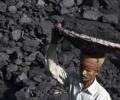
India's core sector output contracted by 0.4 per cent in March, marking the first decline in five months, with coal, crude oil, fertiliser, and electricity production falling, according to official data.

A woman in Kerala was allegedly denied the right to vote due to a bandaged finger, sparking controversy during the state's assembly elections.

Petrol and diesel prices in India have been increased by Rs 3 per litre each, marking the first rate hike in over four years. This decision follows a period of stable prices during recent state elections, despite rising global crude oil prices and significant losses for fuel retailers.

Petrol and diesel prices have been increased by Rs 3 per litre each, marking the first hike in over four years, as state-run fuel retailers pass on some of the impact from surging global crude prices, which have been exacerbated by the Iran war.

JPMorgan has downgraded Indian equities to 'neutral' from 'overweight', citing elevated valuations, rising earnings risks, and limited exposure to next-generation technology like AI. The brokerage believes other emerging markets offer more attractive risk/reward propositions despite India's strong structural growth story.

Indian benchmark indices Sensex and Nifty experienced a decline due to renewed geopolitical concerns in the Strait of Hormuz, a strained US-Iran ceasefire, and the rupee hitting a record low against the US dollar.
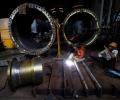
India's industrial production growth decelerated to a five-month low of 4.1 per cent in March, primarily due to the subdued performance of the manufacturing and power sectors, exacerbated by the West Asia crisis.
