
The orange alert has been issued for moderate or heavy thunderstorms and wind speed with 30-40 km per hour to reach some districts of Odisha within the next three hours.

The very severe cyclonic storm Tauktae could cause heavy to very heavy rains at isolated places in north Konkan, Mumbai, Thane and Palghar in Maharashtra on May 17, the India Meteorological Department (IMD) said.

Around 29 trains have been delayed by two to five hours due to foggy weather, a railway official said.

Temperatures in March will be critical to determining the impact of any unusual heatwave conditions on this year's wheat crop in North India. It is that time of the year when the crop enters its vital grain-filling stage, say meteorologists and crop experts. So far, the high day temperatures in the North are not believed to have any significant impact on the final yields since the crop hasn't entered a stage where heat affects yields.

Delhi saw seven cold wave days in January 2020, while it did not record any such day last year.

The poisonous haze has been causing significant problems for people with existing respiratory issues, according to doctors.

Very dense fog lowered visibility to 50 metres at the Palam observatory, near the Indira Gandhi International airport, at 5:30 am.

The city also recorded a maximum temperature of 23.8 degrees Celsius, 16 notches below normal and the lowest in the month of May since 1951, the IMD said.

It was a repeat of scenes witnessed last month as motorists struggled to manoeuvre their vehicles on flooded roads and subways while showers led to traffic congestion in Chennai and suburbs.

The Safdarjung Observatory, which provides representative data for the city, recorded a maximum temperature of 40.1 degrees Celsius, which was eight notches more than normal, said Kuldeep Srivastava, the head of the IMD's regional forecasting centre.

Heavy rains in Bengaluru on Wednesday night resulted in waterlogging, incidents of tree fall, damage to certain infrastructure and power outage in several parts.

Apart from 15 teams of the National Disaster Response Force (NDRF) and 12 teams of State Disaster Response Force (SDRF), personnel of the Army, Navy, Air Force, Indian Coast Guard and Border Security Force (BSF) are deployed for relief and rescue operations, officials said.

The city recorded a minimum temperature of 14.6 degrees Celsius, a notch above normal, according to the India Meteorological Department.

The IMD also issued a red alert in the same 10 districts for August 3 also.

India maintained 43rd rank on an annual World Competitiveness Index compiled by the Institute for Management Development (IMD) that examined the impact of COVID-19 on economies around the world this year. The 64-nation list was led by Switzerland, while Sweden has moved up to the second position (from sixth last year), Denmark has lost one place to rank third, the Netherlands has retained its fourth place and Singapore has slipped to the fifth place (from first in 2020). At eighth, Taiwan reached the top-10 for the first time since the ranking began 33 years ago (moving up from 11th last year).

A tormenting heatwave swept through North India on Sunday with the mercury crossing 49 degrees Celsius in pockets of Delhi, while the weather office forecast some relief Monday onwards.

Apart from the metropolis, several other parts of Maharashtra also reported a drop in night temperatures, resulting in chill and cool breeze in those areas.

'There's also a possibility of the cyclonic system changing its course, thus avoiding a landfall in Odisha'

The WR is taking various measures including setting up disaster management rooms, help desks, and keeping relief trains ready.

Delhi's primary weather station, the Safdarjung Observatory, registered a maximum temperature of 40.4 degrees Celsius, four notches higher than normal.

Normally, monsoon reaches Delhi by June 27. It covers the entire country by July 8. Last year, the wind system had reached Delhi on June 25 and covered the entire country by June 29.

The health minister said the Centre has taken timely measures ahead of the summer season to address heatwave-related illnesses.

The orange alert implies that authorities should be ready to handle situations arising out of severe weather.

The depression in the Arabian Sea is likely to intensify into a 'very severe cyclonic storm' on May 17 and cross the Gujarat coast a day later, the India Meteorological Department (IMD) said.

After becoming active over the rice-growing Indo-Gangetic plains, the southwest monsoon might witness weak phase for the next 3-4 days over the already rain-deficient region. So far, the main deficit states are Uttar Pradesh (-42 per cent), Bihar (-36 per cent), Jharkhand (-48 per cent), and West Bengal (-24 per cent). According to private weather forecasting agency Skymet, rains in west UP, Punjab, Haryana, Bihar, and Jharkhand are expected to be weak in the next 3-4 days before again picking pace.
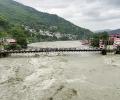
Incessant rains unleashed more death and destruction on Monday in parts of north India, with 37 people killed in landslides and other rain-related incidents in the last two days even as the Army and NDRF teams stepped in to intensify the relief and rescue operations.
