
The broader NSE Nifty, in a volatile session, recaptured the key 11,300-mark. It ended at 11,369.90, up 82.40 points or 0.73 per cent.

While demand for consumer durables has been growing fast, investors need to be selective as stock valuations have risen even faster.

Led by crude oil and finished steel, the output of the six core infrastructure industries grew by 7.4 per cent in March, 2011, an improvement from the 6.8 per cent expansion clocked a year ago.

Sensex may remain under pressure this week due to weak global factors.

If the year 2010 was the year of the hatchbacks, it appears that the year 2011 is all set to be big on sedan launches.

India's GDP is estimated to contract by a record 7.7 per cent during 2020-21 as the COVID-19 pandemic severely hit the key manufacturing and services segments, as per government projections released on Thursday. Amid overall decline in economic activities, some respite was provided by the agriculture sector and utility services like power and gas supply, which have been projected to post positive growth during the current fiscal ending March 2021.

If government statistics are at variance with private data flow, chances are high that the latter presents a picture closer to reality.



Some recent forecasts suggest further weakness in the US economy.
According to the data released by the government, the capital goods segment in the overall industrial output rose by 63 per cent in July and pushed up the Index of Industrial Production (IIP) by 13.8 per cent.

Videocon Industries surged 6.3%, Blue Star rose 6% and Titan Industries rallied 3.5% by close of trade on Friday.
Advance tax pay-up by India Inc presents a rosy picture, despite a massive fall in April IIP numbers and a likely fall in the remaining months of Q1; with the largest lender SBI leading the pack with Rs 1,100 crore (Rs 11 billion) against Rs 850 crore (Rs 8.50 billion) in the year-ago period.

Ernst & Young India on Tuesday said that despite the steep fall in headline inflation in August, the Reserve Bank is likely to persist with monetary tightening measures by hiking key policy rates by at least 25 basis points at its mid-quarter review on Thursday.
India's factory output maintained its robust pace in March, growing by 13.5 per cent despite monetary tightening and a partial roll back of stimulus measures. Driven largely by manufacturing, this was the sixth straight month of double-digit expansion.

The NSE index finally ended at 5,383 - up 31 points. Most of the sectoral indices were in the green today with realty index jumping 2.2% at 3,337. Bankex and IT were also up.
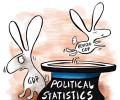
The SBI report, however, said the economic growth rate will pick up pace in 2020-21 to 6.2 per cent.

'It appears the growth rate could be around six per cent'.

Industrial growth zoomed to 16.8 per cent in December 2009, giving hope to the government that overall economic growth may be faster and rekindling a debate on withdrawal of stimulus packages in the Union Budget.

D&B sees January IIP to decline by 0.5-1.5 per cent. Last month the factory output, as measured in terms of the index of industrial production, had contracted by 0.6 per cent.

The Indian markets ignored the lower than expected IIP numbers and ended with modest gains.
There is little doubt that the global economic crisis has worsened Indias growth prospects, but the slowdown began long before the US financial meltdown began.

Key macroeconomic indicators suggest softening industrial growth.
Jyoti Basu, the 95-year-old communist, has lost touch with many of his comrades. But this morning the former chief minister of West Bengal did not forget to call his favourite Congressman to say, "Happy Birthday!"
Six core infrastructure industries grew at 4.5 per cent in February against a meagre 1.9 per cent during the corresponding month last year, primarily due to increased output in electricity (7.3 per cent). The core sector had grown by a robust 9.5 per cent in January 2010.

The Nifty closed at 5,137, up three points. The market breadth turned weak at close. Out of 2,921 stocks traded on the BSE, there were 1,037 advancing stocks as against 1804 declines.

During April-May, growth in the eight core industries slowed to 3.3 per cent as against 4.9 per cent in the year-ago period.

Technically speaking, US equities have seen net losses since January. India is strongly influenced by US trends.

Manufacturing sector, which accounts for two-thirds of the industrial production, recorded a growth of 7.3 per cent in June indicating return of consumer demand in the market.

The Nifty ended down 14 points at 4,458. The market breadth was fairly negative - out of 2,681 stocks traded 1,367 declined while 1,215 advanced.
According to the official industrial data, industry grew 2.7 per cent in May, more than double the 1.2 per cent in the previous month. During the month, manufacturing sector output rose by 2.5 per cent, while mining and power generation grew 3.7 per cent and 3.3 per cent, respectively.

But it is likely that campaign spending resulted in some positive activity through this period.

India owed $82.5 billion to foreigners as on June-end this year, 39 per cent higher than $59.4 billion three months back, in terms of the country's assets and liabilities to the international community.

Among other things, the agenda is likely to focus on increasing private investment, employment generation and giving relief to the farm sector

After paring some gains, the 30-share index settled at an all-time closing high of 28,008.90, up by 98.84 points, or 0.35 per cent, over the previous close.

The government will unveil the Consumer Price Index data and the Wholesale Price Index data for August on Monday.

The technical report of the NSSO has generated controversy following its observation that as much as 36 per cent units forming part of MCA-21 database, used in computing GDP, could not be either identifiable or traceable in the field.
Industrial output expanded 1.4 per cent in April after two months of decline, leading experts to predict that the economy had bottomed out. A return to 8-plus per cent industrial expansion was, however, some time away, they added.

The industrial production figures suggest the economy will grow by 7.5 per cent this fiscal and perhaps over 8.5 per cent in the next fiscal, Mukherjee told reporters in New Delhi.
Domestic policies rather than the global turmoil is what will really affect growth prospects.
