
Bhogapuram international airport, Ramayapatnam and Bandar ports, the Muktyala lift irrigation scheme and a bridge across the Krishna river are some of the projects likely to be hit.

The overall volume at India's top four M&HCV makers - Tata Motors, Ashok Leyland, Volvo Eicher, and Mahindra & Mahindra - fell 59.5 per cent to 31,067 units during the month.
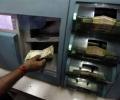
Despite Indian economy recovering, there is very little room for loan growth, say bankers.

During the fourth quarter (January-March), banks step up the activity to meet annual targets. This leads to a race to raise funds from markets often by jacking up deposit rates. This time around, the market has not seen such trend yet.

The commercial vehicle loans that were extended recently have shown higher tendency for default than old advances, according to a study by rating agency Icra. The large number of borrowers is being brought into the fold in a segment that is growing fast (buoyant) and there is certain lowering of credit criterion (read laxity in lending norms).

Financial planners advise against putting capital to work by anticipating what might go up or down.

Most jewellery shops and establishments in the country are shut since March 2.

Import growth moderated to a four-month low, owing to sharp decline in that of gold.

The auditors also said that the company is in the process of monetising its assets and has submitted a draft resolution plan to the consortium of bankers for restructuring its borrowings and also there have been discussions for stake sale by the promoters to a strategic partner with further equity infusion.
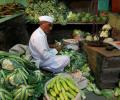
Inflation in onion continued to rule high at 42.22 per cent and in potato at 43.25 per cent.
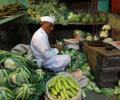
Build up inflation rate in the financial year so far was 2 per cent compared to a build up rate of 4.56 per cent in the corresponding period of the previous year. Inflation in food articles as a group rose to 11.08 per cent during the month as against 9.80 per cent in the previous month, mainly driven by exorbitantly high onion prices, the rates of which spiked by over 172 per cent from a year-ago. The annual rate of inflation, based on monthly wholesale price index was at 0.16 per cent in October.

The price of the Indian basket of crude oil jumped as much as 78 per cent to cross $50 a barrel last week, from a multi-year low of $28 in January.
Unlike bank FDs that are considered risk-free investments, NCDs do carry a certain amount of risk, primary among them is the risk of default, either servicing the interest payment or meeting their principal repayment obligations.
Although exports of gold jewellery have increased from Rs 5,220 crore (Rs 52.20 billion) during FY 2001 to Rs 23,516 crore (Rs 235.16 billion) during FY 2007 (source: Icra industry monitor), the export business has been constrained by an inability to compete in global markets on basis of price and superior design capabilities.
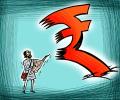
Historically, there has been no correlation between growth in bank credit to industry and lower benchmark interest rate

The Indian benchmark remained static in its last closing on May 28, while Brent prices dropped further to $75.71 a barrel. Less Brent crude in Indian basket makes prices sticky.

Economists, however, caution against interpreting the data as a broad-based revival

For the near term, Gill will have to improve relations with the Reserve Bank of India, which have been strained in recent times. He will also need to strengthen the bank's asset quality and improve governance standards and internal processes.

Economic affairs secretary S C Garg said that all macroeconomic parameters are performing well.
Govt squeezed capital expenditure, and also cut revenue expenditure, that does not go into creating assets, by 11% in H1
An initial reading of the guidelines indicates two factors - potential rise in borrowing cost and lower returns on investment book - could hit the spread of NBFCs.
Unlike last year when private equity participants exited through strategic deals with third party investors, this year PEs are opting to exit via initial public offerings route.
"Growth is expected to moderate gradually in China... pick up in India, and remain broadly stable in the Asean-5 region."
Common use products like hair oil, soaps and toothpaste will be charged with a single national sales tax or GST of 18 per cent instead of present 22-24 per cent

Exports rise for 8th month, albeit at lower pace

Direct tax collections grew by a meagre 6.6 per cent during April-July of the current financial year against the Budget target of 14.4 per cent for 2018-19. Corporation taxes, in particular, grew at just 0.57 per cent, the lowest in the first four months in at least seven years.

The calculation is based on annual usage of eight cylinders per household.
For the first eight months of the current financial year, the figure stood at Rs 7.17 trillion.
Global IT services spending is likely to increase at around 7-8 per cent over the medium term to $500 billion in 2007 from $470 billion in 2006.

Factors like dedicated recovery teams, centralised follow-up on bad loan accounts and resolutions via NCLT are driving the trend

Private hospitals, especially smaller standalone ones, are staring at a crisis that they were not prepared for. Analysts say larger corporate chains have to brace up for at least six months for business to return to normal.

Will demonetisation lead to a rate cut, leading to higher quantum of lending?

All public sector banks have moved to such a regime voluntarily, while private banks are yet to. The state-run banks have introduced repo-linked products for floating-rate home and auto loans, but the RBI said loans to micro, small and medium enterprises (MSMEs) should also be linked to an external benchmark.

The internals of the food inflation are worrying, given a broad-based uptick across categories that tend to be sticky, such as proteins, and a narrower-than-expected reduction in inflation for vegetables.
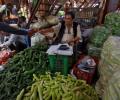
RBI targets to keep inflation at 4 per cent, (+/- 2 per cent), and its rise beyond this comfort zone will put pressure on the central bank to hike rates.
