
Investigations in the Headley-Rana case have revealed the involvement of a Kerala-based man, who has been part of the immigration business.
The United States, which foiled a major terror plot by the Lashkar-e-Tayiba to target India, has cited legal limitations in allowing Indian investigators to quiz arrested operatives David Coleman Headley and Tahawwur Rana. US National Security Adviser James Jones said President Barack Obama has shown personal interest in the Headley-Rana case and the matter was discussed during his meeting with Prime Minister Manmohan Singh on Tuesday.

A Delhi court has issued fresh non-bailable warrants against Pakistani-American David Coleman Headley, his accomplice Tahawwur Rana, lashkar-e-Tayiba founder Hafiz Saeed and 26/11 attack mastermind Zaki-ur-Rehman Lakhvi, who are accused of carrying out several terror attacks in India.
Making it clear that no clean chit has been given to anyone so far in the Headley-Rana terror case, the government on Sunday said the probe to complete the duo's trail in India will take four to six weeks.
A Delhi court on Monday issued fresh non-bailable warrants against Pakistani-American David Coleman Headley, his accomplice Tahawwur Rana, Lashkar-e-Tayiba founder Hafiz Saeed and 26/11 attack mastermind Zaki-ur-Rehman Lakhvi, who are accused of carrying out terror attacks in New Delhi.
Tahawwur Hussain Rana, a Pakistani-born Canadian national accused of playing a role in the 2008 Mumbai terror attacks, has been extradited from the United States to India. Rana was arrested in the US in 2009 and convicted in 2011 for providing material support to the Lashkar-e-Taiba terror group, which carried out the Mumbai attacks. He had been fighting extradition since 2012, but the US Supreme Court ultimately denied his review petition, paving the way for his transfer to India. Rana will now face trial in India for his alleged role in the attacks, which killed 166 people.
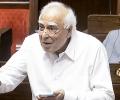
Rajya Sabha MP Kapil Sibal has congratulated both the previous UPA government and the current dispensation for the extradition of Tahawwur Hussain Rana, the mastermind behind the 2008 Mumbai attacks. Sibal expressed confidence that the extradition will shed light on the involvement of individuals within Pakistan's establishment in the attacks. Rana is being questioned by the National Investigation Agency (NIA) to uncover the full extent of the conspiracy behind the deadly 2008 terror strikes. Sibal highlighted the efforts of the UPA government in establishing the NIA and pursuing Rana's extradition, and also acknowledged the current government's success in bringing him back to India. The interrogation is expected to focus on Rana's potential ties to the Lashkar-e-Taiba (LeT) and his role in the Mumbai attacks.
Tahawwur Rana, a Canadian citizen and native of Pakistan, was extradited to India to face charges related to his alleged role in the 2008 Mumbai terror attacks. The US Department of Justice said Rana allegedly commended the LeT terrorists who carried out the attacks and suggested they should be awarded Pakistan's highest gallantry award. Rana is accused of facilitating a fraudulent cover for his childhood friend, David Headley, to conduct surveillance in Mumbai for the Lashkar-e-Taiba (LeT) terrorist group. He is also accused of helping Headley submit false visa applications to Indian authorities. This extradition follows a lengthy legal process that began in 2020 with India's request for Rana's surrender. Rana, who was previously convicted in the US for providing material support to LeT, will now face trial in India on 10 criminal charges related to the Mumbai attacks.
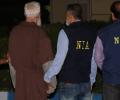
The National Investigation Agency (NIA) has begun questioning Tahawwur Hussain Rana, the mastermind behind the 2008 Mumbai terror attacks, to uncover the larger conspiracy behind the deadly strikes. Rana, who was extradited from the US, is being held at the NIA headquarters in New Delhi. The interrogation is focused on his possible connection with the Lashkar-e-Taiba (LeT) and his suspected links with the Pakistani spy agency Inter-Services Intelligence (ISI).
Tahawwur Hussain Rana, a key accused in the 26/11 Mumbai terror attacks, was brought to India on Thursday after being "successfully extradited " from the US, the National Investigation Agency (NIA) said. The 64-year-old Canadian citizen of Pakistani origin landed in Delhi in a special plane on Thursday evening, ending days of speculation of when and how he will be extradited, officials said. The NIA said in a statement that it had secured the successful extradition after years of sustained and concerted efforts to bring to justice the key conspirator behind the 2008 mayhem that claimed 166 lives. Rana is accused of conspiring with David Coleman Headley alias Daood Gilani, and operatives of designated terrorist organisations Lashkar-e-Taiba (LeT) and Harkat-ul-Jihadi Islami (HUJI) along with other Pakistan-based co-conspirators, to carry out the the three-day terror siege of India's financial capital.

Tahawwur Hussain Rana, a Pakistan-born Canadian national and close associate of David Coleman Headley, is set to be extradited to India from the US. Rana was involved in the planning and execution of the 2008 Mumbai terror attacks, which killed 166 people, including six Americans. He assisted Headley in obtaining a visa for India, established a front company in Mumbai, and helped in reconnaissance of targets in Mumbai and New Delhi. Rana was convicted in the US for providing material support to Lashkar-e-Taiba (LeT) and sentenced to 14 years in prison. His extradition to India will allow authorities to question him about his involvement in the Mumbai attacks and potentially uncover new information about the role of Pakistani state actors.
Investigators told rediff.com that more than two people within the Indian Mujahideen provided logistical support to David Headley and his accomplice Tahawwur Rana to survey the targets that were attacked during 26/11.
The key to the conspiracy hatched by David Headley and Tahawwur Rana may lie in Bangladesh and Pakistan.
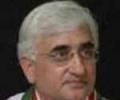
External Affairs Minister Salman Khurshid has written to his United States counterpart Hillary Clinton requesting for extradition of Pakistani-American Lashkar-e-Tayiba terrorist and Mumbai terror accused David Headley and his accomplice Tahawwur Hussain Rana.
Mumbai attacks accused David Headley had repeatedly told his Federal Bureau of Investigation interrogators that his friend and co-accused Tahawwur Rana was unaware of his terror activities and had not provided any support to him knowingly, details that were omitted from an affidavit filed before a court, recently unsealed documents reveal.
The Indian Consulate in Chicago said the papers related to issuance of visas to terror suspects David Coleman Headley and Tahawwur Rana had not gone missing and the 'relevant information' in this regard is available with the Indian government.

The National Investigation Agency, probing the conspiracy angle in 26/11 Mumbai attacks, will be holding a video conferencing with the US's Department of Justice for providing "limited access" to alleged Lashkar-e-Tayiba terrorist David Headley and his accomplice Tahawwur Rana.
A United States court on Wednesday rescheduled the sentencing of Pakistani American LeT terrorist David Headley, accused of involvement in 26/11 Mumbai attacks, from January 17 to January 24, while that of his accomplice Tahawwur Rana has been rescheduled for a second time to January 17.
Backed by a court order, India is expected seek extradition of Lashkar-e-Tayyiba operative David Coleman Headley and his accomplice Tawwahur Rana. But this is going to be an uphill task for investigators, reports Vicky Nanjappa.
National Investigation Agency has moved a Delhi court for issuance of non-bailable warrants against Pakistani-American terror suspects David Headley, Tahawwur Hussain Rana and Pakistan-based Zaki-ur-Rehman Lakhvi and Hafiz Saeed on the charge of plotting terror attacks in India.
Pakistani-Canadian terror suspect Tahawwur Hussain Rana, charged with involvement in the Mumbai attacks, will stick to his 'not guilty plea' unlike his co-accused and childhood friend David Coleman Headley, who confessed to plotting the 26/11 strikes.
Terror suspects David Coleman Headley and Tahawwur Rana, indicted on charges of being involved in the Mumbai terror attacks, will be arraigned in a court in Chicago next week. The arraignments of Rana and Headley were initially scheduled for Wednesday, but have now been rescheduled. While Pakistani-Canadian citizen Rana will be arraigned on January 25, Pakistani-American Headley's arraignment has been set for January 27.
A federal grand jury on Thursday returned a superseding indictment adding Chicago native Tahawwur Rana, Pakistan-based terrorist leader Ilyas Kasmiri and a retired major in the Pakistani military Abdur Rehman Hashim Syed, to charges filed last month against Pakistani American and Laskhar-e-Tayiba operative David Coleman Headley.
India indicated the possibility of gaining access to terror suspects David Coleman Headley and Tahawwur Rana, both arrested by FBI, once they are "indicted" by the US.
With the Intelligence agencies confirming that David Headley and Thahawur Hussain Rana had indeed come to Kochi and other parts of Kerala, the state police have started a massive man hunt to find out the duo's associates.
India may get access for the second time to Mumbai attack terrorist David Headley and his accomplice Tahawwur Hussain Rana, currently in the custody of the United States, for questioning. The positive indication was given by Washington to New Delhi during a recent bilateral meeting held in America.
The Indo-US extradition treaty may pose a major hindrance to India's efforts to produce David Headley and Tahawwur Rana before a Delhi court over the Mumbai attacks, as it does not allow handover of a person already convicted or acquitted for the offence he has been sought for.
The papers on the basis of which terror suspects David Coleman Headley and Tahawwur Hussain Rana were issued visas by the Indian Consulate in Chicago may have gone mysteriously missing and Foreign Secretary Nirupama Rao said she has asked for a factual report from the diplomatic mission.
Even as a team of the Federal Bureau of Investigation gets ready to share a mammoth dossier on David Headley and Tawwahur Rana, Indian agencies are bracing themselves to gather information on the duo.

The sentencing of American-born Lashkar-e-Tayiba terrorist David Headley, accused of involvement in 26/11 Mumbai attacks, has been fixed for January 17 next year while that of his accomplice Tahawwur Rana has been rescheduled for January 15 from December four.
A top United States attorney has vowed to bring to justice the other six Pakistan-based defendants who have been named in the indictment filed by federal prosecutors before a Chicago court in Mumbai case. The six defendants are Al Qaeda leader Illyas Kashmiri, Lashkar-e-Tayiba commander Sajid Mir; Major Iqbal, said to be a serving Inter Services Intelligence officer and Abdur Rehman Hashim Syed alias Pasha, another LeT leader.

Lashkar-e-Tayiba operatives David Coleman Headley and Tahawwur Rana, friends from a military school in Pakistan and facing charges of conspiring 26/11 Mumbai terror attacks, have not been in contact with each other or met despite being in the same federal lock-up.
The US has said it is in communication with both India and Pakistan on the case of Lashkar-e-Tayiba operatives David Coleman Headley and Tahawwur Hussain Rana, who were arrested by the Federal Bureau of Investigation in October on charges of plotting terror attacks against Indian facilities.
India has said that it would like to get "access" to arrested US terror suspects David Coleman Headley and his accomplice Tahawwur Rana for interrogation following incriminating evidence about their role in the Mumbai attacks.
The United States has indicated that the Federal Bureau of Investigation has evidence linking American terror suspect David Coleman Headley and his Pakistani-Canadian accomplice Tahawwur Rana to the deadly Mumbai terror attacks. A FBI team arrived in New Delhi on Sunday to hold discussions with their Indian counterparts, during which it may share information on Headley's links with several people in the country, including those linked to the Mumbai terror attacks.
India is expected to get information about the plans and network of Lashkar-e-Tayiba operatives David Coleman Headley and Tahawwur Rana next week when a high-level team of the Federal Bureau of Investigation visits New Delhi with "all details" of their probe.
Pakistan army has arrested a retired Major for his alleged links with terror suspects David Coleman Headley and Tahawwur Hussain Rana, nabbed by the Federal Bureau of Investigation on charges of plotting attacks against India and Denmark.
A senior source in Mumbai police aggressively argued that revelations in the David Coleman Headley and Tahawwur Hussain Rana case by newly-formed National Investigation Agency and the Federal Bureau of Investigation of US is not going to affect the 26/11 case which is being heard in the special court set up at the Arthur Road jail in Mumbai.
Intelligence sources told rediff.com that the duo had both video footage and photographs of the targets that were attacked on November 26.
David Headley and Tawahur Rana who had surveyed several targets in Mumbai which were attacked by the Lashkar-e-Tayiba were in Pakistan at the time of the Mumbai attack, Home secretary G K Pillai said.
