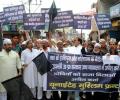
The Supreme Court of India granted bail to eight convicts in the 1987 Hashimpura massacre case. The case involved the killing of 38 people by personnel of the Provincial Armed Constabulary. The court considered the fact that the convicts have been incarcerated for over six years following the Delhi High Court's reversal of their acquittal by the trial court.

However, on Monday, the appellate officer at the Crime Branch-Central Investigation Department assured some activists of prompt action immediately

The families of the Muslim youth from Hashimpura who were shot dead 28 years ago had some committed supporters in their long struggle for justice.
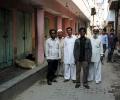
Right from the beginning, the State abdicated its responsibility in fixing the blame for the Hashimpura massacres or getting justice for the victims.

Twenty-eight years ago almost to the day, 37 unarmed Muslims were killed in cold blood, an act of wanton violence for which no one has so far been held guilty. Jyoti Punwani and photographer Uttam Ghosh visited the Meerut locality after the trial court recently acquitted the security personnel charged with the killings, and found a town untouched by its grim past.
On Thursday, two survivors and many members of the families of those killed on May 22, 1987, came to Lucknow to file 615 applications under the Right to Information Act

'It would have given us more relief if the accused had been sentenced to death'
After two months of dilly dallying, the Uttar Pradesh government has finally decided to come to the assistance of the 42 Muslim families whose bread winners were gunned down by policemen 28 years ago.
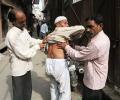
The Delhi HC termed the massacre "targeted killing" of unarmed and defenceless persons by the police.

After last week's acquittal of 16 policemen, pointedly accused of the cold-blooded murder of 42 Muslims in Meerut in 1987, this mohalla in Meerut is still scarred by the past but willing to move on
Rai says the story is a 'sordid saga of the relations between the Indian state and minorities'.

The SP continued silence on last week's acquittal of 16 policemen, pointedly accused of the cold-blooded murder of 42 Muslims in Meerut
The Delhi high court on Friday sought response of 16 policemen acquitted of murder charges and other crimes by a trial court in the 1987 Hashimpura massacre case.
'Communal killings take place routinely in our country and yet we don't ever convict the offenders.' 'The riots of 1993 and 2002 would not have happened if justice was given to the 1984 Delhi riot victims.'

Irrespective of their voting preferences, most voters would find this comparison with ISIS revolting. More specifically, would it persuade anybody who voted for Narendra Modi to change her or his mind? asks Shekhar Gupta.

It's difficult to say who suffered more these 28 years: The men who survived the PAC shooting and the assaults in jail; or the women who lost their men in these custodial killings.
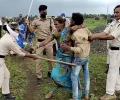
'... of protecting the lives and property of a large section of society.' 'It may further deepen the communal divide which already exists in the country.'
Muslims constitute 20% of UP's electorate. Currently, Muslim voters are divided between Akhilesh's SP and Mayawati's BSP. What will tilt the balance? Can Muslims back the winning party? Mohammad Sajjad explains the mysteries of UP's Muslim politics.

'Yogiji has neither been successful in reducing crime in the state nor has he been able to make the people feel that they are safe,' says one UP minister.
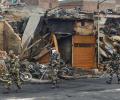
'The humanity displayed by ordinary, lower middle class residents of north east Delhi -- Hindus, Muslims and Sikhs -- will be remembered perhaps even more than the evil wrought in the riots,' notes Jyoti Punwani.

Justice S Muralidhar on Thursday apprised judges and lawyers of the Delhi high court about the sequence of communication on his transfer to Punjab and Haryana high court, saying that he was informed about it on February 17 and had no problem with it.
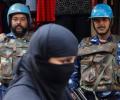
'In UP, the CM actually announced that his administration would 'take revenge' against rioters.' 'That must have been music to his police force's ears for it substantiated what the police always do: Take revenge on an entire community for the violence of a few,' points out Jyoti Punwani.
 © 2026 Rediff.com - Advertise with us - Disclaimer - Privacy Policy - Sitemap - Feedback - About us - Terms of use - Grievances