
Ashrat Ansari (32), Hanif Sayed Anees (46) and his wife Fehmida Sayed (43) were held guilty on charges of planting powerful bombs in two taxis which exploded at Gateway of India and Zaveri Bazaar respectively on August 25, 2003, killing 52 persons.
The Bombay high court on Friday upheld the death sentence of three Lashkar-e-Tayiba members, including a couple, in the 2003 twin Mumbai blasts that claimed 52 lives.
Indian Intelligence Bureau officials told rediff.com that since the 2003 attacks, Lashkar started using their local resources in India. Post 1993, the police believed that all terror operations in India were executed from across the border. While this is true to a large extent, post 2003 one witnessed the real birth of home grown jihadi

On July 27, POTA Judge M R Puranik had convicted Ashrat Ashrat Ansari (32), Hanif Sayed Anees (46) and his wife Fehmida Sayed (43).

A special Prevention of Terrorism Act court on Monday found the three accused in the six-year-old Gateway of India and Zaveri Bazaar twin blasts case guilty.The accused Haneef Sayyed, 46, an auto driver, his wife Fahmeeda, 43 and Ashrat Ansari, 32, were held guilty by the POTA Court.On August 25, 2003, two bombs left in taxis exploded in south Mumbai --- at the Gateway of India and at Zaveri Bazaar in the busy Kalbadevi area -- killing 52 people and wounding over a hundred.
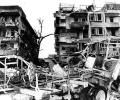
'The entire idea behind the serial bomb blasts was to strike fear in the minds of Indians.' 'I don't think the blasts were targeted to derail the Indian economy; the idea behind the blasts was retribution.'
 © 2026 Rediff.com - Advertise with us - Disclaimer - Privacy Policy - Sitemap - Feedback - About us - Terms of use - Grievances