
Xander Schauffele waded into the debate over the world's best golfer after finishing runner-up to Rory McIlroy in a playoff at the WGC-HSBC Champions in Shanghai on Sunday.

Reserve Bank of India has turned down Hongkong and Shanghai Banking Corporation Ltd's plans to pick up about 20 per cent stake in UTI Bank by restricting its approval for acquisition of only 14.6 per cent stake
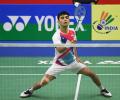
India's Lakshya Sen secured his maiden Super 500 title by winning the Yonex-Sunrise India Open with a stunning straight-game victory over reigning world champion Loh Kean Yew of Singapore in the men's singles final in New Delhi on Sunday.

After a stellar November that saw companies mop up over Rs 36,000 crore from the primary market via initial public offers (IPOs) and offers for sale (OFS), the current month, analysts said, will test investor's willingness to stay on with their investments as the one-month mandatory lock-in period for anchor investors begins to loosen. A note by Edelweiss Alternative Research suggests that in calendar year 2021 (CY21), 51 companies went public. Of these, 41 issuances' anchor selling dates are already over.

India's manufacturing expanded at a faster pace than China
.jpg)
The HSBC Emerging Markets Index, a monthly indicator derived from the PMI surveys, continued its upward trajectory in November on the back of faster manufacturing growth.
The foreign lender's profit after tax was Rs 2,960 crore
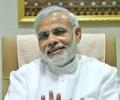
The headline HSBC Services Business Activity Index was at a 17-month peak of 54.4 in June rising from a modest 50.2 in May, HSBC said adding that 'the Modi wave has struck the service sector'.

Swiss banks seek fresh undertakings from Indians.

Although growth picked up slightly across the world's main emerging markets on an average, rates of expansion remain subdued

Private sector output in India expanded for the first time in 8 months in February as slump in the services sector moderated and manufacturing grew at a stronger pace, an HSBC survey said.
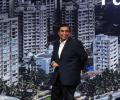
Reliance Industries Ltd's focus on the next hypergrowth opportunities in clean tech and its path to decarbonisation has the potential to spur re-rating, raises clarity on investment cycles and reduces investor worry, brokerages said. RIL chairman Mukesh Ambani at the company's 'Green AGM' on Thursday committed Rs 75,000 crore over the next three years to set up an integrated Green Energy Giga Complex across 5,000 acres in Jamnagar, Gujarat which will contain four giga factories. The complex, which would be one of the world's largest renewable manufacturing facilities, would have an integrated solar photovoltaic module factory, an energy storage battery factory, electrolyser manufacturing for hydrogen production, and manufacturing of fuel cells so that hydrogen can be used in transportation.

The apex body also advised "teams and participants entering tournaments during the European and Asian legs" to "not return to their home countries as many would then have to undergo a 14-day quarantine period upon their return."
The resolution plan has to be put to work this month itself. Jet has a debt of over Rs 8,000 crore and needs to make repayments of up to Rs 1,700 crore by the end of March.
The pace of economic growth in emerging markets continued to revive from the stagnation seen earlier in the year.

The government will investigate every Indian name appearing in an unprecedented leak of financial records, known as the 'Pandora Papers', which alleged that many world leaders have secret offshore stores of wealth.
The index has remained above the 50-mark, below which it indicates contraction, for more than three years now.
The HSBC India Services Business Activity Index, that tracks changes in activity at Indian services companies on a month-by-month basis, fell from 51.6 to exactly 50.0 in October.

The Reserve Bank on Thursday permitted banks to increase charges for cash and non-cash ATM transactions beyond free monthly permissible limit from next year. Bank customers will have to pay Rs 21 per transaction, instead of Rs 20, with effect from January 1, 2022, if they exceed the monthly limit of free transactions. "To compensate the banks for the higher interchange fee and given the general escalation in costs, they are allowed to increase the customer charges to Rs 21 per transaction. "This increase shall be effective from January 1, 2022," the RBI said in a circular.

The Hyderabad Open badminton tournament, scheduled to be held from August 11 to 16, was on Thursday cancelled by the world body BWF in view of the coronavirus pandemic. The event was part of the BWF's revised calendar to restart the sport after the pandemic-forced cancellations since March.
HSBC's services purchasing managers index, that maps the activity of around 400 firms, despite a 40 basis points dip, has kept above the 50 mark that signifies growth since November.

India's top shuttlers PV Sindhu and Saina Nehwal will be seen in action for the first time since the coronavirus-forced break when they compete in three upcoming tournaments in Bangkok, including the prestigious BWF World Tour Finals.
Indian parents are willing to make tremendous sacrifices when it comes to educating their children.

'Both Saina Nehwal and HS Prannoy have been cleared to participate in the ongoing Yonex Thailand Open after the fourth-round tests reports confirmed that both shuttlers have been tested negative for COVID-19.'

New business orders fall at faster pace, with index at 47.6 in March from 49.5 in February.

Kapoor told the ED that he was told by the then petroleum minister Murli Deora that the refusal to buy the MF Husain painting will not only prevent him from building a relationship with the Gandhi family but also prevent him from getting the Padma Bhushan award.

Omkeshwar Singh, Head, Rank MF, a mutual fund investment platform, answers your queries.

Tax department has launched 60 prosecutions.

According to the annual HSBC 'Value of Education Learning for Life' report, India has the world's highest proportion of parents (88 per cent) who are willing to send their children abroad for higher studies, ahead of Turkey (83 per cent), Malaysia and China (82 per cent each).
After contracting for 3 consecutive months, manufacturing activity saw an uptick in November, latest data from the HSBC Purchasing Managers' Index shows.

'The company's transition from an individuals-driven private firm to a board-driven listed public one will be carried out in a well-thought-through and well-executed manner.'

The HSBC India Composite Output Index, which maps both services and manufacturing, increased from 48.9 in March to 49.5 in April, but remained below the crucial 50 mark which indicates contraction for the second successive month.
The HSBC India Manufacturing Purchasing Managers' Index for the manufacturing industry climbed from 49.6 in October to 51.3 in November on the back of a rebound in new orders and output.
Exports of high-tech products will grow more quickly than exports of other goods over the next 15 years as emerging Asia moves away from being a low-cost production hub for foreign brands and toward developing value-added local products, according to research from HSBC.
Of the BRIC (Brazil, Russia, India and China) economies, China, Russia and Brazil posted sharper increases in activity, but India registered a fourth successive decline in output.

The index has posted below the 50 mark, which marks contraction, for the third consecutive month.

EPFO is managing a corpus of Rs 6.5 lakh crore.
The HSBC global research team has compared average annual fees and annual cost of living in 13 major study abroad destinations.

Insurance companies are seeking a separate deduction limit of Rs 1 lakh for insurance premium payment under Section 80C of the Income Tax Act in the upcoming Union Budget to bring in more people under the ambit of insurance. The insurers also want reduction in the goods and services tax (GST) rate of 18 per cent currently applied on health insurance products to 5 per cent to make such products more affordable to common people. Finance Minister Nirmala Sitharaman will present the Union Budget for 2022-23 on February 1.
