
Concerned over growing resistance from the Opposition and some of the allies of the ruling National Democratic Alliance, the divestment ministry appears to have given up hopes of any big-ticket privatisation.
The Supreme Court on Monday issued a notice to the Centre on a Public Interest Litigation challenging the legality of the government's decision to privatise public sector oil firms Bharat Petroleum Corporation and Hindustan Petroleum Corporation.
The Core Group of Secretaries on Divestment is believed to have favoured the appointment of HSBC as the global advisor for managing the privatisation of oil PSU Hindustan Petroleum Corporation.\n\n
Divestment Minister Arun Shourie said on Tuesday that his ministry had furnished all the facts to Attorney General for getting his opinion on the legal aspects of privatising public sector oil company, Hindustan Petroleum Corporation.
Petroleum ministry strongly supported the proposal of 26 per cent government holding in Hindustan Petroleum Corporation in the post disinvestment era to prevent new management from stripping or re-selling of company's assets to third party.\n\n

Alka Mittal has been appointed interim chairman and managing director of Oil and Natural Gas Corporation (ONGC) - the first woman to head the country's largest oil and gas producer. Mittal replaces Subhash Kumar, another interim head who retired after reaching superannuation age on December 31. "The Appointments Committee of the Cabinet (ACC) has approved the proposal of the Ministry of Petroleum and Natural Gas for entrustment of additional charge of the post of chairman and managing director (CMD), ONGC to Alka Mittal, director (HR), ONGC for a period of six months with effect from January 1, 2022, or till the appointment of a regular incumbent to the post, or until further order, whichever is the earliest," the Department of Personnel and Training (DoPT) said in an order dated January 3, 2022.
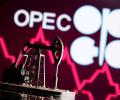
Changes in global oil and gas rates matter more to India's economy than other major economies because the country imports around 87 per cent of its oil, half of its gas in the form of LNG, and over 60 per cent of its LPG.
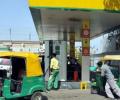
State-owned Indian Oil Corporation (IOC) and a joint venture of billionaire Gautam Adani's gas arm and Total of France -- Adani Total Gas Ltd -- have bid for maximum number of licenses to retail CNG to automobiles and piped cooking gas to households in the latest city gas bidding round.
Hindustan Petroleum Corporation is all set to sell half its stake in the Vishakapatnam refinery to French firm Total SA, which will bring in Rs 6,000 crore (Rs 60 billion).
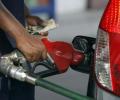
Petrol and diesel prices, which have been on a freeze for the past four months in view of assembly elections in states like Uttar Pradesh, need to be increased by over Rs 12 per litre by March 16 for fuel retailers to break even. International crude oil prices shot above $120 a barrel for the first time in nine years on Thursday before retreating a little to $111 on Friday, but the gulf between cost and retail rates has only widened. With international oil prices - on which domestic fuel retails are directly benchmarked - spiking in the last two months, state-owned fuel retailers "need a massive price hike of Rs 12.1 per litre on or before March 16, 2022, just to breakeven and a price hike of Rs 15.1 is required" after including margins for oil firms, ICICI Securities said in a report.
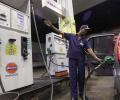
Petrol price in Delhi was hiked to Rs 77.28 per litre from Rs 76.73, while diesel rates were increased to Rs 75.79 a litre from Rs 75.19, according to a price notification from State oil marketing companies. Rates have been increased across the country and vary from state to state depending on the incidence of local sales tax or VAT.
Petrol and diesel prices were hiked by 80 paise a litre each on Wednesday, taking the total increase in rates in 16 days to Rs 10 per litre.

Govt's move will facilitate entry of global giants such as Total SA of France, Saudi Arabia's Aramco, BP Plc of the UK, and Trafigura's downstream arm Puma Energy.

The three oil PSUs have told Air India that if it did not make the monthly lump sum payment, they will stop fuel supply from October 11 at six major domestic airports.
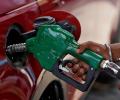
The price of petrol was hiked to Rs 101.39 a litre in Delhi from Rs 101.19 and to Rs 107.47 per litre in Mumbai, according to a price notification of state-owned fuel retailers. Diesel rates went to Rs 89.57 a litre in Delhi and Rs 97.21 in Mumbai.

State-owned oil companies such as HPCL, BPCL, IOC, ONGC and OIL plunged on worries that the government may ask them to share the burden of higher petrol and diesel prices.

Other shortlisted chief executives include Abdulrahman Ali Al-Abdulla of Muntajat, Peabody Energy's Gregory Boyce, Pailin Chuchottaworn of PTT Public Company Ltd, Repsol's Antonio Brufau and Ian Taylor of Vitol.

After a hiatus of nearly two decades, the government's programme to privatise state-owned firms restarted with the handing over of debt-laden national carrier Air India to the Tata Group. With the new owner shelling out Rs 18,000 crore for the buyout of the 'Maharaja', this would be the highest-ever amount garnered through privatisation, and is even more than the cumulative sum mopped up through strategic sales from 1999-00 to 2003-04. The government had in October last year inked the share purchase agreement with the Tata Group for sale of national carrier Air India for Rs 18,000 crore. Tatas would pay Rs 2,700 crore cash and take over Rs 15,300 crore of the airline's debt.
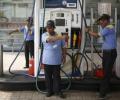
In nine hikes, petrol price has gone up by Rs 5 per litre and diesel by Rs 4.87 a litre.
Petrol and diesel prices are likely to be hiked this week as oil companies prepare to pare losses accumulated from keeping rates steady for over four months in the run-up to assembly elections in five states, including UP, despite international oil prices jumping to a 13-year high of $140 per barrel. West Texas Intermediate crude futures, the US oil benchmark, rose to $130.50 per barrel on Sunday evening, its highest since July 2008, before retreating. The international benchmark, Brent crude, hit a high of $139.13 at one point overnight, also its highest since July 2008.
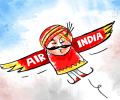
With the new owner shelling out Rs 18,000 crore for the buyout of 'Maharaja' this would be the highest ever amount garnered through privatisation or even the cumulative sum garnered through strategic sale in 1999-00 to 2003-04. The government had garnered roughly over Rs 5,000 crore during that five-year period by privatising 10 CPSEs.
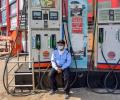
Petrol price on Tuesday breached the Rs 85 a litre mark in the national capital and diesel neared record high after rates were raised for the second consecutive day. Petrol and diesel prices were hiked by 25 paise per litre each, according to a price notification from oil marketing companies. This took the petrol price in Delhi to Rs 85.20 per litre and to Rs 91.80 in Mumbai. Diesel rate climbed to Rs 75.38 a litre in the national capital - just shying away from its record high - and to an all-time high of Rs 82.13 in Mumbai, the price data showed.
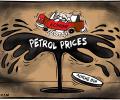
Petrol and diesel prices were raised for the second day in a row on Wednesday as state-owned fuel retailers resumed daily rate revision after a more than two-week long hiatus during assembly elections in states like West Bengal. Petrol price was increase ford by 19 paise per litre and diesel by 21 paise a litre, according to a price notification of state-owned fuel retailers. Petrol in the national capital now costs Rs 90.74 a litre and diesel comes for Rs 81.12 per litre.
The field operations are on in the sub-Himalayan terai region stretching from the Gorakhpur district in eastern UP to Bijnore district in western UP. The two companies were given prospecting licences sometime back, he informed. The licence allows the licence holder to undertake mineral substance prospecting works within a specific area.
International oil prices surged close to $100 a barrel on Tuesday after Russian President Vladimir Putin sent troops into Ukraine, but petrol and diesel prices in India continue to be on freeze and are expected to rise once assembly elections in states like Uttar Pradesh end. Amid fears of supplies being disrupted because of Russian aggression, the price of futures contract for Brent crude oil with April delivery on London's ICE rose by 4.18 per cent to $99.38 per barrel on Tuesday morning, before paring some gains to settle just above $98. The last time Brent exceeded $99 per barrel was in September 2014. Russia makes up for a third of Europe's natural gas and about 10 per cent of global oil production.

Diesel price on Monday was hiked by 25 paise per litre -- the third increase since last week -- and more rate hikes for both diesel and petrol are in the offing in the coming days as international oil prices have soared to a three-year high. The price of diesel was hiked to Rs 89.32 per litre in Delhi and to Rs 96.94 in Mumbai, according to a price notification of state-owned fuel retailers. This is the second straight day of increase in diesel prices and the third since September 24 when the state-owned oil firms ended a three-week hiatus in rates.
In 13 hikes, petrol price has gone up by Rs 7.11 per litre and diesel by Rs 7.67 a litre.
The Supreme Court on Monday issued notices to Hindustan Petroleum Corporation Limited and the Union government, taking note of a news item that said the diesel sold in the national capital region was being adulterated.
The Supreme Court on Friday reserved its order on petitions challenging the Union government's decision to privatise oil sector PSUs Hindustan Petroleum Corporation Ltd and Bharat Petroleum Corporation Ltd.
Workers of state-owned Hindustan Petroleum Corporation Ltd and Bharat Petroleum Corporation Ltd returned to work on Friday after a three-day strike to oppose privatisation of the cash-rich oil refiners.\n\n\n\n
The strike by workers of state-owned oil firms Hindustan Petroleum Corp and Bharat Petroleum Corp to oppose privatisation of the cash-rich refiners entered the second day on Wednesday but operations and petroleum product supplies remained unaffected.
Along with the opposition, key BJP allies Shiv Sena and Samata Party also slammed Divestment Minister Arun Shourie for going ahead with the strategic sale of the equity of the two public sector oil giants.
Along with the opposition, key BJP allies Shiv Sena and Samata Party also slammed Divestment Minister Arun Shourie for going ahead with the strategic sale of the equity of the two public sector oil giants.
In one of the steepest increases since daily price revision was started, petrol price on Thursday was hiked by 25 paise per litre and diesel by 30 paise as oil companies raised rates for the third straight day to pass on to consumers the increase in international oil prices.
