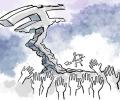
Eighteen of India's 28 states exceeded the fiscal deficit ceiling of 3 per cent of GSDP in FY25, a deterioration comparable to the Covid year of 2020-21, according to the Comptroller and Auditor General (CAG). The report also noted a decline in states reporting a revenue surplus, with Bihar, Mizoram, and Telangana moving into deficit.

'Improved law and order and transparent governance have helped change UP's investment image.'

A new white paper released by the Tamilaga Vettri Kazhagam (TVK) government reveals that Tamil Nadu's direct debt has nearly doubled to an alarming 10 trillion in the past five years, exposing significant fiscal strain and a substantial debt burden on every citizen.

NITI Aayog's inaugural Investment Friendliness Index, scoring 36 states and Union Territories on 84 indicators across eight pillars, revealed that no state or UT reached a score of 60 out of 100, indicating significant room for improvement in attracting investment.

Tamil Nadu Governor RV Arlekar announced that the TVK regime, led by Chief Minister C Joseph Vijay, will take steps to ensure fair financial devolution from the Centre, including pursuing the matter in the Supreme Court. The government also plans to conduct a 'Social Justice Survey' and address the state's severe financial deterioration.

Kerala, Tamil Nadu and West Bengal have been fiscally stressed for a considerable period of time, and there are no easy ways to mobilise revenues to meet the cost of the promised freebies, particularly in the prevailing difficult economic scenario, points out M Govinda Rao.
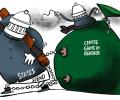
India's state-level fiscal rules have improved headline deficits, but the gains are fragile and uneven with major states still grappling with high debt levels, a World Bank report submitted to the 16th Finance Commission (FC) said. According to the report, despite nearly two decades of adoption of fiscal responsibility laws (FRLs), debt levels have not converged.
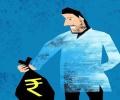
Uttar Pradesh Chief Minister Yogi Adityanath announced that the state has secured investment proposals worth approximately Rs 50 trillion over the past nine years, attributing this economic revival to the enforcement of the rule of law and strategic policy changes. He affirmed UP's trajectory towards becoming a $1 trillion economy by 2029-30.

If TVK MLAs and ministers are perceived as clean, or demonstrably cleaner than their predecessors, the credibility dividend will be enormous. The voter will feel rewarded, points out Ramesh Menon.

West Bengal Chief Minister Mamata Banerjee has announced a new unemployment allowance of Rs 1,500 per month for young job seekers in the state, starting March 7. The announcement comes ahead of the assembly elections and aims to support unemployed youth aged 21-40 who have passed their secondary exams.

Under the TMC, Bengal has seen expansion of welfare, but not big-ticket private investment.

Governments should move away from universal subsidies towards tightly targeted transfers, backed by stricter eligibility norms, sunset clauses and periodic audits to curb leakages and improve spending efficiency, a joint study by Asian Development Bank and PwC has recommended.

'Our government is committed to addressing it firmly while protecting the rights of genuine citizens.'
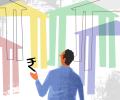
State debt is rising because revenues are disappointingly weak. Ten states have debt ratios exceeding 30 per cent. In 2023-2024, states were borrowing simply to meet day-to-day expenses, points out Debashis Basu.

A shift appears underway in India's tax landscape. States with relatively smaller tax collections like Odisha and Telangana are emerging as the fastest-growing contributors to indirect and direct tax collections, respectively.

A string of welfare schemes and promises tests the state's budget, which is already heavily dependent on central support and spends little as capital outlay.

India's new national accounts will leverage new data sources and surveys to enhance the measurement of the country's informal economy, and introduce double deflation methods across sectors, replacing the current system that relies on a single deflation mechanism in Gross Domestic Product (GDP) calculations.

A new report indicates that increasing unconditional cash transfer schemes for women across 12 Indian states are impacting their fiscal health, with six states projecting revenue deficits.
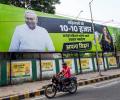
Voters are weighing a stark trade-off -- between preserving a socially driven policy and reversing course to revive revenue, restore fiscal balance, and rein in the underground liquor economy.

Experts say the state's economy is grappling with hidden debt, rising welfare costs, and lack of transparency.

Uttar Pradesh, Gujarat and Odisha budgets maintain revenue surpluses despite welfare schemes while Rajasthan and West Bengal face high debt, fiscal deficits and low capital outlay.
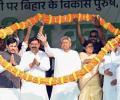
If he cannot do it this term by using his bureaucracy and experts from different fields, it will be a tragedy, asserts Ramesh Menon.
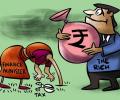
India's 18 largest states, accounting for over 90 per cent of the country's gross state domestic product (GSDP), are likely to record a marginal uptick in revenue growth to 7-9 per cent this year, from 6.6 per cent clocked in 2024-25 (FY25), rating agency Crisil said in a report on Tuesday. This growth, slower than the decadal average of about 10 per cent, would lift these states' cumulative revenue to around Rs 40 trillion in FY26 from Rs 37.26 trillion in FY25.
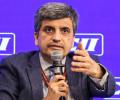
'If in our cities, all urban bus transport services are free, then the taxpayers are paying for it, or if electricity were to be made free, that's a huge cost to the rest of the people'
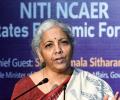
'Each state is unique, but when it comes to finance, the fundamentals cannot be different.'

More than 58% of individual housing loans disbursed in 2023-2024 were more than 25 lakh in size.

'We don't have to compete with Maharashtra or Gujarat. We have to now start thinking about how we compete with the United States or China.'

The road ahead will require navigating complex financial challenges while fostering job creation and sustainable development in the region.

The state's economic health is in focus as it has consistently breached the fiscal deficit in eight of the last 10 years since Telangana's formation.

The Sixteenth Finance Commission Chairman, Arvind Panagariya, has highlighted the challenges faced by southern states due to falling fertility rates and the subsequent increase in dependency ratios and ageing populations. He noted that Andhra Pradesh, Assam, and Tamil Nadu have raised concerns about these demographic trends. The Commission is currently touring the states to gather feedback and is expected to submit its recommendations after completing nationwide consultations.

Schemes like the Mukhyamantri Majhi Ladki Bahin Yojana strain fiscal resources amid rising unemployment and prices of food items.

Using the debt-to-GDP ratio as a fiscal anchor aligns with efforts to promote fiscal transparency through proper disclosure of off-budget borrowings.

The new excise policy, introduced in Delhi in November 2021, made sweeping changes to the city's liquor trade.
States are on track of fiscal consolidation with their total borrowings reaching Rs 5 trillion till October, which is 60 per cent of the projected borrowings of Rs 8.38 trillion till December 2024, according to data from official sources. Government officials said the lower-than-projected borrowings by states were a sign of prudent fiscal management by them. States announce their borrowing plans every quarter.

Populism gains momentum during election periods, and this trend is evident in at least four states: Telangana, Rajasthan, Madhya Pradesh and Chhattisgarh.

Per capita income in the state has consistently been below the national average for at least 24 years. However, it has narrowed the gap with the all-India level in recent years.

South Haryana hasn't delivered a chief minister since 1967, when his father Rao Birender Singh was ousted from power. It's a legacy Rao Inderjit Singh is determined to reclaim.

Terrorists active in Jammu and Kashmir will either land in jail or be sent to jahannum (hell), Minister of State for Home Affairs Nityanand Rai said in the Rajya Sabha on Wednesday while asserting that the Modi government has zero tolerance for terrorism.

Economies of Punjab, Andhra Pradesh, Madhya Pradesh, Uttarakhand and Haryana may have grown at a slower pace than the national economy during 2022-2023.

The situation raises concerns about whether the promised freebies will once again push the state into a revenue deficit.
