The coronavirus variant B.1.617 first identified in India last year has been classified as a "variant of global concern", with some preliminary studies showing that it spreads more easily, a senior WHO official had said on Monday.
The World Health Organisation (WHO) has classified the EG.5 strain of the SARS-CoV-2 virus circulating in different parts of the world, including India, as a 'variant of interest' but said it did not seem to pose more of a threat to public health than other strains.
"We continue to call on China to be transparent in sharing data and to conduct the necessary investigations and share the results. Understanding how the pandemic began remains both a moral and scientific imperative," Ghebreyesus said.

"A recent risk assessment of the situation in India conducted by WHO found that resurgence and acceleration of COVID-19 transmission in India had several potential contributing factors, including increase in the proportion of cases of SARS-CoV-2 variants with potentially increased transmissibility; several religious and political mass gathering events which increased social mixing; and, under use of and reduced adherence to public health and social measures. The exact contributions of these each of these factors on increased transmission in India are not well understood," it said.

Mortality rates were 0.7 per cent for Delta, 0.4 per cent for the original Omicron variant and 0.3 per cent for Omicron BA.2.
The WHO said that studies have highlighted that the spread of the second wave has been much faster than the first in India.

Experts in Singapore, which is seeing a surge in Omicron cases, have warned that the new and supposedly more contagious variant is likely to replace Delta over the coming weeks as the dominant global variant, with the virus being fitter and having a reproductive advantage.
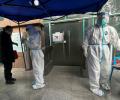
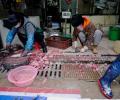
A new analysis of genetic samples collected from a seafood market in central China's Wuhan city shows the presence of the SARS-CoV-2 virus in raccoon dogs sold at the venue, strengthening the case for the natural origin of the Covid-19 pandemic, according to a team of international experts.
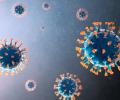
Mu -- also known by its scientific name as B.1.621 -- was first identified in Colombia in January 2021, and since then, there have been 'sporadic reports' of cases and some larger outbreaks in South America and Europe, the United Nations health agency said in its weekly bulletin on the pandemic on Tuesday.
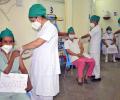
Experts said the strain has not propelled a surge in cases like Omicron, but advised strict adherence to COVID-19-appropriate behaviour.
The Delta Plus variant have been detected sporadically in Maharashtra, Kerala and MP.

The move came soon after Belgium confirmed a case of the B.1.1.529 variant in someone who had travelled back from Egypt earlier this month, with the European Union (EU) member states agreeing to a snap travel ban on seven African nations.

The UK's health authorities have confirmed that a new and "most significant" variant of COVID-19 is officially under investigation in the country as the government on Friday added six countries to its travel ban red list from southern Africa, where B.1.1.529 strain was first identified.
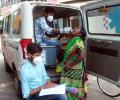
The highly transmissible Delta variant of SARS-CoV-2 has mutated further to form the 'Delta plus' or 'AY.1' variant but there is no immediate cause for concern in India as its incidence in the country is still low, scientists in New Delhi said.
 © 2026 Rediff.com - Advertise with us - Disclaimer - Privacy Policy - Sitemap - Feedback - About us - Terms of use - Grievances