The government's indirect tax collection is expected to increase by 8.3 pc in the financial year 2025-26 (FY26), according to a report by ICICI Bank. The report also noted that this growth is higher than the 7.1 per cent increase seen in FY25 and is mainly driven by rise in GST revenue from strong urban consumption. It said "The increase is driven by higher goods and services tax collections which in-turn is explained by boost to urban consumption".

Prime Minister Narendra Modi asserted on Tuesday that India's water will no longer flow outside the country but will be utilized in the nation's interest, a statement seemingly directed at Pakistan following his government's decision to put the Indus Waters Treaty in abeyance after the Pahalgam terror attack. Addressing the ABP Network's 'India@2047' Summit, Modi emphasized his government's focus on interlinking rivers, noting that water used to be a source of conflict among states, before alluding to India's stance against Pakistan while discussing water. He highlighted the finalization of the India-UK free trade agreement as a historic milestone and underscored the importance of prioritizing national interest for achieving objectives and realizing the country's potential. Modi highlighted the country's growth and development under his government's rule, emphasizing its focus on welfare schemes and digitalization. He reiterated his government's commitment to 'Nation First' and pointed to the recent reforms undertaken, including the new Waqf law and the ban on triple talaq, which he said were aimed at benefiting the marginalized sections of society.

'Not paying workers enough will end up being self-destructive or harmful for the corporate sector itself.'

...and getting GDP to measure India's data economy, recommends Ajit Balakrishnan.
'The government has to explain (to the army, air force and navy chiefs) whether they want a punitive strike, a deep punitive strike, or whether they want limited war or an all-out war, will it be a circumscribed war or will it be a shallow attack along the border.'
India's economy grew by 13.5 per cent in the first quarter of the current fiscal, mainly due to the base effect, official data showed on Wednesday. The gross domestic product (GDP) had expanded by 20.1 per cent in the corresponding April-June period of 2021-22, according to data released by the National Statistical Office (NSO). Many analysts had projected the Indian economy will expand at a double-digit growth rate due to the base effect.

The Reserve Bank of India (RBI) on Friday cut the repo rate by 25 basis points to 6.25 percent, marking the first reduction in five years. The central bank also projected GDP growth for fiscal year 2026 at 6.7 percent and inflation to come down to 4.2 percent in FY26 from 4.8 percent in FY25. The RBI said the global economic backdrop remains challenging but the Indian economy continues to remain strong and resilient.

One fact is irrefutable: Nepal's recent political history tells us that the route to a return of monarchy cannot go through India despite friends in high places, asserts Aditi Phadnis.
States are mandated to develop and implement 'heat HAPs' for prevention of heat-induced diseases. But most do not go beyond standard advisory on heat prevention.

India's largest IT services firm Tata Consultancy Services on Thursday reported a 1.68 per cent dip in its consolidated net profit to Rs 12,224 crore for the March 2025 quarter. Tata Consultancy Services (TCS) - whose earnings marked the official start of IT results season - reported a total revenue of Rs 64,479 crore in Q4 FY25, up 5.3 per cent over the year-ago period.

It will be the second Budget of the Modi 3.0 government and eighth straight Budget for Nirmala Sitharaman, rare in Indian polity.

'For the first time in this country, perhaps the first time anywhere, we are going to use backwardness index.' 'It is a fundamental shift in the discourse in the country's social justice.'

Global trends, trading activity of foreign investors and news flow on tariffs are expected to influence movement in the equity market in a holiday-shortened week ahead, analysts said. Equity markets would remain closed on Wednesday for 'Mahashivratri'.
The World Bank on Tuesday revised upwards its GDP growth forecast for India to 6.9 per cent for 2022-23, from 6.5 per cent earlier.
The Indian economy is projected to grow at 6.2 per cent in 2025-26, slower than earlier estimated rate of 6.5 per cent, due to escalated trade tensions and global uncertainty, the International Monetary Fund (IMF) said on Tuesday. "For India, the growth outlook is relatively more stable at 6.2 per cent in 2025, supported by private consumption, particularly in rural areas," IMF said in its World Economic Outlook (WEO).

Samajwadi Party MLA Abu Asim Azmi, suspended from the Maharashtra assembly over his remarks praising Mughal emperor Aurangzeb, will be '100 per cent' put in jail, Chief Minister Minister Devendra Fadnavis said in the legislative council.

'Militarily, it risks escalating tensions with Pakistan, potentially triggering conflict due to Pakistan's heavy reliance on the Indus.'
Facing criticism from the government over the central bank prioritising inflation over growth, the new RBI Governor Sanjay Malhotra on Monday said that prospects of the Indian economy are expected to improve on the back of high consumer and business confidence in 2025. "As we strive to preserve financial stability to support a higher growth path for the Indian economy, our focus remains steadfast on maintaining stability of financial institutions and, more broadly, systemic stability," Malhotra said in foreword to the Financial Stability Report.

In an eventful week ahead, stock markets may face volatile trends before the RBI's interest rate decision and the US inflation data announcements, as investors continue to assess the broader implications of US tariffs on global economy and inflation, analysts said. Investors fear that a full-blown trade war will impact global trade and economic growth, according to market experts.

The Reserve Bank on Wednesday marginally lowered the country's GDP growth projection for the current fiscal at 6.8 per cent from its earlier estimate of 7 per cent. However, despite the downward revision in the economic growth projection, India will remain among the fastest growing major economies in the world, said RBI Governor Shaktikanta Das while announcing the latest bi-monthly monetary policy.

The country's current account deficit widened to 4.4 per cent of the GDP in the quarter ended September, from 2.2 per cent GDP during the April-June period, due to higher trade gap, as per data released by the Reserve Bank on Thursday. "India's current account balance recorded a deficit of $36.4 billion (4.4 per cent of GDP) in Q2:2022-23, up from $18.2 billion (2.2 per cent of GDP) in Q1:2022-23 and a deficit of $9.7 billion (1.3 per cent of GDP) a year ago [i.e., Q2:2021-22]," the RBI said.

'War is not an answer. War is not a solution.' 'Deterrence is a solution. We should have the stick with us with which we can beat Pakistan.'

Haryana has done well in terms of economic growth over the last couple of decades. For it to continue to lead the growth ladder, the new government has to work hard on multiple dimensions, recommend Shishir Gupta and Rishita Sachdeva.

The time is ideal for a 'Dream Budget' akin to the 1991 reforms that sparked high growth and unlocked significant gains in productivity, points out Rajeswari Sengupta.
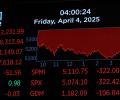
'If the US stagnates and falls into a recession, the dollar will weaken, oil prices will also dip. This augurs well for India.'
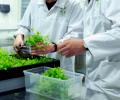
Several leading scientists, academicians, and agriculturalists have called for raising government support for research and development to make Indian agriculture future-ready.

Samajwadi Party MLA Abu Asim Azmi was on Wednesday suspended from the Maharashtra legislative assembly till the ongoing budget session ends on March 26, over his remarks eulogizing Mughal emperor Aurangzeb.
The government resolution does not spell out what action would be taken, if any, against those writing and publishing 'negative' news. Nor does it define 'negative news and "misinformation', explains Jyoti Punwani.

Samajwadi Party MLA Abu Asim Azmi's remarks praising Mughal emperor Aurangzeb sparked outrage in the Maharashtra legislature, leading to calls for his suspension and accusations of treason. The issue, which was politicized by both the ruling coalition and opposition parties, led to the adjournment of both Houses of the state legislature. Azmi later retracted his statements, saying they were twisted and that he had not made any derogatory remarks against Shivaji Maharaj or Sambhaji Maharaj. The BJP, however, seized the opportunity to slam the Congress and other opposition parties, accusing them of trying to "eradicate" Sanatan Dharma. The Mumbai police have initiated a probe into the matter, registering a case against Azmi for his remarks.
India needs another shot of difficult reform, of the kind only possible at gunpoint. Mr Trump holds that gun to our heads now. A drastic reduction in tariff protection, other elements of sarkari wet-nursing will force entrepreneurial India to become competitive again, argues Shekhar Gupta.
India's manufacturing sector growth fell to a 14-month low in February amid softer increase in new orders and production, a monthly survey said on Monday. The seasonally adjusted HSBC India Manufacturing Purchasing Managers' Index (PMI) registered 56.3 in February, down from 57.7 in January, but remained firmly within the 'expansionary' territory. In PMI parlance, a print above 50 means expansion, while a score below 50 denotes contraction.
Clawing the economy back to an 8 per cent growth path will require bringing savings and investment rates closer to 35 per cent on a sustained basis, which were 30.2 and 29.6 per cent, respectively, in FY22, according to a report. As per India Ratings, a large part of investments will have to be in infrastructure, which can help revive private investments by easing supply constraints and offset the weakening of external demand due to global headwinds. Higher investments will have to be accompanied by higher domestic savings to keep the savings-investments gap under check.
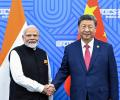
Prime Minister Narendra Modi has emphasized dialogue over discord in India's relationship with China, acknowledging natural differences between the two countries but stressing that stronger cooperation is essential for their mutual interests and global stability. In a podcast with Lex Fridman, Modi highlighted the ongoing efforts to restore normalcy along the border following the 2020 clashes, emphasizing the importance of a stable and cooperative relationship.

'If weak indicators persist, there is a risk that India could slip into a prolonged slowdown similar to the one experienced between 2014 and 2019,' warns Debashis Basu.
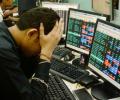
Mahindra & Mahindra, Bharti Airtel, Infosys, Tata Motors, Titan, Tata Consultancy Services, Nestle and Maruti were also among the major laggards. HDFC Bank emerged as the only gainer from the pack.
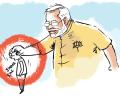
Prime Minister Narendra Modi on Wednesday urged all stakeholders to come together and invest in people for skill development, nurturing talent and promoting innovation which are essential for job creation and boosting the economy. Participating in post-Budget webinar on employment, Modi said the government has provided skill training to 3 crore youth since 2014 and decided to upgrade 1,000 ITIs and set up five centres of excellence.

'Every Indian should move to an EV, and the government should not buy any fossil fuel cars. The government should become the first driver of EV adoption.'
India's economy grew by 6.3 per cent in the second quarter of the current fiscal, official data released on Wednesday showed.


At the PMO, policies are framed by factoring in analytical perspectives, implications, sustainability, and other dimensions.
