
The Koodankulam atomic power project is expected to be commissioned in September, capping months of delays due to non-availability of equipment and anti-nuclear protests.
The plant was earlier scheduled for commercial operations in December but it was deferred to March next due to the stir by locals and resultant stand-off between them and government. The commercial operation of the second unit to produce another 1000 mw is now expected by February 2013, the NPCIL said.
A day after the Tamil Nadu government gave its go ahead to the Koodankulam Nuclear Power Plant, work at the Indo-Russian project started in full swing with officials expressing hope that the first unit would be commissioned "as soon as possible."
The first unit of the Koodankulam nuclear power project is expected to start generating electricity in the next 40 days, Minister of State in the Prime Minister's Office V Narayanasamy said on Monday. He said the Atomic Energy Regulatory Board officials were at the Koodankulam project site and inspecting the plant.
India's nuclear regulator on Friday said it has granted permission for loading of fuel into the much-delayed Kudankulam atomic power plant.
The Centre on Saturday said it is confident of commissioning the first unit of the Koodankulam Nuclear Power Project to generate 1,000 MW of power in two months as 99 per cent of its works are over.
S P Udayakumar, who is fasting along with his associate M Pushparaya, gives us a first-person account from Idinthakarai, Ground Zero of the protests against the nuclear power plant in Tamil Nadu.
Construction work at the controversial Koodankulam nuclear power plant has been stopped but essential maintenance activities are underway, Minister of State in the Prime Ministers Office V Narayanasamy said on Thursday.
India has said the stalled agreement for four more Russian nuclear reactors in Koodankulam in Tamil Nadu was not a setback.
The committees set up by the Centre and Tamil Nadu government to resolve the standoff over the Koodankulam Nuclear Power Plant met in Tirunelveli on Tuesday for the first time when representatives of the protesters presented a charter of demands including a paper on plant's status.
The Koodankulam Nuclear Power Project has been jinxed ever since it was thought of. It was first talked about in 1988 when the Soviet Union agreed to build a plant in India and also supply it fuel. The Soviet Union broke up soon after. Rediff.com's A Ganesh Nadar spoke with Swapnesh Kumar Malhotra.
The Nuclear Power Corporation of India Ltd has postponed the expected date of commissioning of the first unit of Kudankulam Nuclear Power Plant to next month
Bogged down by the over month-long agitation by local people led by anti-nuclear activists, commissioning of the first reactor of the controversial Koodankulam Nuclear Power Project has been delayed by three months.
Officials of Nuclear Power Corporation of India Limited are inspecting the first unit of Koodankulam Nuclear Power Plant in Tirunelveli district after removing dummy fuel from the reactor prior to getting clearance from the Atomic Energy Regulatory board to upload the real fuel.

The Hindutva social media continues to present the DMK especially as anti-god, anti-Hindu and anti-Brahmin. The strategy did not work in the past, it has not worked in the present, and would not work in the future, as a massive vote-getter, asserts N Sathiya Moorthy.
Anti-nuclear activist S P Udayakumar, who has been called a threat to the economic security of India by the Intelligence Bureau, speaks to A Ganesh Nadar.
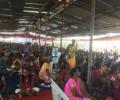
The Centre has zeroed in on Kovalam village in Kanyakumari district for a new port, but fishermen's protests could derail this plan.

In one village, a woman asks, "They are always showing cash seizures on television, you think some of it will escape and we will get money as usual?" "Only 1 percent of cash is actually seized, the rest has arrived, you don't worry," a party worker assures her. Rediff.com's A Ganesh Nadar reports on the election in the southern-most tip of the country.

The 'Raj Bhavan/Nakkeeran Gopal case', in which editor S Gopal was arrested in the morning and set free by the court in the afternoon, is not the first one where the Tamil Nadu's once-reputed police force is seen as faltering in the eye of the law, says N Sathiya Moorthy.

Muzzling NGOs is unbecoming of a democracy. Self-confident democracies encourage, indeed applaud, the involvement of citizens' associations, including NGOs, in social and political decision-making and development planning. Instead, our paranoid government bullies and terrorises them, says Praful Bidwai.

In a spontaneous outpouring of grief, thousands of people bid an emotional farewell to former President APJ Abdul Kalam who was on Thursday laid to rest with full state honours in his home town here amid chants of "Bharat Mata Ki Jai".

R S Sundar, the site director of KNPP, on how the plant is producing 1,000 MW of nuclear power, the largest in the country.

'The government is using the Intelligence Bureau to go after NGOs.' 'It is not only the NDA, the UPA also didn't like NGOs.' 'NGOs predominantly work with the poor. So, when you cancel an NGO, the affected are the poor, the Dalits, the tribals, the street children and the marginalised.'

'Not a single person I spoke to there believes that the Kundalkulam plant is safe.'

India's nuclear establishment is continuing its march of folly at the expense of safety in the false belief that atomic power is the energy of the future. It's not. Nuclear power is in relentless global decline, says Praful Bidwai.
 © 2026 Rediff.com - Advertise with us - Disclaimer - Privacy Policy - Sitemap - Feedback - About us - Terms of use - Grievances