
State Bank of India Chairman C S Setty stated that banks will take three to four months to deploy the significant funds mobilised through foreign currency non-resident (bank), or FCNR(B), deposits, which is unlikely to cause "abnormal lending". He also highlighted the need for agentic artificial intelligence (AI) costs to fall sharply for its widespread deployment in India, envisioning its role in transforming banking from fraud detection to personalised financial assistance.

Fintech firm PhonePe has signed a Memorandum of Understanding (MoU) with the Ministry of Electronics and Information Technology (MeitY) to integrate its enterprise data intelligence platform, PulsePro, into the PM GatiShakti framework. This collaboration aims to provide granular, hyperlocal insights for national infrastructure planning, economic analysis, and holistic urban and rural development.

Prominent individuals, including Infosys co-founder Nandan Nilekani and Zerodha founders Nithin and Nikhil Kamath, have appeared on a notice list during Karnataka's Special Intensive Revision (SIR) of electoral rolls due to various discrepancies. Authorities clarify that these notices are part of a verification process and officials will assist in resolving the issues without inconveniencing the individuals, also debunking reports about CM D K Shivakumar's mother receiving a notice.

PhonePe, at the Global Fintech Fest 2026, unveiled its strategic vision for the next decade, focusing on inclusive digital progress for individuals, households, and businesses across India. The roadmap details innovations in financial inclusion, wealth creation, credit access, and merchant solutions.

SEBI Chairman Tuhin Kanta Pandey stated that the National Stock Exchange (NSE) has not submitted any proposal seeking approval to trade on its own platform after getting listed, and such trading is currently not permitted. He also confirmed that SEBI would examine concerns raised by brokers and asset management companies regarding the new UPI Merchant Discount Rate (MDR) framework.
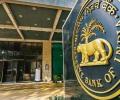
The Reserve Bank of India (RBI) is planning to extend tokenisation to various financial asset classes, building on its successful trials with certificates of deposit (CDs). This move aims to enhance the efficiency of issuance, trading, and settlement of financial assets, leveraging blockchain technology and wholesale Central Bank Digital Currency (CBDC) for atomic settlements.

The Reserve Bank of India (RBI) has introduced new features for India's digital payment ecosystem, including UPI tap-to-pay for PIN-less transactions up to 5,000 and multi-currency capabilities for forex on Bharat Connect, supporting Euro, British Pound, and other major currencies.

Two men, Rohan Parikh and Dilip Kunde, were arrested after attempting to enter a Mumbai mall with a firearm and a fake PMO identity card. Parikh confessed to fabricating the PMO ID using ChatGPT to enhance his social standing, while Kunde, a former Army man, was acting as his bodyguard with a personal weapon. Both have been remanded to judicial custody.

EPF wage ceiling rising to Rs 25,000 could increase employer statutory contributions by Rs 1,200 monthly per employee.
The National Payments Corporation of India (NPCI) stated that the Merchant Discount Rate (MDR) "is distributed only amongst the UPI ecosystem, to further invest into infrastructure resilience, innovation, cybersecurity (protecting the UPI infrastructure with banks and non-banks) and customer service."

The government is introducing a 0.4% Merchant Discount Rate (MDR) on UPI person-to-merchant payments above Rs 2,000, effective October 15. This move ends the zero-MDR regime, aiming to fund UPI infrastructure and sustainability, as the previous government subsidy was insufficient to cover operational costs. Payments between individuals and most everyday merchant transactions will remain free.

PAYD suits infrequent drivers who can estimate annual mileage.
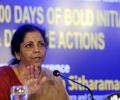
Finance Minister Nirmala Sitharaman criticised commentators who express pessimism about India's demographic dividend, asserting that the country's youth are actively driving economic growth and innovation. She also highlighted the dual nature of AI and the need for robust safeguards in emerging technologies like quantum computing to balance innovation with safety.

India's MSME sector faces a significant formal credit gap of approximately Rs 60 lakh crore, with traditional channels meeting only a fraction of the demand. A new report suggests that a centralised, interoperable digital layer could effectively bridge this gap and enhance productivity across the formal business sector by digitising workflows and enabling cash-flow-based underwriting.

BRICS members have expressed 'serious concerns' over the unilateral imposition of trade and finance-related measures, including higher tariffs and non-tariff barriers, stating these actions distort trade and are inconsistent with WTO rules. The grouping also highlighted elevated risks to the global economic outlook due to geopolitical tensions, trade fragmentation, and protectionism.

Experts laud the decision to impose a 0.4 per cent Merchant Discount Rate (MDR) on UPI transactions exceeding Rs 2,000, effective October 15. This move, along with a dedicated fund for small merchants, is seen as crucial for creating a sustainable digital payments ecosystem, incentivising expansion in rural areas, and funding innovation while keeping most transactions free for users.

Sebi chairman Tuhin Kanta Pandey acknowledged that all global jurisdictions experienced lower liquidity during the initial implementation phases of the closing auction session (CAS), a stock price determination framework introduced in India on August 3.

Chief Economic Advisor V Anantha Nageswaran has stressed the urgent need for India's financial sector to proactively address the safety and security risks of artificial intelligence, stating that waiting for problems to materialise is not an option.

Finance Minister Nirmala Sitharaman has urged the Reserve Bank of India to accelerate its central bank digital currency initiatives, emphasising the need to sharpen capabilities with the digital rupee amidst rapid advancements in tokenisation, agentic AI, and quantum computing. She also highlighted critical concerns regarding cybersecurity, warning that autonomous AI systems are evolving rapidly and require robust safeguards. Sitharaman proposed a federated industry platform to give India's technology ecosystem a collective international voice.

Mumbai Police have arrested Rohan Parikh (24) and Dilip Kunde (49) for allegedly forcing their way into Jio World Plaza with a firearm and a fake PMO identity card. The incident, which occurred on Monday evening, has been clarified by police to have no connection with Prime Minister Narendra Modi's event in the city.

'It's A Cat And Mouse Game.'
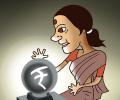
Finance Minister Nirmala Sitharaman clarified that the Merchant Discount Rate (MDR) on digital transactions applies to merchants, not customers, and aims to support banks and fintech in infrastructure investment. She countered Congress leader Jairam Ramesh's claims, stating that a committee will decide on MDR only after Parliament passes the Taxation and Other Laws (Amendment) Bill, 2026, a process currently stalled by parliamentary disruptions.

Axis Bank MD & CEO Amitabh Chaudhry has cautioned that the surge in FCNR(B) deposits could lead to 'abnormal lending' as banks seek to deploy excess liquidity, while also hinting at a potential interest rate hike in the near future.
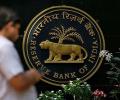
Reserve Bank of India (RBI) Deputy Governor Rohit Jain has warned that financial institutions' increasing reliance on a small number of common technology providers, including cloud and AI model providers, could create a new source of systemic risk. He highlighted 'speed, concentration and opacity' as key risks, noting that a disruption at one provider could rapidly spread across multiple institutions, amplifying existing financial risks.

As NSRCEL enters its next phase, the incubator plans to focus on AI, deep technology and global partnerships as it looks to expand its reach.

Finance Minister Nirmala Sitharaman announced that the Goods and Services Tax (GST) Council's October 7 meeting will focus on 'GST 2.0' process reforms, including e-invoicing and input tax credit rules, while also addressing complex issues surrounding the taxation of the digital economy and cryptocurrency.

Fintech giant PhonePe has launched 'PhonePe UPI 123Pay', a new service enabling UPI transactions for feature phone users without requiring an internet connection. This initiative aims to bring digital payment capabilities to over 200 million feature phone users, promoting financial inclusion across India.

The Congress party has criticised the Modi government over a notification regarding UPI transactions, alleging it paves the way for imposing fees, especially on transactions above Rs 2,000. Rahul Gandhi claimed the government is surrendering to American pressure, while Mallikarjun Kharge highlighted the potential burden on common citizens amidst inflation. The government's notification prohibits charges on UPI transactions up to Rs 2,000 but remains silent on higher amounts, sparking fears of a "Digital Payments Tax."

Following a ban on real-money gaming, Dream Sports, the parent company of Dream11, is strategically expanding its portfolio across 11 companies, including a new venture into wealth management and stockbroking, with a focus on serving a mass user base through AI-first solutions, cofounder Harsh Jain confirmed.

The BJP has announced a month-long 'Seva Sankalp Abhiyan' campaign, starting on Prime Minister Narendra Modi's birthday, September 17, to commemorate his 25 years in public life. The initiative includes various programmes like 'Seva Diwas', 'Ashirwad Ka Diya', 'Seva Jyoti Kalash Yatra', youth yatras, and innovation challenges, all aimed at public participation and promoting the vision of 'Viksit Bharat 2047'.

The Indian government has introduced a 0.4% Merchant Discount Rate (MDR) on UPI person-to-merchant (P2M) transactions exceeding Rs 2,000, effective October 15. This move ends nearly six years of fully free UPI payments, though person-to-person (P2P) transfers and small P2M payments remain free. The charges aim to bolster investment in UPI infrastructure, with specific exemptions and caps for essential sectors.

India's UPI International payment system is now playing a crucial role in humanitarian efforts, enabling seamless disaster relief donations from Indian users to Nepal's Prime Minister Disaster Relief Fund, showcasing its growing global acceptance and utility beyond tourism. UPI IMAGE: Kindly note that this image has been posted for representational purposes only. Photograph: Unsplash Key Points UPI International, initially for Indian tourists, is now facilitating disaster relief donations to Nepal's Prime Minister Disaster Relief Fund. The embassy of Nepal in India is actively encouraging Indian users to utilise their UPI apps for these contributions. This marks a significant shift, expanding UPI's cross-border use case beyond tourism to include inbound collection for foreign governments. The move positions UPI International alongside global payment giants like Alipay+ and UnionPay for international aid. Donors need to activate the UPI International feature on their apps to transact, with amounts converted from INR to NPR.

For India, the goal is not simply to host another grand diplomatic gathering. It is to prove that a diverse coalition of emerging powers can still deliver.
The Payments Council of India has confirmed that Unified Payments Interface (UPI) services will continue to be free for consumers and small merchants, despite a recent Lok Sabha Bill. This clarification addresses concerns about potential charges, emphasising that while a sustainable financial model for UPI infrastructure is being developed, transaction charges will not be passed on to users or small businesses.

The absolute amount of money raised is more than three times the 2 trillion seen before the pandemic (June 2019).
Minister of State for Telecom Chandra Sekhar Pemmasani urged BRICS nations to collaborate on building institutional capacity and advocating for fair standards in international telecom and ICT bodies. He highlighted India's willingness to share its modular, open-source digital public infrastructure frameworks like Aadhaar and DigiLocker, emphasising their role in sustainable development and economic growth across the Global South.

Making UPI payments fee-based for some transactions could enhance mental reservations against digital payments -- which have largely been overcome -- once more. Do we want to regress?, asks R Jagannthan.
The Rajya Sabha has passed The Bankers' Books Evidence Bill, 2026, which aims to replace a British-era law and allow digital and virtual records to be admissible as evidence in courts. This legislation aligns with contemporary digital banking practices and extends a uniform evidential framework to various financial entities, including NBFCs and fintech companies. Finance Minister Nirmala Sitharaman highlighted the bill's role in strengthening public confidence and safeguarding customer privacy. The bill's passage, however, saw an Opposition walkout over unrelated issues.
One 97 Communications Ltd, operating Paytm, is set to issue its first bonus shares, following a landmark year of achieving its maiden full-year profit and gaining significant market share. The board will meet on July 20 to decide on the bonus issue, reflecting confidence in its financial strength and aiming to improve stock accessibility for retail investors.
Parliament was informed that UPI has onboarded 55.49 crore users by June 2026, with transactions reaching 24,162 crore in volume and Rs 314 lakh crore in value in FY 2025-26. The platform, operated by NPCI, is expanding internationally through NIPL, facilitating cross-border payments and assisting other nations in building similar systems. Significant efforts are also underway by the Government, RBI, and NPCI to enhance the security and transparency of UPI transactions, including risk-based limits, security frameworks, and public awareness campaigns against cyber-crime.
