
Foreign direct investment (FDI) equity inflows into India contracted by 16 per cent to $43.17 billion during the April-December 2021 period, according to data from the Department for Promotion of Industry and Internal Trade (DPIIT). The inflows had stood at $51.47 billion during the corresponding period of the previous year. The total FDI inflows (which includes equity inflows, re-invested earnings and other capital) aggregated at $60.34 billion during the nine month period of the current fiscal year as against $67.5 billion in the year-ago period.

FDI equity inflows into the country during April-January 2020-21 grew by 28 per cent to $54.18 billion, according to the Commerce and Industry Ministry data released on Monday. Foreign direct investment (FDI) inflows during April-January 2019-20 stood at $42.34 billion. Total FDI (which includes reinvested earnings) during the 10-month period in FY21 increased by 15 per cent to $72.12 billion over the year-ago period.

Ask rediffGURU and PF expert Milind Vadjikar your insurance, stocks, mutual fund and personal finance-related questions.

Amid domestic traders continuously complaining alleged violations of FDI norms by foreign online players, Commerce and Industry Minister Piyush Goyal on Friday said the ministry will "very shortly" come out with certain clarifications on the e-commerce sector. Goyal said the ministry is not changing any policy on e-commerce for foreign direct investment as the policy is crystal clear. "We will also come out with the e-commerce policy and whatever clarifications... Certain instances have come to our notice where the policy is not being followed in letter and spirit, we will obviously be clarifying that very shortly," he told reporters in New Delhi.

'Expect India to keep doing well irrespective of geopolitics.'

Access to India's defence market must be made conditional -- available only to those who are ready to make a long-term commitment in India, argues Ajai Shukla.

The most striking features of this Budget was its focus on simplification and improving the ease of doing business in India, asserts Kaku Nakhate.
Foreign Direct Investment into India rose by 13 per cent in 2020, boosted by interest in the digital sector, and while fund flows "declined most strongly" in major economies such as the UK, the US and Russia due to the Covid-19 pandemic, India and China "bucked the trend", the UN has said.

The deputy leader of Congress in Lok Sabha, Capt Amrinder Singh, said the budget was "not pro-poor".

India attracted an estimated $49 billion FDI in 2019, a 16 per cent increase from the $42 billion recorded in 2018.

The government on Wednesday notified its decision to permit 100 per cent foreign direct investment (FDI) under automatic route in the telecom services sector. In a press note, the Department for Promotion of Industry and Internal Trade (DPIIT) said foreign investment in telecom services will be subject to the condition of Press Note 3 of 2020. Accordingly, cases requiring prior government approval under the provisions of Press Note 3 will continue to be in place.

Anticipating US action on tariffs, India seems to have made the first move by revamping its tariff structure by reducing the slabs to eight rates, points out Mukesh Butani.

Fast-moving consumer goods (FMCG) distributors' association has written to the finance ministry, highlighting concern over fund utilisation and fund accumulation by quick commerce companies and deep discounting of goods on their platforms. According to a recent letter seen by Business Standard, All India Consumer Products Distributors Federation (AICPDF) noted that its analysis indicated that approximately 80 per cent of these funds were directed toward customer acquisition strategies instead of creating cutting-edge innovations or sustainable growth models for the retail sector.

'We are allowing FDI on the terms of the investors, multinationals.' 'We bow down to whatever they say.' 'When they say you open this sector, we open that sector.'

From the 30-share blue-chip pack, Zomato surged over 7 per cent. Maruti, ITC Hotels, ITC, Mahindra & Mahindra, Asian Paints, Titan and IndusInd Bank were among the biggest gainers. Power Grid, Larsen & Toubro, NTPC, UltraTech Cement, HCL Tech, Tech Mahindra, Infosys and Adani Ports were among the laggards.

These are the highlights of the Union Budget 2025-26 presented by Finance Minister Nirmala Sitharaman in Parliament on Saturday.

India has reduced the time period for foreign investors to seek international arbitration from five years to three years as part of the recently signed investment pact with the United Arab Emirates (UAE), a departure from its model Bilateral Investment Treaty (BIT). Under the Investor-State Dispute Settlement (ISDS) mechanism, if the Indian judicial system is unable to resolve a dispute within this shortened period, investors can resort to international arbitration. The investment pact, signed on February 13 in Abu Dhabi, came into force on August 31, replacing the previous pact.

Finance Minister Nirmala Sitharaman in his Budget speech said that India's FDI inflows in 2018-19 grew by 6 per cent to $64.37 billion.

India has received nearly Rs 30,000 crore worth of FDI in the private sector insurance firms since 2015, when the government had increased FDI limit from 26 per cent to 49 per cent. Investment under the automatic route does not require prior approval from the government.
The US replaced Mauritius as the second largest source of foreign direct investment into India during 2020-21 with inflows of $13.82 billion, according to government data. Singapore remained the top source of foreign direct investment (FDI) into the country for the third consecutive fiscal at $17.41 billion. During the last financial year, India attracted $5.64 billion in FDI from Mauritius, according to the data by the Department for Promotion of Industry and Internal Trade (DPIIT).

Similarly, FDI from Cyprus too increased by about three-times to $879 million in the last financial year from $296 million in 2018-19.

An article on 'State of the Economy' in the monthly Bulletin also said the improvement in the outlook for agriculture and the revival of rural spending have turned out to be the bright spots in the evolution of demand conditions. Consumer price inflation ticked up in June 2024 after three consecutive months of moderation as a broad flare-up in vegetable prices halted the overall disinflation that had been underway, it said.

The government on Thursday permitted 100 per cent foreign investment under the automatic route in oil and gas PSUs which have received in-principle approval for strategic divestment. The move would facilitate privatisation of India's second biggest oil refiner Bharat Petroleum Corp Ltd (BPCL). The government is privatising BPCL and selling its entire 52.98 per cent stake in the company.

Phantom FDI refers to investments that pass through shell companies that have no real business activities and are tailor-made to cut tax liabilities.

The outward foreign direct investment (FDI) by Indian companies stabilised in 2023-24 (FY24) after witnessing a fall in 2022-23 (FY23). The actual outward FDI inched up slightly to $13.75 billion in FY24 from $13.49 billion in the previous financial year (FY23), according to finance ministry data. This stability came after a sharp fall in outward flows in FY23 from $18.52 billion in 2021-22 (FY22).
Sectors which attract maximum foreign inflows include services, computer software and hardware, telecommunications, automobile and trading.

The UN Conference on Trade and Development (UNCTAD) said in a report on Monday that a lower but positive economic growth in India in the post-Covid-19 pandemic period and India's large market will continue to attract market-seeking investments to the country. The World Investment Report 2020 by UNCTAD said that India was the 9th largest recipient of FDI in 2019, with 51 billion dollars of inflows during the year, an increase from the 42 billion dollars of FDI received in 2018, when India ranked 12 among the top 20 host economies in the world.

While Paytm (One97 Communications) is not completely past regulatory hurdles, its share price has gained in the last month or two. The Paytm handle migration is complete along with FDI clearance necessary for the Payment Aggregator (PA) license. UPI consumer data indicates stable market share, and expansion in partner networks in financial distribution. All this implies Paytm could be set to meet guidance of turning Adjusted Ebitda breakeven by Q4FY25 (ex of UPI-incentives).

FDI is a major driver of economic growth and a source of non-debt finance for the economic development of the country. The government has put in place an investor-friendly policy on FDI, under which investment up to 100 per cent is permitted on the automatic route in most sectors/ activities. At $ 64.37 billion, FDI in 2018-19 is the highest ever investment received for any financial year.
Singapore continued to be the largest source of FDI in India followed by Mauritius, the US, the Netherlands and Japan.

Prime Minister Narendra Modi accused the Congress and its allies of plotting to have a separate Constitution for Kashmir and working to restore Article 370. Addressing a rally in Chhatrapati Sambhajinagar for the upcoming Maharashtra assembly elections, Modi claimed the Congress is speaking the language of Pakistan and that every Indian wants only Dr. Babasaheb Ambedkar's Constitution in Kashmir. He also highlighted the BJP's fulfillment of Shiv Sena founder Bal Thackeray's wish by renaming Aurangabad as Chhatrapati Sambhajinagar, emphasizing the Congress's opposition to the decision. Modi further contrasted the BJP's focus on national pride and development with the Congress's alleged support for Aurangzeb. He pointed out the BJP's achievements in granting classical language status to Marathi and attracting maximum FDI in Maharashtra after forming the Mahayuti government.

Private consumption is back driven by festive spending, and the medium-term economic outlook remains bullish as the innate strength of the macro-fundamentals reasserts itself, the Reserve Bank Bulletin said on Wednesday. Global economic activity remained resilient during Q4:2024 amidst fragile confidence and rising protectionism, said an article on 'State of the Economy' published in the November Bulletin.

The Rajya Sabha on Thursday approved a bill to raise the foreign investment limit in the insurance sector to 74 per cent, with Finance Minister Nirmala Sitharaman saying while control will go to foreign companies, the majority of directors and key management persons will be resident Indians who will be covered by law of the land.

'As much as $4 billion in India's start-up companies has come from Chinese funds.' 'Government policy must not remain indifferent to the problems India's start-up ventures are likely to face after the change in FDI rules,' says A K Bhattacharya.

It also said that there is a need to improve investor confidence about the surrounding ecosystem in the country to attract more FDI inflows.

The government on Saturday made its prior approval mandatory for foreign investments from countries that share land border with India to curb 'opportunistic takeovers' of domestic firms following the COVID-19 pandemic, a move which will restrict Foreign Direct Investment from China.

The Union Finance Ministry on Friday announced key amendments to foreign exchange (forex) regulations, including mandating government approvals for all investments originating from countries that share land borders with India. The latest amendments also seek to simplify cross-border share swaps and streamline key definitions, such as "control". The updated regulations have aligned the treatment of downstream investments made by overseas citizen of India (OCI)-owned entities with those owned by non-resident Indians (NRIs) on a non-repatriation basis.

'Inflation is not good for industry. Nor for the economy as a whole.'
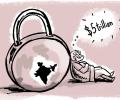
Foreign Direct Investment (FDI) is critically important for India to become a $5 trillion economy, Deloitte CEO Punit Renjen said while noting that over two-fifths of the 1,200 business leaders surveyed in the US, UK, Japan and Singapore are planning additional or first-time investments in India. Referring to the survey, he said India continues to be "one of the most attractive" FDI destinations. "Despite the COVID-19 destruction, inflows hit a record high last year. "Business leaders, whom Deloitte surveyed, are preparing to make additional and first-time investments in India," Renjen said.

The recent depreciation of the rupee along with sharp fall in the country's foreign exchange (FX) reserves has sparked a debate whether stability of the exchange rate is necessary and desirable. The rupee was one of the least volatile currencies among peers for almost two years before the current downward pressure started in September after the US Federal Reserve lowered interest rate.
