
Indian stock market benchmark indices Sensex and Nifty recorded their second consecutive day of decline, with the Sensex dropping 555.23 points and the Nifty falling 144.05 points, primarily due to rising crude oil prices and ongoing US-Iran hostilities in West Asia.

If the new MDR regime is rolled out from the middle of this month, as scheduled, it should count as one of the boldest political actions by the Modi government on an economic-policy issue, and a signal that it is less worried about erosion of political capital it draws from one of its key constituencies, notes A K Bhattacharya.

Global payments solution major Mastercard has fully exited Indian fintech firm Pine Labs, selling its entire 4.31 per cent stake for Rs 933 crore through block deals on the BSE.

India's IT services industry is witnessing a surge in mergers and acquisitions, particularly among mid-cap companies, as AI-led pricing pressure and macroeconomic uncertainty compel firms to seek scale, capabilities, and broader market reach. This trend is exemplified by the recent merger of Happiest Minds Technologies and ITC Infotech, aiming to offer end-to-end solutions and compete for larger transformation programmes.

The National Stock Exchange's initial public offering (IPO), expected to raise around Rs 30,000 crore, is likely to open for public subscription on September 18 and list on September 25, potentially becoming India's largest IPO.

Indian benchmark stock indices, Sensex and Nifty, rebounded on Friday, driven by value buying in banking, oil & gas, and auto shares following recent sharp losses. The Sensex climbed 315.20 points to settle at 73,895.74, while the Nifty rose 77.40 points to 23,140.50.

Dig into the prospectus. Use the prospectus to understand the business and its risks.

'Since the category has a limited track record, assess the fund manager's experience across equity and debt market cycles rather than relying only on past returns.'

Indian benchmark stock indices, Sensex and Nifty, declined for a second consecutive day, primarily due to selling pressure in IT, oil & gas, and select banking shares. Concerns over the US-Iran negotiations and a sluggish monsoon further dampened market sentiment.

Indian benchmark indices, Sensex and Nifty, closed lower on Monday due to elevated crude oil prices, escalating US-Iran hostilities, and concerns over a potential US interest rate hike, impacting investor sentiment.

Indian benchmark equity indices, Sensex and Nifty, experienced declines in early trade due to renewed tensions in West Asia, which led to a rebound in crude oil prices, coupled with weak global market trends and foreign fund outflows.

The benchmark Sensex plummeted 813 points to a three-month low, with the Nifty settling below 23,450, as escalating tensions in West Asia drove crude oil prices above USD 100 per barrel, leading to widespread selling in IT, FMCG, financial services, and oil & gas shares.

Hockey India President Dilip Tirkey has lodged a police complaint against several HI officials, including the former Executive Director, accusing them of "criminal breach of trust, theft, endangerment of life and wrongful abandonment." The complaint stems from an incident where Tirkey's personal belongings, including medicines, were allegedly withheld after an official vehicle was recalled. This incident highlights an ongoing power struggle between Tirkey and HI Secretary General Bhola Nath Singh, exacerbated by past controversies like the saffron jersey fiasco and disputes over board meetings.

The benchmark BSE Sensex rebounded by 362 points, ending a four-day losing streak, driven by strong buying in metal, private banking, and oil and gas shares, while the broader NSE Nifty saw modest gains despite paring some advances in the closing session.

The Supreme Court has strongly criticised the exorbitant markup on cancer drugs by hospitals, calling it "carnage" and "broad daylight dacoity." The court highlighted a case where a cancer drug was marked up ten times its retail price and urged the Centre to implement a uniform 16% margin on all medicines. It also raised concerns about hospitals forcing patients to buy medicines from their in-house chemists.
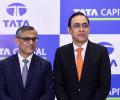
Tata Capital remains confident in its 23-25 per cent growth guidance, driven by strong momentum in Retail and SME segments, despite facing pressures from rising funding costs and potential impacts from new RBI regulations on revolving credit.

SEBI Chairman Tuhin Kanta Pandey stated that the National Stock Exchange (NSE) has not submitted any proposal seeking approval to trade on its own platform after getting listed, and such trading is currently not permitted. He also confirmed that SEBI would examine concerns raised by brokers and asset management companies regarding the new UPI Merchant Discount Rate (MDR) framework.
Seven of them posted losses, led by Air India, with their combined net loss widening to Rs 31,823 crore in FY26 from Rs 17,553 crore a year earlier and Rs 1,555 crore in FY20.
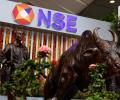
The National Stock Exchange of India's initial public offering (IPO) was subscribed 5.69 times, with qualified institutional buyers (QIBs) showing the strongest demand, as the Rs 22,561-crore issue moves towards allotment and a planned listing on the BSE.

Jio Platforms Ltd, the digital services arm of Reliance Industries, has secured Sebi's final observation to launch an initial public offering (IPO) aiming to raise approximately USD 4 billion (Rs 37,700 crore), potentially making it the largest IPO in India's history.

Indian benchmark equity indices, Sensex and Nifty, rebounded in early trade after a three-day slide, driven by strong buying in blue-chip bank stocks and a firm trend in global markets, supported by easing US bond yields and record foreign-currency deposit inflows.

Hockey India is embroiled in a significant internal dispute between President Dilip Tirkey and Secretary Bhola Nath Singh, primarily over a controversial jersey colour change and the authority to call emergent meetings. An upcoming Executive Board meeting aims to address these differences, discuss the future of the Hockey India League (HIL) including its restructuring into a joint venture, finalise election dates, and deliberate on hosting Asian Champions Trophy events.

Indian benchmark indices Sensex and Nifty experienced significant declines in early trade, driven by soaring crude oil prices amidst escalating tensions in West Asia, coupled with weak global market trends and foreign fund outflows.

Indian benchmark indices Sensex and Nifty experienced a significant slump in early trade, mirroring a bearish trend in global equities, as escalating conflict in West Asia drove up crude oil prices and intensified investor concerns.

'Regulations give a particular minimum amount of shares to be given in the OFS or IPO -- without which one cannot do the IPO.' 'We got that number on the day of filing of updated DRHP -- sufficient for us to go live with the IPO.'
Indian stock market benchmark indices Sensex and Nifty closed nearly one per cent higher, extending their winning streak for a second day. This rally was driven by softening crude oil prices, positive geopolitical developments, and significant buying in blue-chip IT stocks, despite a broader global tech sell-off.

Hockey India is set to hold an emergent Executive Board meeting on September 18 to address a deepening internal controversy involving President Dilip Tirkey and Secretary Bhola Nath Singh, stemming from a jersey colour change. The meeting will also focus on restructuring the Hockey India League (HIL) to create an independent Governing Council with franchise involvement, and discuss upcoming elections and Asian Champions Trophy hosting.

Analysts predict that developments in the West Asia conflict, crude oil prices, and upcoming US inflation data will be the primary factors influencing the Indian stock market next week, alongside foreign investor activity and global market trends.
Indian benchmark equity indices, Sensex and Nifty, rebounded after a two-day losing streak, driven by strong buying in blue-chip IT stocks and positive global market cues, with the Sensex climbing 330.92 points.

Germany, Netherlands, Sweden and Wales have questioned Infantino's reform pledge, arguing that FIFA needs deeper governance changes, stronger accountability and broader leadership reforms to restore trust.
Indian benchmark indices, Sensex and Nifty, saw declines in early trade due to escalating crude oil prices and ongoing US-Iran hostilities, which subdued investor risk appetite.

Flexi-cap mutual fund schemes have attracted nearly Rs 50,000 crore in net inflows during January-July 2026, a 27 per cent increase year-on-year, as investors increasingly favour dynamic equity strategies.

Net mutual fund inflows into active equity schemes in India plummeted by 40 per cent month-on-month in May, reaching a one-year low of 22,908 crore, primarily due to weaker lump-sum investments and increased redemptions amidst significant market volatility and global uncertainties.

Indian benchmark equity indices, Sensex and Nifty, rebounded in early trade after two days of losses, driven by strong buying in blue-chip IT stocks and a rally in global markets.

Smallcap funds have emerged as the primary beneficiaries of the systematic investment plan (SIP) wave in Indian mutual funds over the past five years, with their SIP assets surging to approximately 1.83 trillion by March 2026, a fivefold increase.

Six initial public offerings, including Rentomojo Ltd and Karamtara Engineering, were fully subscribed on their final day of bidding, with Rentomojo's IPO subscribed 72.88 times and Karamtara's 62.63 times, reflecting robust investor appetite in the primary market.
Indian stock markets, including the Sensex and Nifty, experienced a significant tumble in early trade, driven by escalating tensions in West Asia that pushed crude oil prices close to the USD 100-per-barrel mark, alongside selling in IT stocks and fresh foreign fund outflows.

'Every period of excessive optimism eventually gives way to a correction, while periods of extreme pessimism often create the best investment opportunities.'
Indian benchmark indices, Sensex and Nifty, experienced declines in early trade due to elevated crude oil prices, escalating US-Iran hostilities, and renewed concerns over a potential US interest rate hike.

Chandra's tenure also saw a big jump in Tata Sons' other income, such as brand fee from group companies, treasury gains, and other non-recurring income.
