
Highlights of the Economic Survey 2025-26
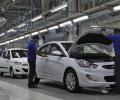
Rising automobile exports are reflective of the increasing acceptance of India-manufactured vehicles across global markets, according to Economic Survey 2025-26.
India must focus on building enduring national capabilities and economic sovereignty in the face of shrinking space for rules-based trading, anti-immigrant stance, weaponization of energy sources and growing use of export controls in critical sectors, the Economic Survey said on Thursday.

According to the Economic Survey 2026, the appropriate stance for 2026 is therefore one of strategic sobriety rather than defensive pessimism.
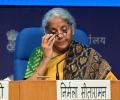
Finance Minister Nirmala Sitharaman on Friday presented the Economic Survey 2024-25 in the Lok Sabha. The Economic Survey is an annual document presented by the government ahead of the Union Budget to review the state of the economy.

The value of the rupee, which has slipped to the 92 per dollar mark, does not accurately reflect India's stellar economic fundamentals, the Economic Survey said on Thursday.

The country's primary capital markets delivered a robust performance in FY26, emerging as a global leader in initial public offerings (IPOs) despite an uncertain environment, the Economic Survey said on Thursday.

The Survey is authored by Chief Economic Advisor V Anantha Nageswaran and his team.

The Economic Survey on Thursday projected the GDP growth in the range of 6.8 to 7.2 per cent in 2026-27, a tad lower than 7.4 per cent estimated in the current fiscal.
Indian economy to grow at 6.3-6.8 pc in FY26, against 6.4 pc in FY25

Finance Minister Nirmala Sitharaman on Monday tabled the Economic Survey 2021-22 along with Statistical Appendix in the Lok Sabha on the first day of the Budget session of Parliament. Later, the Lok Sabha was adjourned till tomorrow. The Economic Survey will now be tabled in the Upper House. The Budget Session of the parliament commenced on January 31 with President Ram Nath Kovind's address. The first part of the Budget session of Parliament will be held from January 31 to February 11 and the second part of the Budget session will take place from March 14 to April 8.

Headline WPI inflation may decline between 6.2 to 6.6 per cent in March 2013.
Survey likely to be tabled in July by the new government.
pbeat on the prospects of India's foreign trade contributing majorly to the economy, the Economic Survey on Wednesday cautioned against the negative impact of hardening of global oil prices and volatility among major currencies on country's exports.

India needs to sustain a GDP growth rate of 8 per cent to become a five trillion dollar economy by 2025, the Economic Survey has stated.

'We have become so unequal that we are among the most unequal countries in the world.'

An Indian School of Business professor highlights the lack of precise data on losses from free UPI transactions, arguing that the benefits, such as user data generation, are often overlooked in the debate over implementing a Merchant Discount Rate (MDR). A recent ISB survey suggests that charging MDR could lead street vendors to revert to cash, despite the government's allowance for MDR on transactions above Rs 2,000 and NPCI's deferral of its implementation.

Finance Minister Pranab Mukherjee on Thursday tabled the Economic Survey for 2009-10 that says that economic recovery is weak and the high double-digit food inflation in 2009-10 is a matter of great concern.

The pre-budget Economic Survey, which is tabled in Parliament ahead of the Union Budget to present the state of the economy and suggest policy prescriptions, quite often misses on the GDP forecast, sometimes by a significant margin. This time, Finance Minister Nirmala Sitharaman will table the Economic Survey for 2021-22 in the Lok Sabha on Monday soon after the President's address to both Houses of Parliament. She will present the Union Budget for the next financial year beginning April 1, 2022, on Tuesday.
The Economic Survey on Thursday prescribed reforms in the subsidy regime in oil, food and fertiliser sectors and asked the government to review the possibility of direct cash transfer to the targeted people.
In recent years, as the number of government economic reports coming out in the weeks and months before the Survey has increased, its utility has diminished as a source of data and as the ministry's assessment of the state of the economy.
A day before unveiling the Budget, Finance Minister Pranab Mukherjee will table the Economic Survey in Parliament on Thursday which will take stock of the economy and also the impact of stimulus on industry.

Amidst strained ties with China, the pre-budget Economic Survey on Monday made a strong case for seeking foreign direct investments (FDI) from Beijing to boost local manufacturing and tap the export market. As the US and Europe are shifting their immediate sourcing away from China, it is more effective to have Chinese companies invest in India and then export the products to these markets rather than importing from the neighbouring country, the Survey said.
Outlining the roadmap to achieve 7-8 per cent economic growth on sustained basis, the Economic Survey on Wednesday indicated major initiatives in the Union Budget to overhaul tax system, slash deficit, contain prices and boost agriculture.

India's unemployment rate for individuals aged 15 years and above saw a marginal improvement, dipping to 5.1 per cent in the July-September 2026 quarter from 5.4 per cent in the previous quarter, according to the Periodic Labour Force Survey (PLFS). The decline was primarily driven by a fall in rural unemployment, while urban joblessness remained largely stable.
The report said in the first year of Raman Singh government in 2004-2005 the food grain production registered a negative growth of 21.67 per cent from 2003-2004.
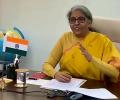
Finance Minister Nirmala Sitharaman on Friday presented the Economic Survey that details the state of the economy ahead of the government's Budget for fiscal year beginning April 1, 2021. The Economic Survey 2020-21, authored by a team led by Chief Economic Adviser Krishnamurthy Venkata Subramanian, details the state of different sectors of the economy as well as reforms that should be undertaken to accelerate growth.

Principal economic advisor, Ila Patnaik, is coordinating the work on Economic Survey 2013-14.
India's economic revival also depends on the government's capacity to push through some critical policy reforms in the coming months, says the Economic Survey 2008-09, which was\npresented by Finance Minister Pranab Mukherjee in Parliament on Thursday.

Tamil Nadu police detained Assistant Professor A Kalaiyarasan for an alleged abusive Instagram comment targeting TVK MLA J Kamatchi. He was later released after police confirmed his photo was used for a fake account. The incident drew strong criticism from DMK president M K Stalin, who termed it "peak of fascism" and demanded an apology, while Kalaiyarasan detailed his "harassment and humiliation".

Overseas property is becoming a bigger part of Indian investors' wealth, but buyers must weigh currency risks, tax obligations, remittance limits and maintenance costs before investing.

However, Icra Rating Principal Economist Aditi Nayar feels that the numbers are a bit too optimistic and need real heavy-lifting by the Centre and the states. "The survey forecasts on real and nominal GDP will require a substantial push from Central and state spending as private sector capacity expansion is anticipated to be intermittent, and sector-specific in the next couple of quarters," she said. Nayar added that private consumption is likely to chart a differentiated recovery across income and age groups. Based on the comments made in the Survey, she expects the Union Budget to incorporate a growth in gross tax revenue of 15-16 per cent.

S&P in November ruled out an upgrade in the country's rating for some considerable period, citing India's low per capita GDP and relatively high fiscal deficit.
The GDP growth for 2014-15 is pegged at 5.4 to 5.9 per cent: Economic Survey

The Purana Qila in New Delhi is hosting the SCO Civilisational Dialogue Forum, featuring an exhibition titled 'Astitva - The Essence of our Existence'. This exhibition showcases archaeological remains from 1200 BC to 1200 CE, including painted grey ware, Mauryan terracotta figurines, and a Vaikunth Vishnu image. Prime Minister Narendra Modi is scheduled to inaugurate the forum and visit the exhibition, which aims to present India's ancient civilisational identity and foster cultural relations among SCO member countries.

The Indian economy can contract by 7.7 per cent in current financial year ending on March 31 and the growth could be 11 per cent in the next financial year, according to the Economic Survey tabled in Parliament by Finance Minister Nirmala Sitharaman. The contraction in FY21 is mainly due to coronavirus (Covid-19) pandemic and the visible damage caused by the subsequent countrywide lockdown to contain it. The survey unveiled two days before the Union Budget is broadly in line with forecasts by the Reserve Bank of India (RBI) which has said it expected the country's GDP to contract by 7.5 per cent in the year ending March 31.

Making a case for an optimal fiscal stance, the Economic Survey on Friday said growth leads to debt sustainability and not necessarily vice-versa. "This is because debt sustainability depends on the 'Interest Rate Growth Rate Differential' (IRGD) i.e. the difference between the interest rate and the growth rate in an economy. "With the Indian context of potential high growth, the interest rate on debt paid by the Indian government has been less than India's growth rate by norm, not by exception," it said.


The decision is expected to provide a push for their development in healthcare, cultural identity, education, financial matters, skill development and women empowerment among others, the Chief Minister's Office said in a statement.
