Escalating geopolitical tensions in West Asia are beginning to disrupt India's automotive supply chain, leading to rising commodity prices, logistics bottlenecks, material shortages, and pressure on consumer demand, with two-wheeler makers already raising prices.
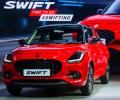
Passenger vehicle sales in India are estimated to have surged by nearly 25 per cent in June 2024, reaching approximately 4 lakh units, with Maruti Suzuki, Tata Motors PV, and Mahindra & Mahindra leading the growth, despite concerns over geopolitical tensions and monsoon impact.
BMW India has outpaced rival Mercedes-Benz India in luxury car registrations for the first quarter of calendar year 2026, driven by new product launches and a growing electric vehicle segment, even as the overall luxury car market remains largely flat.
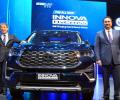
Grant Thornton Bharat's latest survey indicates that hybrids are set to consolidate market share this festive season, bridging the gap between conventional petrol engines and the emerging electric vehicle segment.
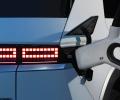
Under FAME-II, automakers provided subsidies to electric vehicle (EV) customers at the time of purchase, with the understanding that the government would reimburse the firms later.

Indian carmakers, including Maruti Suzuki and Kia India, reported robust sales growth in May 2026, with both companies achieving their highest-ever monthly sales despite rising fuel prices. Maruti Suzuki's domestic sales surged to 1,93,535 units, while Kia India recorded 27,586 units, driven by strong demand in mini and compact segments and a shift towards electric and CNG vehicles.

The Tata Harrier.ev is a car that makes you feel safe and powerful within a luxurious cocoon, raves Rajesh Karkera/Rediff after a gruelling test drive.

With features usually seen in more expensive cars and segment-first paddle shifters, the Tiago offers excellent value for money, says Rajesh Alva/Rediff.com.
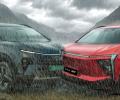
Tata Harrier.ev versus Mahindra BE.06 versus Mahindra XEV.9E -- which one should you buy? Rajesh Karkera offers a checklist of features to influence your decision.

India's leading passenger vehicle manufacturers are significantly increasing investments and factory capacities, alongside planning major product launches for FY27, driven by strong confidence in sustained domestic demand growth despite global geopolitical tensions and supply chain risks.

Prime Minister Modi has urged citizens to adopt measures like judicious fuel use, postponing gold purchases, and deferring foreign travel to strengthen India's economy in the face of the West Asia conflict's adverse impact.

Despite India's electric passenger vehicle market experiencing an 83.6% year-on-year surge in FY26, new foreign entrants VinFast and BYD have significantly outpaced Tesla, which struggles with high import duties, a limited retail footprint, and a lack of local manufacturing commitment.

Tata Motors' 2026 Tiago facelift is a tech-loaded and safety-focused entry-level hatchback, with prices starting at Rs 4.69 lakh.
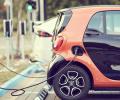
Despite the benefits of hybrid technology, a lack of government backing and few launches have kept the segment from gaining ground.
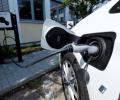
The Delhi government is set to equip its industrial training institutes (ITIs) with advanced labs to train young people in power electronics, electric vehicles, and the automotive sector, aiming to create a skilled workforce ready for industry demands.

Tata Motors' MD and CEO, Girish Wagh, has identified rising diesel prices as the most significant threat to India's commercial vehicle (CV) industry recovery, despite the sector recently surpassing its pre-FY19 wholesale peak. Diesel costs account for 25-50% of a truck operator's total cost of ownership, making any increase a critical concern for fleet economics.

Investors are keenly awaiting clarity on Reliance Jio Infocomm's IPO, the company's AI and data centre strategies, and next-generation leadership structure at Reliance Industries Ltd's (RIL's) 49th annual general meeting (AGM).

Tata Motors emerged as the biggest gainer in the passenger vehicles (PV) market in the second half of FY25, following a GST rate cut in September, achieving the highest growth among major OEMs and overtaking Mahindra & Mahindra in volumes.

TVS Motor Company on Wednesday said it has partnered with connected lifestyle brand Noise for electric vehicle-smartwatch integration to enable riders to connect with their vehicles.

But when it comes to e2W, China is the dominant player and had grabbed over 76 per cent share of total e2W imports in 2025 with brands like Yadea, NIU and Sunra dominating the market.

JSW Motors, part of the JSW group, is set to enter India's passenger vehicle market with plans to launch 15 new-energy vehicles (NEVs) over the next four years, with deliveries commencing from December 2026.
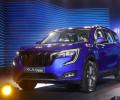
Mahindra & Mahindra (M&M) is largely bullish among analysts following its Q4FY26 results, driven by strong SUV demand, a robust product pipeline, and improving growth visibility across segments, despite near-term margin pressures from rising commodity costs and potential weakness in the tractor cycle.
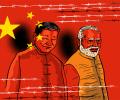
China has filed a complaint against India in the World Trade Organization (WTO) over New Delhi's subsidies for electric vehicles (EVs) and batteries. Commerce secretary Rajesh Agrawal said that the ministry will look at the detailed submissions made by China.
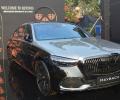
What we will not do is discount deeply, neither will we compromise on product substance, says Managing Director and Chief Executive Officer (MD&CEO) Santosh Iyer.
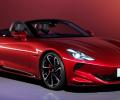
Maruti Suzuki, Tata Motors, Mahindra & Mahindra, Hyundai and MG Motors are gearing up to introduce EVs in India.
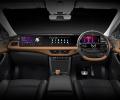
Mahindra pushes premium EV strategy with XEV 9e Cineluxe, blending luxury design, immersive technology and over 500 km range capability.
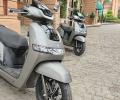
Hero MotoCorp and TVS Motor crossed Rs 1,000 crore in R&D spend for the first time, as legacy OEMs accelerate innovation to compete with new-age EV players.

The closure of the Strait of Hormuz has disrupted some 20 per cent of the global flows but even if it opens, damages to production facilities in the region will take time to repair, points out Sunita Narain.

Indian car buyers care more about affordability than technology, keeping ICE vehicles dominant while hybrids emerge as the preferred transition option and EVs struggle in the mass market.

Rajesh Exports has vehemently denied allegations of inflated revenues and preferential share placement to LIC, labelling them 'speculative inferences' and affirming its commitment to addressing concerns raised by Sebi.

After a slew of programmes to facilitate electric-vehicle (EV) adoption in India, the NITI Aayog has said the government has done enough on incentives and now it's time to take the programme a step further with "strong signals" through regulations and mandates.

Tamil Nadu Governor RV Arlekar announced that the TVK regime, led by Chief Minister C Joseph Vijay, will take steps to ensure fair financial devolution from the Centre, including pursuing the matter in the Supreme Court. The government also plans to conduct a 'Social Justice Survey' and address the state's severe financial deterioration.

The Andhra Pradesh cabinet has recommended a series of measures, including 'No Vehicle Day,' online classes, and reduced foreign tours, to mitigate the economic impact of the Gulf war.
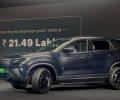
The Harrier EV is the first mainstream EV in India to offer a dual-motor, all-wheel-drive (AWD) which the company has termed as QWD, The Quad Wheel Drive, reports Rajesh Karkera.

Prime Minister Narendra Modi has strongly refuted a media report suggesting the government is considering levying a tax, cess, or surcharge on foreign travel, calling the news "totally false".

The Delhi government has announced a series of measures to conserve fuel, including work from home for government offices, increased use of public transport, and reduced fuel quotas for officers.

The 63-seater open-top bus, manufactured by Ashok Leyland's arm Switch Mobility, was gifted to the city's tourism department as a corporate social responsibility initiative.

Retail sales of electric passenger vehicles (ePVs) nearly doubled in July 2025, surging 93 per cent year-on-year (Y-o-Y) to 15,528 units, even as overall passenger vehicle (PV) retail volumes declined marginally. In contrast, electric two-wheeler (e2W) sales dropped by 4.3 per cent to 102,973 units, according to the Federation of Automobile Dealers Associations (Fada) data.

The charging infrastructure expansion includes the setup of over 600 DC charging stations by 2030 (including company-owned and company-operated ones) in addition to partnerships with over 10,200 charging points, collaborating with operators like Shell, Charge Zone, and Statiq.

Glimpses from Beijing's grand Auto China exhibition reveal the rapid evolution of electric, autonomous and futuristic mobility.
