Finance Minister Nirmala Sitharaman while unveiling the Union Budget said the proposal would make India more attractive market for investment.

The Street was hoping that investors will lap up shares of high-dividend companies on optimism that their payouts will increase further, thanks to the 20 per cent tax saving. However, the trade failed to materialise as wealthy investors stayed away fearing high tax outgo, and experts raised doubts on whether companies would actually increase cash dole outs.

Without changes to the taxation rules, buybacks are expected to remain scarce.

DDT is levied on dividends that a company pays its shareholders out of its profits. It is currently charged at the rate of 20.55 per cent, including a surcharge and education cess. Government may instead tax the shareholders receiving dividends, in a bid to help improve investor sentiment by addressing the multiplicity of taxes and bring down the effective tax rates for companies.

The proposed move to withdraw the DDT would help encourage investments by addressing multiple taxation of income and bringing down the effective tax rate on companies, which is among the highest in the world.

Or a brief stop on the way to better times, asks Ajit Balakrishnan.

Finance Minister Pranab Mukherjee on Monday said that he proposes to exempt the income of New Pension System Trust from the income tax and any dividend paid to this Trust from Dividend Distribution Tax.

Kajol explores Russia... Janhvi travels to Mussoorie... Amitabh dances with Kriti...
Dividend distribution tax in FY20 would only be applicable after deducting Rs 70 received from the foreign subsidiary, meaning 20.56 per cent DDT would be paid only on Rs 30.
However, a net amount of Rs 11,119 crore was withdrawn from the debt segment during the same period. This translated into a net investment of Rs 1,003 crore.

The allegations of DDT evasion is connected to some transactions the Indian entity has made while buying shares of the company from the Mauritius and US companies of Cognizant.

DDT is levied at the rate of 20% on dividend paid by cos to shareholders.

For an annual dividend income of Rs 10 lakh or more, the investor will pay a DDT of 10 per cent
The government will come out with new guidelines to revive export hubs, special economic zones (SEZs), which have lost sheen after imposition of certain levies and proposal to take away tax incentives.
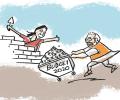
The Budget has relaxed a few safe harbour rules that aim to make it easier for fund managers overseeing offshore India-focused funds to relocate to the country.

An analysis of S&P BSE 500 companies suggests that promoters of Indian private-sector companies in particular could end up paying at least 20 per cent more as additional tax on the same dividend income.

10% TDS only on dividend paid by mutual funds, not on redemption of units: Tax dept
Some funds may get a direct bite of the infrastructure pie, while taxes add unwanted weight to others.

Concessional rate of tax on dividends received by Indian companies from foreign subsidiaries will be done away with from April 1, a change that may hamper global expansion of Indian companies and compel some firms to move their headquarters out of India to geographies such as Singapore and Dubai. At present, dividends received by Indian companies from their foreign subsidiaries are subject to a concessional tax rate of 15 per cent under Section 115BBD of the Income Tax (I-T) Act. The provisions of this section shall not apply from assessment year 2023-24 onwards, according to the Finance Bill.

One of India Inc's top demands is the abolishing of the MAT.

Ajit Balakrishnan on learning from past technology revolutions.

Higher levy on dividends earned by individuals also on radar.

Anil Rego, CEO, Right Horizons, answers your personal income tax queries.

Sooner the investors shift, the better it is as a majority of equity funds have single-digit returns since January 31.
Equity investors should thank cash-rich biggies such as TCS, ITC, HUL, Nestl, and Bajaj Auto for this.

In 2020-21, Indian firms offered to buy back shares worth Rs 39,295 crore, or 97% more than Rs 19,972 cr proposed in the previous financial year.

In the wake of the Union Budget proposals, developers of Special Economic Zones (SEZs) say the scheme is heading for an end, with investors' interest certain to reduce drastically.

The industry status will help the sector access bank lending at average interest rates

The transformational reforms like GST, Bankruptcy Code and recapitalisation of banks, Black Money Act, demonetisation, flexible inflation targeting and adoption of fiscal discipline (FRBMA), etc, have temporarily and purposefully pulled us back only to propel us forward with greater velocity, Rajiv Memani.

Senior officials say the government might come up with an incentive package for the SEZs following the release of Foreign Trade Policy.

Investors were stuck in old schemes though they were suspended because of tax implications.
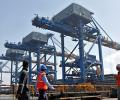
Special Economic Zones are likely to be central to realising Prime Minister Narendra Modi's ambitious Make in India agenda.
Finance Minister P Chidambaram on Wednesday announced that the Permanent Account Number (PAN) to be made sole identity for participants in the security markets to strengthen capital market.

Brokers also want tax rebates, removal of additional tax on dividends, streamlining of GST...
A host of companies, including giants like Reliance Industries are rushing in to finalise their interim dividend payments to outsmart a hike in dividend distribution tax (DDT) proposed in the Union Budget.
A key demand is to reduce the dividend distribution tax on listed firms.

To save promoters from 10% levy, 70 firms call board meetings on interim pay.

A primer on tax you pay on your mutual fund gains

ITC was the top laggard in the Sensex pack, tanking 6.97 per cent, followed by L&T, HDFC, SBI, ONGC, ICICI Bank and IndusInd Bank.

The IT and ITeS sectors expect a reduction in minimum alternate tax (MAT) and dividend distribution tax in the next month's Union Budget, a senior economist said on Tuesday.
