
Global energy supermajor BP plc on Thursday said it is about to open its first 'Jio-bp' branded petrol pump in partnership with Reliance Industries near Mumbai.

Billionaire Mukesh Ambani's Reliance Industries Ltd on Friday reported a 12 per cent rise in December quarter net profit on improving oil-to-chemical business, strong continued momentum in retail and steady telecom unit Jio.

India's crude oil production fell 2.15 per cent in October as state-owned firms produced less but, natural gas output rose by a quarter on the back of output from KG-D6 fields of Reliance-BP, government data released on Tuesday showed. Crude oil production dropped to 2.51 million tonnes in October, as output from fields operated by Oil and Natural Gas Corp (ONGC) and Oil India Ltd (OIL) dipped. While ONGC produced 4 per cent less crude oil at 1.64 million tonnes, OIL output dropped 1.46 per cent to 2,53,000 tonnes.

With two of its clusters - R-Series and Satellite Series - likely to start production in the next two years, the company looks to turn around production from this business.

While most of us remain confined to our homes to stay safe from the pandemic, Dr Raashi Mehta, consultant dermatologist, Masina Hospital, Mumbai, suggests foods you may include in your diet to boost Vitamin D levels.
Billionaire Mukesh Ambani's Reliance Industries has announced the contours of carving out of its oil-to-chemicals (O2C) business into an independent unit with a USD 25 billion loan from the parent, as it looks to unlock value by selling stakes to global investors like Saudi Aramco.
CNG and piped cooking gas prices in cities such as Delhi and Mumbai may be hiked by 10-11 per cent next month as the government-dictated gas price is set to rise by about 76 per cent, ICICI Securities said in a report. The government, using rates prevalent in gas-surplus nations, fixes the price of natural gas produced by firms such as state-owned Oil and Natural Gas Corp (ONGC) from fields given to them on nomination basis, every six months. The next review is due on October 1.

Despite a massive underperformance at the bourses since the last six months, analysts are turning optimistic on Reliance Industries (RIL). Those at Jefferies, for instance, say that the company is a proxy play for India's consumption growth story. The key catalysts for the stock, according to a Jeffries note, include faster-than-expected market share gain in retail, oil-to-chemicals (O2C) stake sale, recovery in gross refining margins (GRM), potential public listing of Jio and even a possible banking licence going ahead. That apart, analysts feel any tariff hike in Reliance Jio (RJio) - its telecom venture - will also aid performance. With balance sheet adequately de-levered, proceeds from a strategic stake sale in the O2C business will create a sizeable war chest for the company, analysts say.

The government on Thursday more than doubled the price of natural gas that is used to produce electricity, make fertilisers, turned into CNG and piped to household kitchens for cooking, on the back of a spike in global energy prices. The price of gas produced from old regulated fields, such as the nation's largest gas field of Bassein of ONGC, will rise to a record high of $6.10 per million British thermal unit (mmBtu) from the current $2.90 per mmBtu, according to the oil ministry's Petroleum Planning and Analysis Cell (PPAC). The new price, which is likely to result in a hike in CNG and piped cooking gas rates, will be for six months beginning April 1.

Billionaire Mukesh Ambani's Reliance Industries Ltd on Friday reported a 22.5 per cent rise in net profit for the quarter ended March on the back of bumper oil refining margins, steady growth in telecom and digital services and strong momentum in the retail business. The oil-to-retail-to-telecom conglomerate's consolidated net profit rose to Rs 16,203 crore in the quarter ended March 31, 2022 from Rs 13,227 crore, the firm said in a statement. Net profit, however, fell 12.6 per cent sequentially -- breaking a six-quarter chain of quarter-on-quarter improvement.

RIL's Dhirubhai-34, or R-Cluster field, in the flagging KG-D6 block was to produce about 13 million standard cubic metres per day of gas, equivalent to present day output from D1&D3 as well as MA fields, by 2017-18.

Billionaire Mukesh Ambani's Reliance Industries on Friday reported a 43 per cent jump in its September quarter net profit as its businesses from oil to retail fired on all cylinders, growing both sequentially and on a year-on-year basis. Net profit of Rs 13,680 crore, or Rs 20.88 per share, in July-September compared with Rs 9,567 crore, or Rs 14.84 a share, in the same period a year back, the company said in a statement. While better realisation and a sharp rise in crude oil prices benefited the old-economy business, retail saw footfalls at stores reach pre-Covid levels and per user earning from telecom business rose.
CAG had in its previous reports slammed Oil Ministry and its technical arm DGH for not exercising enough control and vigil over KG-D6 block.
The government will now examine the report and decide on how and to what extend should ONGC be compensated for its gas being produced by RIL.

Reliance Industries on Friday reported a 41.5 per cent jump in its third quarter net profit as oil, retail and telecom businesses fired on all cylinders. Net profit of Rs 18,549 crore in October-December compared with Rs 13,101 crore a year back, the company said in a stock exchange filing. Income from operations rose to Rs 1.91 lakh crore from Rs 1.28 lakh crore.

RIL-BP currently produce gas from Dhirubhai-1 and 3 field and oil and gas from MA field, three of the over one-and-half dozen discoveries made in KG-D6 block

RIL has maintained it had followed the production sharing contract (PSC) in letter and spirit and done no wrong and it has drilled all wells within its boundary.

The withdrawal of the arbitration will now entitle the two companies to marketing and pricing freedom on the natural gas they produce from newer fields in the deep sea at an investment of Rs 40,000 crore by 2022.
RIL and ONGC on March 28 agreed to appoint neutral international expert to decide if four wells drilled on boundary of KG-D6 block were drawing gas from neighbouring gas discoveries of the state-owned firm.

Energy supermajor Exxon Mobil Corp is in talks to buy a stake in producing oil and gas fields in India, Oil Minister Dharmendra Pradhan said on Wednesday showcasing efforts to raise domestic output to cut imports. Exxon Mobil had in October last year signed a memorandum of understanding (MoU) with state-owned Oil and Natural Gas Corporation (ONGC) to offer its expertise and technology for developing resources in offshore blocks.

Why does the world's fastest-growing major consumer of energy fail to attract investments in oil and gas? This is a question worth pondering after private sector conglomerate Reliance Industries Ltd (RIL) failed to close a $15-billion downstream asset deal with Saudi Arabia's national oil company, Aramco. It's understandable if multi-billion dollar investments in oil and gas projects or deals involving state companies that need to traverse a complex bureaucracy at state and federal levels and the corridors of ministries unravel. However, Mukesh Ambani-run RIL, India's most successful energy company, is not typically known to fumble on closing deals (Ambani closed deals worth around Rs 2 trillion early last year in telecom and retail with blue chip investors).
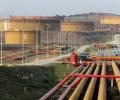
The length of the main trunk pipeline is 1,385 km from Kakinada to Bharuch and 75 km is the length of the spur lines.
After missing two self-imposed deadlines, billionaire Mukesh Ambani's Reliance Industries Ltd on Friday announced recalibration of a proposed $15 billion deal to sell 20 per cent stake in its oil refinery and petrochemical business to Saudi Aramco, saying the two firms have agreed to re-evaluate the proposed investment in light of the Indian firm's new energy forays. The stake sale talks, which were first officially revealed in August 2019, are being reset in light of Reliance making forays into new energy business in recent months by investing $10 billion in alternative energy over three years. To pivot to green energy, it has already bought a German maker of photovoltaic solar wafers and signed a deal with a Danish company to manufacture hydrogen electrolysers in India.
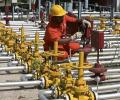
The government on Thursday hiked by 62 per cent the price of natural gas that is used to produce electricity, make fertilisers and turned into CNG to use as fuel in automobiles and cooking gas for household kitchens. This is the first increase in rates since April 2019 and comes on back of firming benchmark international prices but does not reflect the spurt in spot or current price of liquefied natural gas (LNG) witnessed during the last couple of weeks. The oil ministry's Petroleum Planning and Analysis Cell (PPAC) said the rates paid for gas produced from fields given to state-owned Oil and Natural Gas Corporation (ONGC) and Oil India Ltd (OIL) will be $2.90 per million British thermal unit for the six-month period beginning April 1.

Reliance Industries and its partner BP Plc on Thursday won approval to invest $3.18 billion in R-Series gas field in the flagging KG-D6 block.
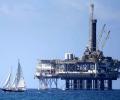
The stage for negotiations to settle the Krishna-Godavari basin dispute is long over, says a government official

If proved correct, MJ-1 would the third biggest gas field in KG-D6 after D1&D3.
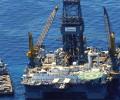
The KG-D6 fields, which began production in April 2009, hit a peak output of 69.43 mmscmd in March 2010 before water and sand ingress led to more than a third of the wells shutting down.
ONGC takes Reliance to court, alleging years of stealing from its offshore block and a sleeping govt, right after it was agreed there would be a probe by experts.
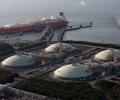
Around 15 years ago, when Reliance Industries (RIL) struck natural gas in the Krishna-Godavari (KG) basin off the east coast, the government made plans to supply that fuel cheaply to scores of generators that sprang up in India triggered by the discovery. Most of the plants, which account for 6 per cent of India's total generation capacity, operate sparsely after the KG-D6 area first failed to meet production targets, and then finally shut shop. Affordable domestic gas was why those thermal plants came up and the rate of the fuel today is why those generators hardly operate. Record liquefied natural gas (LNG) rates may yet again unravel India's ambitions to expand use of gas in industries, households and vehicles. Rates, while volatile, may stay strong this decade as developed nations with higher purchasing power embrace gas as the transition fuel.
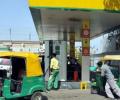
Prices of natural gas, which is used to produce fertiliser and generate electricity and is also converted into CNG for use in automobiles as fuel and cooking gas for households, are set every six months -- on April 1 and October 1 each year.
Oil Min rejects RIL arbitration notice.
The lack of mutually acceptable arbitrators has delayed the resolution of the two-and-a-half-year-old dispute between Reliance Industries Ltd and the government of India over the recovery of $2.376 billion worth of investment in the KG-D6 gas block.
A fall in crude oil price and Aramco's $75 billion annual dividend commitment may have delayed Saudi company picking a stake in Reliance Industries Ltd's oil-to-chemical unit (O2C), research firm Jefferies said. Richest Indian Mukesh Ambani had in August 2019 announced talks for the sale of a 20 per cent stake in the O2C business, which comprises its twin oil refineries at Jamnagar in Gujarat and petrochemical assets, to the world's largest oil exporter. The deal was to conclude by March 2020 but has been delayed for reasons not disclosed by either company.

Billionaire Mukesh Ambani's Reliance Industries Ltd (RIL) has seen pre-tax profit recover to pre-pandemic levels on the back of continued growth in consumer businesses, Moody's Investors Service said on Monday. The oil-to-retail-to-telecom behemoth on Friday reported a 0.7 per cent Ebitda (earnings before interest, tax and depreciation and amortisation) growth for the quarter ended December 31, 2020, compared with the corresponding quarter in the previous year. "A strong performance in digital services and retail segments underpinned the improvement in consolidated earnings, a credit positive," Moody's said commenting on the earnings. Continued growth in earnings combined with the company's strong balance sheet with zero net debt on a reported basis will keep Reliance's credit metrics strong for its Baa2 rating over the next 12-18 months, it said.
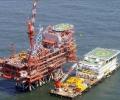
After a long wait for government approval, Reliance Industries (RIL) is to begin work on development of four satellite fields -- D-2, D-6, D-19 and D-22 -- in India's largest gas field, block D6 in the Krishna-Godavari basin, or KG-D6.
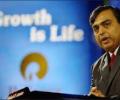
Sources said the Cabinet had in December last year stipulated that the new gas rate will apply to all producers excepting eastern offshore KG-D6 block where the contractor, which is fighting government against levying penalties for output shortfall, will have to give bank guarantees equivalent to the incremental revenue it would get from the new rates.
A market-based gas pricing regime is to kick-in from next month.


The 1,967 MW plant has not been operating since August because of stoppage of natural gas supplies from domestic fields.
