
Finance Minister P Chidambaram on Tuesday assured leather exporters of shielding them from the strengthening rupee against the dollar and asked the community to look at high-value exports to boost overseas sales.

India's leather exports are expected to touch the $14 billion level by 2017 and may double jobs in the sector to 5 million by that period, Council for Leather Exports (CLE) said on Tuesday.
Growing at an annual 13 per cent rate, domestic leather industry aims at doubling its exports earnings to $4 billion by 2010.\n\n

Uttar Pradesh's leading export hubs are reeling under the impact of a steep 50 per cent tariff imposed by the US on Indian imports, with exporters warning of job losses, stalled orders and shrinking market access. Industry leaders from Noida, Kanpur and Varanasi said the tariff has put years of painstaking market-building at risk, even as protests and demonstrations erupted in several districts last week.

As industrial plants boost the village's profile, locals demand priority hiring, alongside better storage facilities and water security.

Textiles, pharmaceuticals, chemicals, engineering goods, gems and jewellery exports will receive a boost from the free trade agreement between India and the 27-nation European Union, according to exporters.

On August 7, the US president announced doubling tariffs on Indian goods to 50 percent for India's purchases of Russian crude oil, but gave a 21-day window to negotiate an agreement.

The USA's steep 50 per cent tariffs on Indian goods entering America will severely impact exports and job creation in labour-intensive export sectors such as shrimp, apparel, leather and gems and jewellery. Exporters said that the imposition of a 25 per cent penalty on India over and above the 25 per cent tariffs move will disrupt the flow of Indian goods to its largest export market.
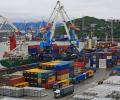
The country's exports rose marginally by 0.61 per cent to $36.56 billion in January, while trade deficit widened to a three-month high of $34.68 billion, government data showed on Monday.

The additional 25 per cent tariff imposed by US President Donald Trump on India is set to deliver a major blow to West Bengal's export-driven economy, with the state's labour-intensive leather, engineering and marine sectors expecting losses ahead of the festive season, stakeholders said. The increased levies on Indian products for the country's purchases of Russian oil came into effect on Wednesday, bringing the total amount of tariff imposed on New Delhi to 50 per cent.
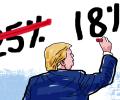
'Trump says India will buy over $500 billion of US goods.' 'At present, India's annual imports of goods and energy from the US are under $50 billion.' 'Reaching $500 billion would likely require more than 20 years, suggesting the figure refers to a long-term aspiration rather than a near-term commitment.'

India and the European Union are set to announce on January 27 the conclusion of negotiations and finalisation of a free trade agreement, which is aimed at boosting economic ties between the two regions amid disruptions in global trade due to US tariffs, an official said.

In the wake of the FTA between India and the European Union, the United States has described the Europeans as 'very disappointing', saying they were unwilling to join Washington, DC in putting tariffs on New Delhi for its purchases of Russian oil because of this trade deal.
Leather exporters have chalked out plans for setting up five special economic zones for giving a much-needed boost to the sector by availing tax incentives offered under the SEZ Act.

Communication channels between India and the US are open to resolve the ongoing tariff issues, and the glitch in trade ties is only temporary, given the long-term relationship between the two nations, government sources said on Wednesday. The US' 50 per cent tariffs on Indian exports to America came into effect from August 27, barring a few sectors.

State governments have requested the Centre for export incentives, lifting of import duty in the case of cotton for the textile sector and GST exemptions.

The leather industry is looking for export destinations other than the crisis-hit Europe, which accounts for 60 per cent of its revenue.

Closure of tanneries pulls down domestic finished leather exports and local price of raw-skin.

Recently, Hindu religious seers had threatened to boycott the ceremonial Kumbh snan if the Ganga was not clean.
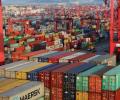
Exporters on Thursday demanded fiscal incentives, tweaking in customs duties on certain products and credit at affordable rates in the forthcoming Budget to boost exports and create jobs. In a pre-budget virtual meeting with Finance Minister Nirmala Sitharaman, the Federation of Indian Export Organisations (FIEO) said the depreciation of the rupee against the US dollar is affecting exports' competitiveness and the sector requires more support. "Creation of employment is the biggest challenge faced by the country...We would urge the government to provide fiscal support to units which provide additional employment in the export sector," the exporter's body said.

Simplifying GST rates, removing exemptions, easing disputes, and speeding up refunds can boost investment in India and offer the best reply to Trump's tariffs, observes V S Krishnan, former member, Central Board of Indirect Taxes and Customs.

Forty five organised slaughterhouses are not in a position to cater for the big demand for rawhide

Taiwanese footwear major Hong Fu Industrial Group - a supplier to Nike, Converse, Vans, UGG, Puma, Adidas, Reebok, HOKA, Under Armour, and ON (a Swiss sportswear brand) -marked its India entry on Monday, with the ground breaking ceremony of the Rs 1,500-crore footwear manufacturing facility at the SIPCOT Industrial Park in Panapakkam, nearly 85 kms from Chennai.
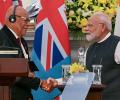
Fijian Prime Minister Sitiveni Rabuka discussed US tariffs on Indian goods with Prime Minister Narendra Modi, noting that "somebody is not very happy with you." The discussion occurred during Rabuka's visit to India to strengthen ties.

The gains, they say, would not be sustained, and too much volatility in exchange rates does not benefit them.

In its UP Vision Document, the BJP had promised it would shut down illegal and mechanised abattoirs in the state if it came to power.

India's policy for agriculture trade must move commodity-by-commodity to gain maximum benefits as US President Donald Trump's 26 per cent tariff on exports from the country take effect, said agriculture economist Ashok Gulati in a recent policy paper.
India's exports fell for the fourth straight month in June as shipments of key segments like petroleum and textiles declined but the country's trade turned surplus for the first time in 18 years as imports dropped by a steeper 47.59 per cent.

The trade gap - difference between imports and exports - was $11.39 billion in March 2015.
.jpg)
Depreciating rupee a silver lining for some businesses amid the economic downturn.
India's exports contracted 12.2 per cent to $34.48 billion in December 2022, mainly due to global headwinds, and the trade deficit widened to $23.76 billion during the same period, according to official data released on Monday. Imports in December 2022 also declined 3.5 per cent to $58.24 billion as against $60.33 billion in the year-ago period. In December 2021, exports stood at $39.27 billion and the trade deficit was at $21.06 billion.

India's gain will be an additional business of $300 million to $400 million per month if 10-11% of Bangladesh's export is diverted to Indian hubs like Tiruppur.
India's exports contracted by 22 per cent, the steepest decline in the last three years, to $32.97 billion in June on account of global demand slowdown, especially in the Western markets like the US and Europe. According to the data of the commerce ministry, the trade deficit in June stood at $20.3 billion against $22.07 billion in the same month last year due to a fall in exports and imports. The inbound shipments during the month under review declined by a steep 17.48 per cent to $53.10 billion.

IT, IT-hardware, petroleum, engineering, leather and garments are the leading exports from the SEZs.

After recording positive growth in September, India's exports declined 5.4 per cent to $24.82 billion in October on account of dip in shipments of petroleum products, gems and jewellery, leather, and engineering goods. Trade deficit in October narrowed to $8.78 billion as against $11.76 billion, as imports also fell 11.56 per cent to $33.6 billion during the month under review.
After contracting for six months in a row, the country's exports grew by 5.27 per cent to $27.4 billion in September, Commerce and Industry Minister Piyush Goyal said on Thursday.
CLE, the implementing agency for the park, is in the process of creating the common facilities in the park.
Imports also fell for the eighth consecutive months, down 0.75 per cent to $41.14 billion in January, widening the trade deficit to a seven-month high of $15.17 billion.
 © 2026 Rediff.com - Advertise with us - Disclaimer - Privacy Policy - Sitemap - Feedback - About us - Terms of use - Grievances