
Interview with Asia-Pacific economist, Morgan Stanley

Analysts are bullish on consumption and investment themes.

The sweeping tariffs proposed across sectors by US President Donald Trump are scheduled to be imposed starting April 2, with most analysts worried about their impact on companies, and in turn the financial markets. Recently, the US administration signaled that it will impose sectoral tariffs on energy, pharmaceuticals, semiconductors, agriculture, copper, and lumber.
Sounding bullish on the stock markets, it pegged the Sensex target at 23,000 by December.

The first issue is inflation, which has been widely discussed. The government is now rightly working on reversing fiscal and monetary stimulus to manage the inflation pressure.
India's challenges: infrastructure, large fiscal deficit, low FDI

India is likely to be the fastest-growing Asian economy in 2022-23, according to analysts at Morgan Stanley. They expect India's gross domestic product growth to average 7 per cent during this period - the strongest among the largest economies - and contributing 28 per cent and 22 per cent to Asian and global growth, respectively. The Indian economy, they said, is set for its best run in over a decade as pent-up demand is unleashed.

A higher-than-expected consumer price inflation (CPI) print for March in the US has dashed hopes of an interest rate cut by the US Federal Reserve (US Fed) in June. Analysts now expect the US central bank to start cutting rates in September, provided inflation remains in check and oil prices remain supportive. The markets, analysts believe, partially factored in this possibility.

''The outcome of the state polls may lead to some strategy-related permutations and combinations and the markets may extrapolate it to the likely outcome in the general elections.'

Comparative to other Asian GDP growths, India would have the fastest economic expansion, it said

Brent crude oil prices may rise to $110 a barrel in 2023, up nearly 33 per cent from the current levels, said analysts at Morgan Stanley, in a recent note. This is, however, lower than the peak level of nearly $127 touched earlier in 2022 as geopolitical concerns took centre stage amidrising demand. "Looking ahead, Brent oil price growth will decelerate even more in the coming quarters. "This comes even as our global oil strategist expects a rise in oil prices back to $110 a barrel by the second half of 2023.
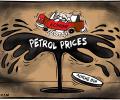
Amid news of a fuel shortage in some parts of the country and wider unrest over fuel issues in the neighbourhood, an analysis of the data from international tracker globalpetrolprices.com shows that the per litre price of petrol is higher in India than in seven out of its nine neighbours.

Morgan Stanley draws optimism from a slew of favourable factors.

After a stellar run in 2021 that saw the S&P BSE Sensex and the Nifty50 clock gains of 20 per cent and 22 per cent respectively, global equity markets, including India, are gearing up to welcome 2022 on a cautious note. For one, new variants of the Covid -19 infection that make current vaccines less effective is one of the key risks worth flagging, analysts said. Inflation was also a risk for this asset class in 2021, although most market participants expect that the current elevated inflation levels will be transitory.

According to the global financial services firm, the recent steps taken by the government provide further confidence that not only is the reforms agenda on track but the pace is accelerating too.

The Reserve Bank may cut key interest rates as early as this week.

Other countries with a large number of cases including Brazil, Russia, Spain and the United States of America, all have more people heading to work.
.jpg)
Bank has cited trend of global easing and weak growth
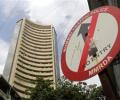
D-Street is hoping RBI policy review meeting on Tuesday will uphold its stand on easing of interest rates
.jpg)
A section of the market believes RBI should hold rates as negative real rates will hurt savings and investment.

Morgan Stanley expects RBI to cut rates sharply rather than "dribble down".

Buying stocks during bad times can lead to good returns.

The companies' underrecoveries stood at a whopping Rs 1,39,869 crore last financial year. Of that, Rs 62,837 crore was accounted for by diesel alone.

Usually, a fall in oil prices is followed with a cut in retail prices of auto fuels and the government passes on the benefit to consumers. However, Morgan Stanley believes gains this time around will remain capped.

India only has 3.5 million workers undergoing skills courses a year, compared with 90 million in China

The move to ban Rs 500 and 1000 notes may not curb the root cause of black money.

Cashi Crisis: Day 9: Aaj ki Taaza Khabar!
