The Delhi government is set to introduce a comprehensive drone policy aimed at creating over 1,000 jobs and regulating drone operations. The policy will focus on establishing research clusters, flight testing facilities, and providing subsidies, while also addressing drone usage for government purposes like traffic management and surveillance, considering the city's extensive 'no drone zones'.
The ministry of home affairs has suspended the Foreign Contribution Regulation Act (FCRA) licence of prominent public think-tank Centre for Policy Research (CPR) over violation of laws, officials said on Thursday.

HCLTech, India's third-largest IT services company, announced plans to establish a global technology centre and an AI-optimised data centre in Bhubaneswar, Odisha, with a total investment of approximately Rs 15,000 crore, marking its entry into the AI infrastructure business.

Analysts predict that crude oil prices and the ongoing US-Iran conflict will be the primary drivers of stock market movements, with investors also closely watching the Jackson Hole symposium for cues on interest rates.

Members of the Reserve Bank of India's (RBI) Monetary Policy Committee (MPC) have indicated that interest rate hikes may be necessary sooner rather than later, as headline inflation is projected to rise from its current benign levels in the coming months, according to the minutes of the August review.

IIM Indore will conduct a study on teenage cricket sensation Vaibhav Sooryavanshi to understand the impact of early fame and pressure on child prodigies.

Following devastating flash floods in Nepal, experts are calling for systematic scientific assessments of glaciers to understand and mitigate hazards, alongside the development of a robust land use policy for the Himalayan region. The floods, which killed over 460 people and left thousands missing, are believed to be linked to climate change impacts on glaciers and permafrost.

'Improved law and order and transparent governance have helped change UP's investment image.'

IIT Madras's Centre of Excellence for Road Safety has organised its first international hackathon, focusing on AI in road safety. The event brought together participants from India and other BIMSTEC nations to develop data-driven, technology-enabled solutions for the region, which faces a high number of road fatalities annually. The hackathon aims to foster collaboration among governments, academic institutions, and regional bodies to address this critical issue.

'For any government in India the core ideological issue as far as governance is concerned is very straightforward; which is how do you produce growth of 9 to 10 percent and then use the proceeds of that growth to create a more inclusive society. Unfortunately, for the UPA government there are too many internal ideological divisions for them to be able to tell this large story very clearly,' says Pratap Bhanu Mehta, president, Centre for Policy Research.
Experts highlight India's significant market potential for assistive technologies, estimated at Rs 75,000-95,000 crore by 2030. They advocate for a National Assistive Technology Policy to address current gaps in access and service delivery, fostering inclusion, independence, and economic participation for persons with disabilities and the elderly.

Karnataka Chief Minister D K Shivakumar met with AI major Anthropic to discuss a long-term partnership aimed at accelerating AI adoption across governance, education, healthcare, research, and the state's startup ecosystem. The collaboration focuses on deploying AI solutions responsibly, ensuring data privacy, and developing AI-focused skilling programmes and an AI University.

One of the most important provisions this year is that qualifying NEET-PG does not automatically guarantee participation in counselling.

Farmers under the Samyukta Kisan Morcha have initiated a week-long protest at the Chandigarh-Mohali border, demanding a minimum support price (MSP) based on the C2 plus 50 per cent formula, debt waivers, and opposing the proposed India-US trade deal, Electricity Amendment Bill, and Seed Bill. They also raised concerns about water depletion and sought resolutions based on riparian principles.

'Think of the brain like a machine, and Alzheimer's is like rust.'
'Like a rusty machine breaks down, a rusty brain also breaks down. And when it breaks down, you have memory loss, cognitive issues and so on.'

A parliamentary panel has strongly recommended that the Indian government appoint a dedicated 'polar ambassador' to enhance its strategic engagement and diplomatic influence in the critical Arctic and Antarctic regions, aligning with global trends and India's growing focus on polar affairs.

A parliamentary panel flagged staffing shortages at NCERT and CBSE, inadequate education spending, falling enrolment and poor internet connectivity in government schools.

'There needs to be a monitoring of glaciers in high altitude areas and one needs to check regularly how geological changes are taking place.' 'We can mitigate that by regular monitoring but unfortunately, hardly any monitoring is happening.' 'And without monitoring those higher altitudes of Himalayas, people are suffering.'

Despite aggressive expansion, India's solar power sector faces significant hurdles from rising regional disparities in installed capacity and a looming manufacturing glut due to overcapacity in domestic solar equipment production, potentially leading to consolidation and pricing pressures.

'The prime minister has given us the task of taking at least 300 satellites to orbit in the next five to six years.'

The Delhi government is developing a drone policy focused on creating research clusters, establishing testing facilities, enabling drone use in traffic management, and providing subsidies to support the drone ecosystem.

China sailed through the crisis in the Strait of Hormuz relatively unscathed even as the impact of its steps shielded other consuming nations from having to pay high crude oil prices.

India's position appears to be anchored around three red lines: Hasina's safety and the guarantee of a fair trial; assurances that Bangladeshi territory will not be used for activities hostile to India; and the restoration of an inclusive democratic process in Bangladesh.

Verify a content creator's Sebi registration, qualifications and certifications before acting on their advice.

'We can integrate AI and tech into education, but that is just a means and not an end.' 'Ultimately, we need to control what happens in a classroom and we need to let teachers innovate their teaching style to suit the needs of Gen Z and beyond.'

Education sector experts agree that using the "best technology" was essential to ensure students did not have to sit for an examination all over again because of a question paper leak.

As heart disease increasingly impacts young Indians, understanding the complexities of health insurance, including higher premiums, waiting periods, and the benefits of specialised cardiac policies, becomes vital for financial protection.

The aim is to win over the country's enterprises, developers and startups as AI systems shift from answering questions to autonomously executing tasks.

The Indian stock market's trajectory this week will be significantly influenced by crude oil prices, global market trends, and the commencement of the corporate earnings season, with IT major TCS set to announce its June-quarter results on July 9.

It, however, conceded that 20 per cent blending of ethanol with petrol leads to 3-5 per cent lower mileage in vehicles than conventional petrol, but said the blend offers a significantly higher octane rating, superior anti-knock properties, faster combustion, better pickup, smoother acceleration, and cleaner engine operation.

The Indian stock market is poised for a volatile week, influenced by the Reserve Bank of India's monetary policy decision, crucial global macroeconomic data, and the escalating geopolitical tensions in West Asia, according to market analysts.

90 per cent of institutions recorded no improvement in international student metrics, despite government initiatives such as the Study in India programme, UGC regulations on internationalisation, and efforts to attract foreign students.
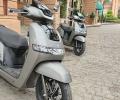
The Delhi government has approved an ambitious electric vehicle policy that eliminates registration fees and road taxes for EVs priced up to Rs 30 lakh, offers a Rs 1 lakh incentive for purchasing new EVs while scrapping old vehicles, and mandates that only electric two-wheelers can be registered starting April 2028.

India has strongly refuted claims by the United States Trade Representative (USTR) regarding excess capacity in its steel and textile sectors, arguing that the nation's significantly low per capita consumption of these products contradicts such assertions, according to Amitabh Kumar, Additional Secretary in the Ministry of Commerce.
Two South African scientists of Indian origin, Professor Salim Abdool Karim and Professor Keertan Dheda, have been awarded the Order of Mapungubwe for their contributions to public health, particularly in HIV/AIDS, tuberculosis research, and pulmonology.

The H-1B visa once symbolised the American Dream for Indians, but today's students are increasingly asking whether they need America at all. In 1995, the question was: How do I get to America? In 2026, it may be: Do I need to?

As a ruler he was a pragmatist and adaptable, and trying all the time to strengthen and perpetuate the empire that he and his forefathers had built.He seldom, if ever, allowed his policies to be determined by his religious beliefs, notes Rudrangshu Mukherjee.

'It's very important for India to retain its sovereignty. India should not sign any agreement which compromises its sovereignty.'

An innovation roadmap, a mechanism to double annual bilateral trade within next five years, and a joint artificial intelligence framework were among 13 outcomes to emerge from wide-ranging talks between Prime Minister Narendra Modi and President Emmanuel Macron on Sunday.

But when it comes to e2W, China is the dominant player and had grabbed over 76 per cent share of total e2W imports in 2025 with brands like Yadea, NIU and Sunra dominating the market.
