
Despite being the fourth largest economy, India's per capita emission levels are 70 per cent below world average and 93 per cent lower than those in the United States, says a latest report on climate change.
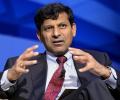
Former Reserve Bank Governor Raghuram Rajan said India will still remain a lower middle country if the potential growth rate remains at 6 per cent annually without any rise in population by 2047 (Amrit Kaal) and will be reaching the end of the demographic dividend by then. Speaking at a programme organised by Manthanon on Saturday, the economist said if the country does not grow faster, it will grow older (demographically) before it gets richer, which means there is the burden of an aging population to deal with also at that point. Rajan said the GDP growth in India for the past two quarters was in the region of 7.5 per cent and if one looks at the labor force participation, it is very low and when it comes to female participation, "it is the lowest in the G20".

'The Indian economy is expected to grow in terms of per capita income and GDP, and with that, the luxury segment becomes more relevant.'

Reflecting growing prosperity, India's per capita income grew by 15.6 per cent to Rs 53,331 per annum in 2010-11, crossing the half-a-lakh rupees mark for the first time, according to government data.
Reflecting growing prosperity, India's per capita income grew by 15.6 per cent to Rs 53,331 per annum in 2010-11, crossing the half-a-lakh rupees mark for the first time, according to government data.

Milk supplies could improve with the monsoon, provided the rains are not excessive.

India's per capita carbon dioxide emissions will increase by nearly three-fold to 3.5 tonnes by 2030, the Economic Survey 2009-10 said on Thursday.
India with a per capita GDP of $3,015 has one of the lowest ranks at 127, according to the IMF.

Moody's Ratings on Tuesday said India's growing water shortage can disrupt farm and industry sectors and is detrimental to the credit health of the sovereign as rising food inflation and decline in income may spark social unrest. It said decreases in water supply can disrupt agricultural production and industrial operations, resulting in inflation in food prices and hence can be detrimental to credit health of sectors that heavily consume water, such as coal power generators and steel-makers.

If Ahmedabad is India's preferred candidate, as seems likely, hosting Olympics 2036 should give it a leg up: A bigger airport, a better metro network, more hotels, flyovers and so on, observes T N Ninan.

Lamborghini has sold 10,112 cars worldwide -- so India's 100 is certainly a big deal for them. But how big a deal is it for us to peg our consumption theories around, asks Rama Bijapurkar.
Addressing economists, investors and academicians in Washington, Basu said the fundamentals of the Indian economy are strong enough in the medium and long term to sustain a healthy growth rate of over 8 per cent.

The situation raises concerns about whether the promised freebies will once again push the state into a revenue deficit.
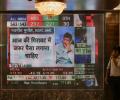
Please promise, especially those millions who trust you with their hard-earned money, never to let your voting preferences determine your actions on the markets. The most appalling and scary phenomenon was fund houses and brokerages going out on election yatras and writing copious reports promising more than 300 for the BJP. That was your wish as voters. Your investors are paying for it now, points out Shekhar Gupta.

As political winds stir in these states, it's prudent to assess their economic landscapes.

Six decades and more later, we are now captives of our identities. Every poll is based on elaborate calculations of electability of candidates on the basis of their castes and other narrow definers. That, along with voter promiscuity, is what defines our political culture, which remains stubbornly resistant to any change, asserts Shreekant Sambrani.
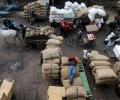
India can sustain 8 per cent annual GDP growth and the conducive macroeconomic configuration may become a launching pad for a step-up in the country's growth trajectory, said an article on the 'State of Economy' in the central bank's March Bulletin published on Tuesday. Over the period 2021-24, gross domestic product (GDP) growth has averaged above 8 per cent. The global economy is losing steam, with growth slowing in some of the most resilient economies and high frequency indicators, pointing to further levelling in the period ahead, said the article authored by a team led by RBI Deputy Governor Michael Debabrata Patra.

'Such steps would be a barrier and something people do not want.'
Population growth rate would be 1.5 per cent during the period 2007-12. "The next 10 years, India will register four major changes. The economic growth will accelerate, the technology will also grow and domestic industry will experience major liberalisation," Ahluwalia said after inaugurating the 22nd Indian Engineering Congress in Udaipur.

All the global transitions are working in India's favour, giving it the potential to become a force in today's uncertain world, but one of the country's biggest challenges is inclusive growth, Tata Sons chairman N Chandrasekaran said on Monday. In his address at the JRD Tata Oration, the head of the Tata group also asserted that Artificial Intelligence (AI) is here to stay and it will be beneficial if India prepares for it. Post the cold war era of relative stability and prosperity, the world appears to have given way to unpredictable conflicts and economic uncertainty, he said, adding that the pandemic resulted in supply chain shocks of gigantic proportion.
Also, incremental demand is expected to rise by 10 per ent over the next five years.

Per capita income in the state has consistently been below the national average for at least 24 years. However, it has narrowed the gap with the all-India level in recent years.

India's first $1 trillion company by market capitalisation (mcap) is achievable by 2032 and HDFC Bank and Reliance Industries (RIL) are seen as lead contenders, ICICI Securities said in a note on Monday. To achieve this, the shares of both the firms will have to appreciate at least 20 per cent annually for the next decade. ICICI Securities believes this is possible if India's gross domestic product (GDP) growth accelerates to 9 per cent per annum and corporate profitability cycle peaks. "Our calculations suggest that India's first $1 trillion mcap stock could emerge by 2032.
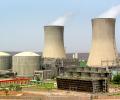
'Chinese are going bang, bang, bang building 30-35 reactors.' 'We should announce a programme of 50 new reactors and show that we mean business on the ground and not just announcements.'

Major General S C N Jatar, who passed into the ages on Monday night, thwarted anti-national forces at the peak of the Assam agitation. Colonel Anil A Athale (retd) salutes this officer and gentleman.

Funding winter and corporate governance woes separated the men from the boys in the country's startup space in 2023 that saw funds into the segment tapering to just around $8 billion. All said, investors are hopeful of strong growth of the maturing startup ecosystem in the new year. Edtech and health tech segments that grew exponentially during the pandemic plunged into an abyss of financial uncertainties, with several firms shuttering their business, and valuation of prominent players like BYJU'S and PharmEasy plummeting 85-90 per cent.
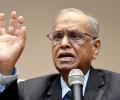
Capitalism, grounded in the twin pillars of a free market and entrepreneurship, is the singular solution to addressing the issue of poverty in India and any country, N R Narayana Murthy, co-founder of Infosys, said during a fireside chat moderated by Nikhil Kamath, co-founder of the brokerage platform Zerodha. "The government should function as a fair and transparent regulator. "On the entrepreneurs' side, they must recognise themselves as evangelists for capitalism.

'If we want real democracy, the economy itself will need to be democratised.'
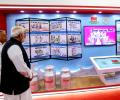
Prime Minister Narendra Modi on Thursday appealed to farmers and other stakeholders associated with the cooperative sector to make GCMMF, which owns the 'Amul' brand, the world's number one dairy company from its current eighth position. He was addressing nearly one lakh people, mostly cattle rearers and farmers, gathered at the Narendra Modi stadium in Motera area of Ahmedabad for the golden jubilee celebration of the Gujarat Cooperative Milk Marketing Federation (GCMMF).

Every patriot should learn from our history and recognise that celebrating size will neither negate nor obscure the huge economic challenges that India faces, asserts Rathin Roy.

Bankers said the outlook of M&As in India in 2024, especially in the second half after the Lok Sabha election, seems relatively better.

'When you do some job for a few hours, you are hardly earning enough to survive.'
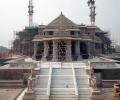
If Saudi Arabia, with just two Muslim holy sites of Mecca and Medina, can create a huge tourism-based ecosystem beyond oil, Ayodhya is sure to become the world's hottest religious tourism site in less than a decade, predicts R Jagannathan.

Get more people working, get more people working in modern manufacturing and services in our cities, and get people working better and longer, suggests Naushad Forbes, past president, CII.

'We are cautious only on sub-sectors that have seen massive melt-up during the past six months.'

'Congress leaders who are making strategy for the Congress to win elections have not even won a class monitor elections.' 'When you have not contested school monitor elections, what will you know about the ground reality?'

In December 2020, as economists debated the shape the global economic recovery might take - Z, V, U, W or L - JP Morgan came up with the concept of the K-shaped curve. The investment bank used the shape of the letter K to illustrate the growing difference between large and small businesses in the United States. Since then, as the Covid-19 pandemic exacerbated the gap between the rich and poor, the term has gained a larger connotation to embody the characteristics of development across economies.

A bill will be brought in the assembly during the ongoing session, possibly this week according to sources in the cabinet.

'As our per capita income increases and various demographic segments emerge, the need for various kinds of protection and risk covers will become even more explicit.'

The point made by sociologist M N Srinivas, that it represented a Sanskritic act that was linked to caste, is never raised in Indian debates and the disapproval of drink is almost universal, notes Aakar Patel.
 © 2026 Rediff.com - Advertise with us - Disclaimer - Privacy Policy - Sitemap - Feedback - About us - Terms of use - Grievances