
The company has also started scouting for land for a new plant, as it plans manufacturing capacity beyond its immediate volume requirements.

Maruti Suzuki India has significantly increased its capital expenditure (capex) outlay to Rs 77,500 crore for the five-year period ending FY31, aiming to boost capacity, develop new models, and enhance R&D, as announced by MD and CEO Hisashi Takeuchi.
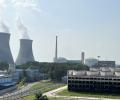
Atomic Energy Commission Chairman Ajit Kumar Mohanty announced that India's private sector is projected to invest Rs 7.5 lakh crore and contribute 30 GW towards the nation's goal of achieving 100 GW nuclear power capacity by 2047. This marks a significant policy shift, facilitated by the SHANTI Act, encouraging private participation in nuclear energy beyond the traditional public sector model. The country is also exploring Small Modular Reactors (SMRs) for industrial needs and advancing its three-stage nuclear power programme, leveraging its substantial thorium reserves.

Korean auto major Hyundai plans to invest an additional Rs 4,000 crore in Maharashtra by 2030, aiming to nearly double capacity at its new Pune manufacturing plant to 320,000 units per annum in a phased manner, a top company executive said.

Microsoft has inaugurated its India South Central data centre region in Telangana, marking its fourth cloud region in the country and significantly expanding its cloud and AI infrastructure. This strategic investment supports Telangana's ambitious goal of achieving 5 GW of data centre capacity by 2029 and attracting USD 30 billion in digital infrastructure investments, further solidifying Hyderabad's role as a global technology hub.
Microsoft has inaugurated its India South Central data centre region in Telangana, marking its fourth cloud region in the country and significantly expanding its cloud and AI infrastructure. This strategic investment supports Telangana's ambitious goal of achieving 5 GW of data centre capacity by 2029 and attracting USD 30 billion in digital infrastructure investments, further solidifying Hyderabad's role as a global technology hub.
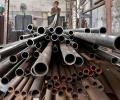
India's government is set to release its draft National Steel Policy for public consultation, aiming for over 600 million tonnes of steelmaking capacity and 500 million tonnes of consumption by 2047. The policy will also introduce a ~5,000-crore scheme to incentivise small steel producers for carbon emission reduction and address challenges like raw material availability and technological dependence.

Honda Motorcycle & Scooter India (HMSI) plans to create over 3,800 jobs and expand its annual two-wheeler production capacity to 80 lakh units by 2028, reinforcing India's role as a global manufacturing and export hub for Honda.
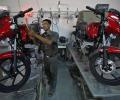
Bajaj Auto plans to increase its annual production capacity by nearly 25 per cent, from around 7 million to over 9 million vehicles, in the coming quarters. This expansion is driven by strong export demand and rapid growth in electric vehicles, which have stretched current capacity across key product segments.

Dabur India on Tuesday said it was planning a Rs 22 crore (Rs 220 million) investment in capacity expansion this fiscal to set up new manufacturing units and has identified Vatika as the umbrella brand for the fast moving consumer goods business.

AI infrastructure firm AM Intelligence announced plans to invest over USD 20 billion in the next 15 months to significantly expand its data centre capacity, including firm orders for 20,000 NVIDIA Rubin GPUs. This expansion will bring its total capacity to 100 Megawatt initially, with a broader goal of 1 GW of compute-as-a-service capacity globally, establishing it as a major buyer of advanced AI hardware.

Mahindra & Mahindra is contemplating another price increase across its SUV portfolio in response to recent commodity price surges, with a decision expected within the next two weeks, according to Nalinikanth Gollagunta, CEO Automotive Division, Mahindra Group.

Despite aggressive expansion, India's solar power sector faces significant hurdles from rising regional disparities in installed capacity and a looming manufacturing glut due to overcapacity in domestic solar equipment production, potentially leading to consolidation and pricing pressures.

India's cement industry is on the brink of an oversupply situation as aggressive capacity expansion by major players is set to outpace demand growth over the next two financial years, potentially leading to pricing pressures and moderated utilisation rates.

The initial public offering (IPO) of auto components maker Hero Motors Ltd was fully subscribed on its first day of bidding, receiving bids for 1.38 times the shares on offer, with strong interest from retail investors.
Microsoft has inaugurated its India South Central datacenter region in Telangana, marking its fourth cloud region in the country. This expansion aims to bolster India's cloud and AI infrastructure, with Telangana targeting 5 GW of datacenter capacity by 2029 and attracting significant investment in the digital ecosystem.

JSW Group and China's SAIC Motor are in discussions for the next round of capital support for JSW MG Motor India, aiming to expand manufacturing capacity beyond 220,000 units annually to an ambitious one million vehicles and broaden its new-energy vehicle (NEV) portfolio.

Mahindra & Mahindra's Q1FY27 results missed consensus estimates due to declining gross margins, but strong demand for its SUV portfolio and strategic price hikes are expected to drive near-term gains, particularly in the auto segment, despite headwinds in farm equipment.
Lithium-ion battery recycling firm NAN Silox GreenMet Pvt Ltd has appointed Vijay Pasupathy as its Chief Executive Officer. The company is advancing plans to establish a Rs 1,400-crore critical metals recycling facility in Naidupeta, Andhra Pradesh, aiming to boost domestic capabilities in processing recovered critical metals and reduce reliance on imports.

India remains one of the Hyundai Motor group's most important and strategic markets globally. The initiative positions India as a strategic core market for the group's growth, emerging market expansion, and next-generation automotive innovation.

Dedicated Ayush dispensaries increased from 26,130 in 2013-2014 to 37,804 in 2024-2025, while hospitals rose much more slowly, from 3,605 to 3,885.

A cyberattack on an automaker can spread through its wider supply chain and create significant financial losses.

Adani Enterprises and US-based Jabil have signed a non-binding agreement to establish a 50:50 joint venture in India. This JV will manufacture artificial intelligence and data centre equipment, including AI racks, servers, storage, networking gear, and cooling systems, targeting both Indian and global markets. The collaboration aims to capitalise on India's accelerating data centre demand and the surging global investment in AI compute infrastructure.
A new Rs 6,000 crore integrated phenol and acetone plant, India's largest, has been inaugurated in Haldia, West Bengal. Developed by Adperma Private Limited, a subsidiary of Haldia Petrochemicals Limited (HPL), the facility aims to reduce India's reliance on imported industrial chemicals and boost the domestic specialty chemicals sector. West Bengal's Chief Minister announced a new industrial policy following the inauguration.

Postgraduate medical aspirants get big relief in NEET-PG 2026 as available seats rise to nearly 58,000 and cut-off scores drop significantly across categories. Here is what candidates should know before counselling begins.
Microsoft has officially launched its fourth cloud region in India, located in Hyderabad, as part of its USD 20.5 billion investment in the country's digital and AI infrastructure. This new facility, which became available on August 6, features zero-water cooling technology and aims to enhance capacity and resilience for organisations in India and Asia, supporting the nation's rapid digital growth and projected increase in data centre capacity.

India's power sector is undergoing a significant transformation, driven by a planned shift towards renewable energy and ambitious capacity expansion targets, with major players like NTPC, JSW Energy, Adani, and Tata Power prioritising predictable returns. However, execution challenges and valuation concerns remain critical factors for sustained growth.

Tata Power is positioning itself as a key partner in India's rapidly expanding data centre ecosystem, with a significant opportunity pipeline across renewable energy, transmission, and distribution. The company is broadening its offerings to include comprehensive solutions like powered land and grid connectivity, actively supporting hyperscalers and AI-ready digital infrastructure, particularly in the Mumbai Metropolitan Region.

Maruti Suzuki India (MSIL) reported a mixed Q1 FY27, with record quarterly sales driving strong revenue growth, but operating performance was below expectations due to higher commodity and other costs impacting margins. Brokerages anticipate sustained sales growth for the company in the current fiscal year, supported by new launches, robust demand, and significant capacity expansion.

Net office space leasing in India's top eight cities declined by 20 per cent in the January-September period to 36.7 million sq ft, primarily due to limited fresh supply of quality workspaces and a high base effect from the previous year, according to a report by Cushman & Wakefield. Despite this, gross leasing saw a 1 per cent increase, reaching a record 64.6 million sq ft, indicating strong underlying market activity.

'Indian private sector hospitals provide quality healthcare at a fraction of the global cost.'
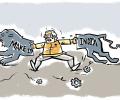
Hical Technologies and Safran Aerosystems have signed a Memorandum of Understanding to explore a joint venture for manufacturing complex systems, including fluid and fuel systems, for the Dassault Rafale program in India. This partnership aims to bolster the Make in India initiative, leveraging Hical's expanding manufacturing capabilities and Safran's technology leadership to produce critical aerospace components domestically and for global markets.

koda Auto Volkswagen India is actively exploring various approaches to penetrate India's burgeoning electric vehicle (EV) market, including importing global models, local assembly, and developing highly localised products, as EV penetration is expected to reach 17-18% by the end of the decade.

'The number of airport bundles that may be awarded to a single bidder would be capped.'

The absolute amount of money raised is more than three times the 2 trillion seen before the pandemic (June 2019).

Hyundai Motor India is set to outpace the broader passenger vehicle market, projecting an 8-10 per cent domestic sales growth in H2FY27, fueled by strategic launches of a new mid-size SUV and a dedicated electric vehicle, alongside increased production capacity.

The government introduced the SHANTI Act, 2025, to support the mission and open the sector to private participation.

Indian pharmaceutical companies are not rushing to relocate manufacturing to the United States despite former President Donald Trump's renewed threat of tariffs up to 200 per cent on imported generic drugs. Instead, they are leveraging existing US plants, contract manufacturers, and making selective investments in complex products while maintaining India as their primary production hub.

The Oppo K14 Lite combines a large display, a capable camera setup and a sizeable 7,000 mAh battery in a sturdy design.
