
The Supreme Court of India strongly criticised a Greater Noida executive magistrate for issuing a notice to a student who participated in a protest, despite the court's earlier order against penal action on student protesters. Chief Justice of India Surya Kant expressed surprise at the magistrate's action and stated that an explanation would be sought. The court had previously quashed FIRs against student protesters and directed compensation for families affected by the NEET paper leak.

The Supreme Court has issued notices to the Election Commission and the Centre regarding pleas alleging that the poll body made several decisions without the approval of the two election commissioners. The court stated it would annul any decisions found not to be in accordance with the law, while also refusing an interim order to restrain CEC Gyanesh Kumar from making decisions.

Modi's greater weakness is his inability since July when he directed the exit of Dharmendra Pradhan, to come up with a political counter strategy. Security measures and executive orders as seen in recent days will only likely further weaken him and make him as lame duck a premier as many prior to him, Indira Gandhi and Manmohan Singh included, observes Nilanjan Mukhopadhyay.
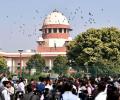
The Supreme Court has agreed to urgently hear a 2016 Public Interest Litigation (PIL) seeking the speedy disposal of criminal cases against lawmakers across India. This decision comes amidst concerns raised by amicus curiae Vijay Hansaria about the high number of legislators facing criminal charges, including chief ministers. The court had previously issued directions in November 2023 to fast-track such trials.

Chief Justice of India Surya Kant stated that the Supreme Court views technology as an aid to human reasoning, not a replacement, and emphasised developing "Swadeshi Jurisprudence" tailored to India's unique conditions. He highlighted efforts to create an indigenous AI ecosystem for the judiciary and stressed that AI cannot substitute human judgment, empathy, or ethical discernment.
The Supreme Court has directed the Delhi police commissioner to form a Special Investigation Team (SIT) to probe a complaint filed by lawyers who were allegedly assaulted during a protest demanding the resignation of Bar Council of India (BCI) chairman Manan Kumar Mishra. This directive comes after the Delhi High Court had dismissed a similar plea, stating it was not maintainable.

Opposition MPs from the INDIA bloc, including prominent leaders like Rahul Gandhi and Priyanka Gandhi Vadra, marched to the Supreme Court to file a petition against Chief Election Commissioner Gyanesh Kumar, alleging 'vote chori' and irregularities in electoral rolls.
The Supreme Court has ruled that the Bar Council of India (BCI) lacks the statutory authority to regulate the conduct of law students. The court clarified that disciplinary actions against students fall under the purview of their respective educational institutions, setting aside BCI notifications issued during a controversy involving NALSAR University students.

The Supreme Court advised actor Rajpal Yadav to make good movies and entertain people to rebuild his image, as it acknowledged his payment of Rs 1.15 crore in a long-running cheque-bounce case. The court also noted a prospective buyer for his property willing to deposit Rs 85 lakh. Yadav expressed financial losses from his film 'Ata Pata Laapata' and the impact on his career.
The Supreme Court has sought responses from the Maharashtra government and other parties regarding a plea to fell and transplant trees for a proposed National Centre of Excellence for Animation, Visual Effects, Gaming, Comics and Extended Reality in Mumbai's Film City. The project, deemed of "eminent national importance," requires the felling of 124 trees and transplanting 333, with compensatory afforestation planned. The court's intervention follows a previous order restricting tree felling in the Aarey colony.

Leaders of the Cockroach Janta Party (CJP), including Saurav Das and Ashutosh Ranka, have vowed to escalate their agitation against Chief Election Commissioner (CEC) Gyanesh Kumar, expanding protests nationwide after their release from detention. They allege an "emergency-like situation" created by the Modi government, illegal detentions, and harassment of protesters, drawing parallels to the 1975 Emergency. The CJP is protesting alleged irregularities in voter rolls and demanding Kumar's resignation, accusing authorities of suppressing dissent.

The Supreme Court has refused to entertain the Centre's plea challenging the Calcutta High Court's decision to uphold the maintainability of Public Interest Litigations (PILs) against the Great Nicobar Island mega-infrastructure project. The PILs allege violations of the Forest Rights Act and impact on Particularly Vulnerable Tribal Groups. The apex court directed the High Court to proceed with hearing all related petitions.
A heated exchange occurred in the Supreme Court between senior advocate S Muralidhar and Solicitor General Tushar Mehta over Mehta's use of the term "Naxalites" during a hearing on the national song Vande Mataram. Muralidhar strongly objected to the remark, demanding its withdrawal, while Mehta defended his statement, referring to an ideology rather than individuals. The bench intervened, emphasising decorum and constitutional issues.

Chief Justice of India (CJI) Surya Kant likened some unemployed youngsters to cockroaches, saying they become media, social media, and RTI activists and attack the system. The comments were made while hearing a petition from a lawyer seeking senior advocate designation.

Supreme Court Justice Dipankar Datta has strongly criticised the 2023 law for selecting the Chief Election Commissioner and election commissioners, arguing that the executive's dominant role in the selection committee creates a 'shadow of doubt' over the Election Commission's independence, even if appointments are meritorious.

Chief Justice of India Surya Kant issued a clarification on his 'parasites' remarks, stating that he was misquoted by the media and that his comments were directed at individuals entering the legal profession with fake degrees, not the youth of the nation.

The Supreme Court has agreed to examine a plea challenging the Bombay High Court's decision to uphold the acquittal of 22 accused in the alleged fake encounter killings of Sohrabuddin Shaikh, his wife Kausar Bi, and aide Tulsiram Prajapati. The apex court expressed concern over 92 witnesses turning hostile during the trial and will review selected witness statements to ensure a fair and just process.

Chief Justice of India Surya Kant urged national law universities to proactively lead the integration of technology into the legal system, rather than merely reacting to changes. Speaking at a conclave, he stressed the importance of incorporating academic integrity and responsible AI use into the curriculum, rejecting outright bans on generative AI. The CJI highlighted that law schools must prepare graduates to critically engage with technological tools, ensuring justice, fairness, and human judgment remain central to the evolving legal landscape.

The Opposition India bloc has threatened to initiate impeachment proceedings against Chief Election Commissioner Gyanesh Kumar, citing alleged irregularities in the Special Intensive Revision (SIR) of electoral rolls. This move comes as the Opposition plans a joint agitation and highlights the constitutional process for removing a CEC, which mirrors that of a Supreme Court judge.

The Supreme Court has rejected a High-Powered Committee's request for a six-month extension to submit its report on the definition and protection of the Aravalli Hills, directing the panel to submit it by November 30. The court warned of reconstituting the committee if it fails to meet the deadline and emphasised the need for issue-specific interim reports. This decision follows a previous controversy over the Aravalli definition and mining regulations.

The Supreme Court has agreed to hear a Public Interest Litigation (PIL) next week that seeks the suspension of Chief Election Commissioner (CEC) Gyanesh Kumar and challenges the alleged unilateral decision-making within the Election Commission without the approval of two other Election Commissioners.

The Supreme Court has urged the Central Board of Secondary Education (CBSE) to consider exempting Class 6 students from its three-language policy for the current academic year. The policy, which mandates the study of three languages including two native Indian languages, is challenged by petitioners who question CBSE's jurisdiction over classes 6-8. The court emphasized finding a solution that avoids student pressure and suggested a potential deferral for Class 6.

A derogatory 'cockroach' remark by Chief Justice Surya Kant during a Supreme Court hearing inadvertently sparked a nationwide student movement, transforming an insult into a powerful symbol of protest that led to Union Education Minister Dharmendra Pradhan's resignation.

The Supreme Court has requested a report from the Allahabad High Court Chief Justice regarding the conduct of the presiding officer in the 2021 Lakhimpur Kheri violence case. This follows allegations by an eyewitness's advocate, Prashant Bhushan, that the officer improperly transferred cases, acquitted accused, and issued a non-bailable warrant against his ill client. The apex court also directed the Uttar Pradesh government to appoint an experienced public prosecutor for the trial.

Twenty-three political parties and an Independent MP have jointly written to Chief Justice Surya Kant regarding the Election Commission's Special Intensive Revision (SIR) process and other election-related issues, a move spearheaded by the INDIA bloc.

The Supreme Court has raised concerns regarding Bengaluru's Premium Floor Area Ratio (FAR) scheme, questioning its impact on urban infrastructure. The court cited Gurugram's infrastructure collapse during rains as a cautionary tale, contrasting it with Greater Noida's planned development. The scheme allows property owners to purchase additional construction rights, but petitioners argue it strains existing infrastructure and could regularise illegal constructions.

The Supreme Court has affirmed its decision not to alter the five-member high-powered committee, led by former Justice R Subhash Reddy, which is investigating allegations of police excesses against student protesters and violence against police personnel in Delhi. The court dismissed concerns about potential bias, stating the committee acts as its "extended hand" and will function under its supervision. It also noted the suspension of an executive magistrate who issued a show-cause notice to a student involved in protests.

The Supreme Court has expressed concern to the Election Commission regarding the "almost mechanical" issuance of notices under the Special Intensive Revision (SIR) exercise in Delhi, urging additional safeguards and clarification on "logical discrepancy" criteria. The court is hearing a petition challenging the EC's process, which has seen millions of voters receive notices, raising practical difficulties and concerns about potential disenfranchisement.

The Supreme Court has expressed shock over numerous deaths, including unnatural ones, in relief camps for internally displaced persons (IDPs) in Manipur. It directed the state's chief secretary to explain steps taken for investigation, criminal proceedings, and ensuring safety, questioning low compensation and incomplete post-mortems. The court also sought a report from MSLSA and urged expeditious trials in violence-related cases.

The Supreme Court has rejected pleas to reconstitute a high-powered committee investigating alleged police excesses against student protesters in Delhi, stating that the allegations against the panel were based on conjecture. The court emphasised the committee's role in ensuring fairness and transparency, and directed it to proceed with its inquiry into various issues including the use of pellet guns, targeted violence, and property destruction, while ensuring protection and confidentiality for vulnerable witnesses.
Supreme Court Justice V Mohana recused herself from a 2016 Public Interest Litigation (PIL) seeking directions for the speedy disposal of criminal cases against lawmakers. This development follows a report by amicus curiae Vijay Hansaria, which revealed over 4,000 pending criminal cases against Members of Parliament (MPs) and Members of Legislative Assemblies (MLAs), including chief ministers from 14 states. The Supreme Court has previously issued directives to high courts to establish special benches to monitor and fast-track these trials.

The Supreme Court has taken a serious view of allegations of harassment against a minor girl who participated in the July Cockroach Janta Party protests. The court emphasised that nobody should be allowed to intimidate a victim or her family from pursuing criminal proceedings and directed the Solicitor General to ensure action on the girl's FIR, seeking reports from Delhi and Uttar Pradesh governments.
The Supreme Court has listed for hearing on August 31 an appeal of Sumit Roy, personal assistant to Trinamool Congress MP Abhishek Banerjee, challenging the August 6 order of the Calcutta high court denying him pre-arrest bail in the Salboni land-grabbing case.

Solicitor General Tushar Mehta informed the Supreme Court that an appeal would be filed against an Allahabad High Court decision that quashed the detention of Delhi University student Akriti Chaudhary under the National Security Act. The High Court had also awarded Rs 5 lakh compensation to Chaudhary and criticised the "despotic" conduct of the Gautam Buddha Nagar DM. The Supreme Court also expressed displeasure over a Greater Noida executive magistrate's notice to another student for protest participation.

The Supreme Court has sought responses from the Union ministries of electronics and information technology and law and justice regarding a plea for safeguards for minors on social media. The NGO 'Just Rights for Children Alliance' filed the plea, arguing that social media platforms should not enter into contracts with children under 18, citing their statutory incapacity to contract and the risks of online harm.

The Supreme Court on Wednesday came down heavily on the Indian Coast Guard (ICG) for not granting permanent commission to a female officer, saying "we will not allow women officers to be humiliated".

The Supreme Court of India has quashed criminal proceedings against comedian Samay Raina and four others who faced charges for remarks about people with disabilities. The court lauded their subsequent efforts in organising events and raising awareness for specially-abled persons and those with rare diseases like Spinal Muscular Atrophy (SMA).
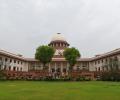
The Supreme Court, in a 6:3 majority verdict, has ruled that the expansive, labour-friendly definition of 'industry' from its 1978 Bangalore Water Supply and Sewerage Board judgement will not be used for interpreting the Industrial Relations Code of 2020. However, the 'triple test' from the 1978 verdict will still apply to pending cases under the now-repealed 1947 Industrial Disputes Act.

The Supreme Court has scheduled a final hearing for a batch of petitions challenging the marital rape exception in Indian law. The court will examine the constitutional validity of the provision that grants immunity to husbands from prosecution for sexual acts with their wives, even under the newly enacted Bharatiya Nyaya Sanhita, 2023. This significant legal challenge follows split verdicts from High Courts and seeks to address whether such an exception aligns with fundamental rights.

The Supreme Court is reviewing a Public Interest Litigation challenging Jantar Mantar's suitability as a protest site in New Delhi, citing inconvenience to local residents and disruption of essential services. The court has issued notices to the Centre and other parties to address concerns about access and movement in the area.
