
Finance Minister Nirmala Sitharaman has urged the Reserve Bank of India to accelerate its central bank digital currency initiatives, emphasising the need to sharpen capabilities with the digital rupee amidst rapid advancements in tokenisation, agentic AI, and quantum computing. She also highlighted critical concerns regarding cybersecurity, warning that autonomous AI systems are evolving rapidly and require robust safeguards. Sitharaman proposed a federated industry platform to give India's technology ecosystem a collective international voice.

India's markets regulator Sebi has launched 'Demat 2.0', a pilot project for tokenisation of corporate bonds, enabling atomic settlement through integration with RBI's wholesale CBDC. This new market infrastructure uses Distributed Ledger Technology (DLT) to make bond issuance, trading, and settlement faster and more efficient. India is the first country to issue corporate bonds natively on a distributed ledger with central bank digital currency settlement. Additionally, RBI Governor announced new UPI innovations: 'Tap & Pay' for faster POS transactions and MyUPI, an AI-powered customer support solution.

Chandigarh is set to launch the Central Bank Digital Currency (CBDC), or digital rupee, for Direct Benefit Transfer (DBT) under the Pradhan Mantri Garib Kalyan Anna Yojana (PMGKAY) on August 14. This initiative makes Chandigarh the first Union Territory to fully roll out CBDC-based DBT for food subsidy, enhancing transparency and efficiency in welfare delivery. The digital rupee, issued by the RBI, will be purpose-bound for purchasing foodgrains from authorised merchants.

The Delhi government has notified detailed guidelines for the Delhi Lakshmi Yojana, outlining strict provisions for beneficiaries found ineligible, including discontinuation of financial assistance, recovery of disbursed funds, and potential fraud charges. The scheme provides Rs 2,500 monthly to eligible women, with specific rules for fund disbursement via RD/FD accounts and CBDC wallets, along with clear eligibility and exclusion criteria.

The Reserve Bank of India (RBI) is planning to extend tokenisation to various financial asset classes, building on its successful trials with certificates of deposit (CDs). This move aims to enhance the efficiency of issuance, trading, and settlement of financial assets, leveraging blockchain technology and wholesale Central Bank Digital Currency (CBDC) for atomic settlements.

The challenge for India lies in navigating complex landscape to its best advantage. The BRICS Summit will test its navigation skills, asserts former foreign secretary Shyam Saran.

The government plans to expand its central bank digital currency (CBDC)-based food subsidy programme to Chandigarh, Dadra and Nagar Haveli, and Daman and Diu by June, following its implementation on a pilot basis in Gujarat and Puducherry, official sources said.

'The impact of CBDC on deposits and deposit insurance is largely unknown.'

A State Bank of India report indicates a sharp increase in precautionary cash holding in India, with the gap between per capita currency in circulation and ATM withdrawals widening significantly, driven by global uncertainties despite record digital payment transactions.

Reserve Bank of India (RBI) Governor Sanjay Malhotra stated that preventing second-round effects of supply shocks, where inflation expectations rise due to prolonged disruptions, is the primary role of monetary policy. He also defended the RBI's foreign exchange market interventions, asserting it did not commit to an 'indefensible peg'.
'There are no additional benefits for banks and market participants to use CBDC...'

One reason why volumes have not increased in the retail segment is that users are not aware of merchants who accept digital currency.
The Reserve Bank is planning to extend wholesale Central Bank Digital Currency (CBDC) for transactions for interbank borrowing or call money market, sources said on Tuesday. The pilot in the wholesale segment, known as the Digital Rupee -Wholesale (e-W), was launched on November 1, 2022, with the use case being limited to the settlement of secondary market transactions in government securities. "RBI is now planning to go into the interbank borrowing market.

'We have seen that stablecoins lack the basic attributes of money, their advantages are neither unique nor unambiguous and their risks are all too real.'
The Reserve Bank of India (RBI) is in no rush to launch the central bank digital currency (CBDC) nationwide, as its most promising use case - cross-border payments - depends on other countries rolling out their own CBDCs simultaneously for the system to work effectively. That said, the CBDC pilot is progressing well, with the user base in India expanding to about seven million, said RBI Deputy Governor T Rabi Sankar.

As deposit growth lags credit expansion, Indian banks face shrinking low-cost Casa inflows, rising funding costs, and structural shifts driven by UPI, e-Kuber, and digital savings trends, points out Tamal Bandyopadhyay.

Non-banking entities such as fintech firms will have to tap into use cases beyond peer-to-peer (P2P) and peer-to-merchant (P2M) transactions to scale up the presence of the retail version of the central bank digital currency (CBDC), which is also known as the e, said industry players. These use cases will enable programmable transactions across domains, including the government's direct benefit transfer (DBT) schemes, with subsidies restricted to specific purposes such as food coupons, hospital bills, fertilisers, pesticides, and cross-border remittances.

The Reserve Bank of India (RBI) does not target any price level on the rupee, Governor Sanjay Malhotra reiterated at an International Monetary Fund and World Bank event on Wednesday.

Officials from both India and the US in the recent past have indicated that a "fair deal" will be concluded soon, with Indian officials holding that more formal rounds of talks are not needed.

'When you think of cross-border payments, the first things that come to mind are risk, compliance, taxation, speed, and cost.'

Reserve Bank Governor Sanjay Malhotra on Wednesday exhorted the fledgling fintech ecosystem to focus on the underserved sections of the society to deepen financial inclusion. Speaking at the annual Global Fintech Fest in Mumbai, Malhotra accepted that serving the "privileged" will be a lucrative business, but urged the smaller companies to focus on the underserved.

'Other sectors that manage the savings pools of Indians are giving tough competition to life insurance companies.'

Investors should be mindful of the high volatility in cryptos: Bitcoin has fallen more than 80 per cent in past corrections.
The Reserve Bank of India (RBI) will launch the Unified Lending Interface (ULI) nationwide in due course, aiming to transform India's lending sector, similar to how the Unified Payments Interface (UPI) revolutionised the payments ecosystem, Governor Shaktikanta Das said on Monday.

'Whether I am optimistic or pessimistic is not the issue; I am just going by the evidence available.' 'The Indian economy and financial sector are now well-placed and very resilient in dealing with any kind of spillover coming from the external world.'
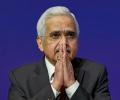
Outgoing Reserve Bank Governor Shaktikanta Das said on Tuesday that restoring inflation-growth balance is the most important task ahead of the central bank. Addressing a press conference on his last day as the central bank chief, Das said his successor will have to navigate the changing world order, effectively deal with cyber threats, and focus on harnessing new technologies.
The Reserve Bank on Friday said it will soon commence the pilot launch of e-rupee for specific use cases with a view to bolstering India's digital economy, making payment systems more efficient, and checking money laundering. In a concept note on Central Bank Digital Currency, the RBI said CBDC is aimed to complement, rather than replace, current forms of money and is envisaged to provide an additional payment avenue to users, not to replace the existing payment systems. "Supported by state-of-the-art payment systems of India that are affordable, accessible, convenient, efficient, safe and secure, the Digital Rupee (e?) system will further bolster India's digital economy, make the monetary and payment systems more efficient and contribute to furthering financial inclusion," the paper said.

Despite the demonetisation of 2016 and the rise in digital transactions that followed, the economy's dependence on cash has remained as high as ever. So when the Reserve Bank of India (RBI) introduced a pilot project of its version of digital cash - called the central bank digital currency (CBDC) - on December 1, many questions were asked. Can the CBDC replace physical cash, even partially? Can it match cash in terms of convenience? Are CBDC transactions truly anonymous?
The recently launched retail central bank digital currency (CBDC) pilot has 50,000 users and 5,000 merchants, the RBI said on Wednesday. "We want the process to happen, but we want the process to happen gradually and slowly. "We are in no hurry to make something happen so quickly," Deputy Governor T Rabi Sankar said at the post-policy press conference in Mumbai.

On the back of sound macroeconomic policies and softer commodity prices, India's growth momentum is likely to be sustained in 2023-24 in an atmosphere of easing inflationary pressures, said the Reserve Bank's annual report released on Tuesday. It, however, added that slowing global growth, protracted geopolitical tensions and a possible upsurge in financial market volatility following new stress events in the global financial system could pose downside risks to growth. "On the back of sound macroeconomic policies, softer commodity prices, a robust financial sector, a healthy corporate sector, continued fiscal policy thrust on quality of government expenditure, and new growth opportunities stemming from global realignment of supply chains, India's growth momentum is likely to be sustained in 2023-24 in an atmosphere of easing inflationary pressures," it said.
The RBI refuses to classify a cryptocurrency as an asset since it doesn't have future cash flow and its value is always fluctuating because of speculation. There is also no consumer protection, observes Tamal Bandyopadhyay, and hence the e-rupee trial run.
Days after the government said the Reserve Bank will introduce a digital currency in 2022-23, Governor Shaktikanta Das on Thursday said the central bank does not want to rush and is carefully examining all aspects before introduction of the Central Bank Digital Currency (CBDC). He, however, declined to give any timeline for the launch of the CBDC. In her Budget 2022-23 speech, Finance Minister Nirmala Sitharaman had announced that the RBI will introduce a digital currency in the next financial year beginning April 2022 to boost the digital economy and for more efficient currency management.
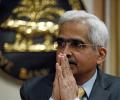
RBI Governor Shaktikanta Das on Friday said the government and the central bank are in discussion with South Asian countries to have cross-border trade in rupee. He also said the central bank digital currency (CBDC) is in trial phase and the RBI is moving very carefully and cautiously on digital rupee launch. After the successful launch of the wholesale pilot, the Reserve Bank of India (RBI) on December 1, last year, began its retail CBDC pilot project.
India's first digital rupee pilot project will commence on Tuesday with nine banks, including SBI, HDFC Bank and ICICI Bank, issuing the virtual currency for transactions in government securities. "...the first pilot in the digital rupee - Wholesale segment shall commence on November 1, 2022," the RBI said in a statement on 'Operationalisation of Central Bank Digital Currency-Wholesale (e?-W) Pilot'. It also announced that the first pilot in digital rupee - Retail segment is planned for launch within a month in select locations in closed user groups comprising customers and merchants.
The highlights of RBI's bi-monthly monetary policy announced by Governor Shaktikanta Das:
Former RBI governor D Subbarao on Monday said there is a strong motivation for the central bank to launch a digital currency and cash is going to coexist with the new-age currency. Addressing an event virtually organised by economic think tank NCAER, Subbarao further said cybersecurity is also one of the downside risks of the Central Bank Digital Currency (CBDC). "There is a strong motivation for the RBI to launch CBDC... Cash is going to coexist with CBDC," he said.

As the RBI moves ahead for the launch of the central bank digital currency (CBDC), Governor Shaktikanta Das on Wednesday marked out cyber security and digital frauds as the main challenges in the new system. Deputy Governor T Rabi Sankar said there are two types of CBDCs - wholesale and retail - and a lot of work has happened in the former while the latter was termed as a "complicated" aspect which will take time. The RBI had earlier this year announced that it has started work on the CBDC, in line with other major central banks of the world which are looking at a fiat digital currency.

The Reserve Bank will launch the first pilot for retail digital rupee in Mumbai, New Delhi, Bengaluru and Bhubaneswar on December 1, and later expand it to nine more cities in the initial phase. This follows a month after the RBI had started a pilot in the digital rupee - wholesale segment on November 1. The Reserve Bank announces the launch of the first pilot for retail digital rupee (e?-R) on December 1, 2022, the central bank said in a statement on Tuesday.
'The Indian economy and the Indian financial sector today remain resilient and much better placed.'
The pilot project for central bank digital currency (CBDC) in the retail segment went live on Thursday with the Reserve Bank of India (RBI) issuing Rs 1.71 crore to four participating banks based on their indents. The central bank has identified four banks for the first phase of the pilot - State Bank of India, ICICI Bank, Yes Bank and IDFC First Bank - in four cities, Mumbai, New Delhi, Bengaluru and Bhubaneswar. The highest indent was received from one private sector bank.
