
Arguing that the recent elevation in retail inflation is not structural but supply-driven and therefore potentially transitory, a foreign brokerage report has forecast that the benign interest rate regime will continue at least until next June. The assessment comes a day ahead of the third bimonthly monetary policy review on Friday wherein it's widely expected that the monetary authority will leave the key rates unchanged at 4 per cent even though the consumer prices have been on remaining above 6 per cent since May and crude prices have been north of $70 a barrel for months.
Foreign brokerage Bank of America Merrill Lynch said they expect the headline inflation to rise to 3.3 per cent in May, but added that it is within the 2-6 per cent range which the government has set for the RBI.

After two months of buying, foreign portfolio investors (FPIs) have turned net sellers in October by pulling out Rs 12,278 crore from Indian markets. As per depositories data, FPIs took out Rs 13,550 crore from equities but invested Rs 1,272 crore in the debt segment during October 1-29. The total net outflow stood at Rs 12,278 crore during the period under review.

As markets complete the first half of the calendar year 2022 (CY22) with a fall of around 9 per cent, the interest-rate hike trajectory by global central banks, paired with the conundrum of inflation and growth, will move the needle for the market, observe experts. Here's a quick rundown on what they'll react to over the next six months.

Despite the wobble in the markets over the past few weeks, Indian equities remain expensive as measured by several yardsticks. India's market capitalisation-to-GDP ratio, for instance, has touched a multi-year high. The ratio is currently at 116 per cent, based on the FY22E gross domestic product (GDP) number, above its long-term average of 79 per cent.

Despite a healthy March-May quarter (Q3FY22) show by global IT consulting firm Accenture, Indian IT companies shed up to 3 per cent on the National Stock Exchange (NSE) on Friday as analysts continued to highlight medium-term pain points for the sector. The Nifty IT index settled 0.9 per cent lower on Friday, as against a 0.9 per cent rise in the Nifty50 index. According to analysts at ICICI Securities, Accenture's Q3 saw moderation in year-on-year growth rate across verticals and US regions, which signals at likely normalisation in revenue momentum for Indian IT services going forward.

Housing sales are likely to be hit, especially in affordable and mid-income categories, following the RBI's decision to hike repo rate, according to real estate developers and consultants. However, the impact of RBI's decision to raise the benchmark lending rate by 50 basis points to 5.40 per cent is expected to be for a short term, they added. This is the third consecutive rate hike after a 40 basis points and 50 basis points increase in May and June, respectively.

Morgan Stanley removed banking stocks from its model portfolio when it slashed its weighting on the sector by 500 basis points. Several foreign brokerages, such as UBS, JP Morgan, and Credit Suisse, of late, have also become less optimistic about banking stocks.
With the O2C business outlook on the mend, the Street is also looking forward to news on RIL's proposal to sell up to 20 per cent of the O2C business to a strategic investor like Saudi Aramco.

Consolidation is happening because of a prolonged slowdown in residential sales which has also brought down the business of brokerages.

The sharp correction in equity markets has taken a toll on mid-and-small cap stocks that have underperformed their large-cap peers. Thus far in calendar year 2022 (CY22), the mid-and-small cap indexes on the BSE have slipped over 8 per cent and 7 per cent respectively, as compared to a fall of around 6 per cent in the S&P BSE Sensex. While investors dumped mid-and small-cap stocks as the markets remained choppy over the past few weeks, analysts still expect these two segments to see good investor interest from a medium-to-long term perspective.

Experts believe while escalation with Pakistan might not have a significant impact on trade economics, both India and China have major trade and investments in each others' economies. While the dispute might continue, it could have a temporary effect on the markets.

China's national health commission said 39,452 new cases were reported on Monday, including 36,304 local asymptomatic cases, as authorities scrambled to contain the fresh surge in infections.

A new generation of investors has taken to stock trading on mobile phones with a renewed zeal, driven mainly by social changes after the Covid-19 pandemic breakout. The proportion of the cash market turnover ascribed to mobile phones has jumped from 5.3 per cent in June 2019 to 18.7 per cent in June this year, reveals BSE data. The share of mobile trading on the National Stock Exchange (NSE) for June this year stood at 19.5 per cent.

The outbreak of the Omicron variant of the coronavirus and unprecedented lockdowns in China have roiled its equity market and also that of Hong Kong. After the crisis-hit Sri Lanka, China and Hong Kong are the worst-performing stock markets in Asia on a year-to-date basis.
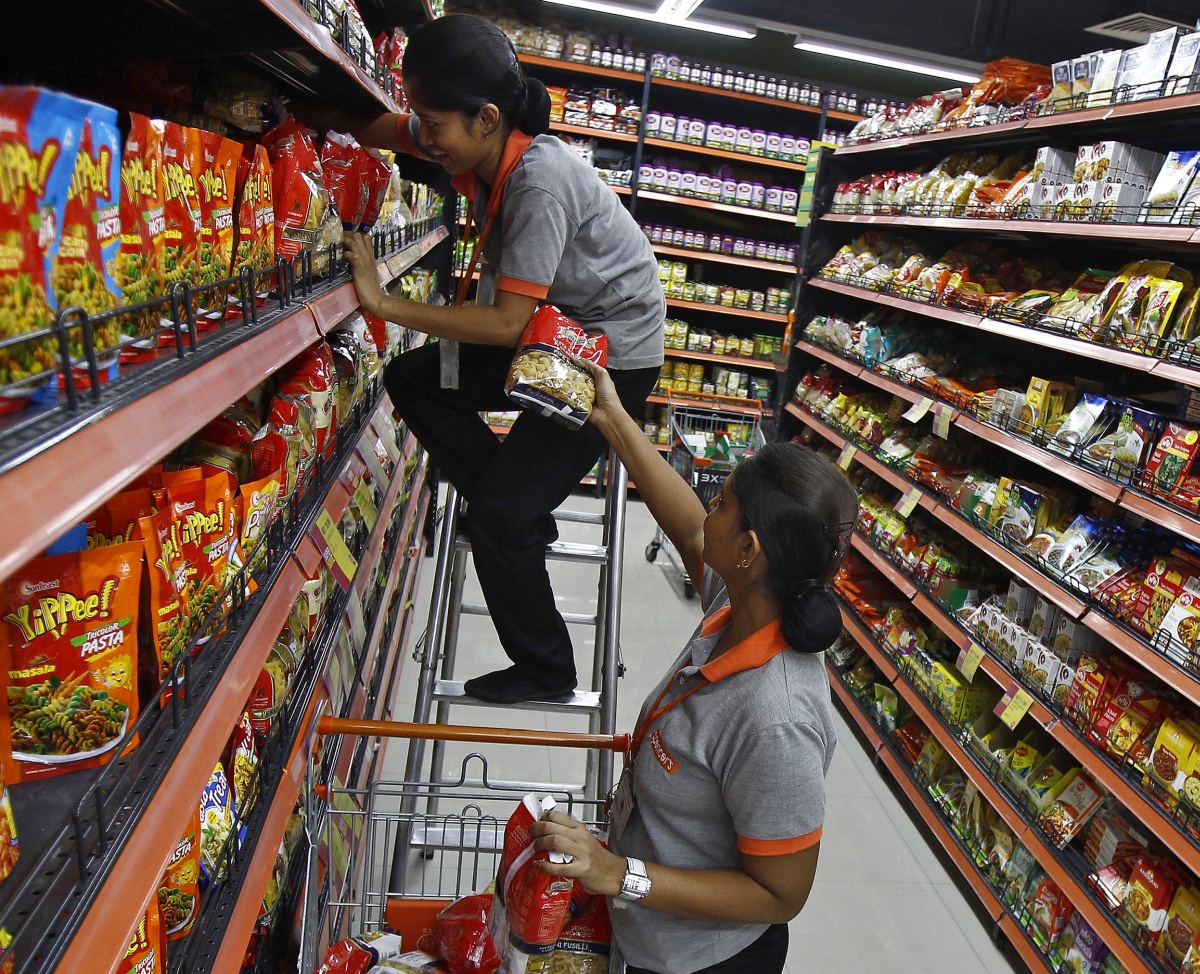
However, rural demand continued to remain a concern for FMCG companies during the quarter.

Paytm founder and chief executive officer (CEO) Vijay Shekhar Sharma will receive his stock grants only after the company's market capitalisation (m-cap) stabilises at its initial public offering (IPO) level, the financial technology (fintech) major said on Wednesday. Paytm's stock price has been in free fall since its IPO at Rs 2,150 apiece, with m-cap at around Rs 1.4 trillion - plunging 76 per cent to a lifetime low of Rs 520 on March 23, when m-cap dropped below Rs 34,000 crore. Since then, the company's share price on the BSE has recovered some value and closed at Rs 637 on Wednesday.

Domestic equity markets are in elite company. In May, Indian markets joined select developed markets (DMs) such as the US, UK and Germany to record new all-time highs. Among emerging markets (EMs), Brazil is the other market to have logged new highs this month. Asian peers such as South Korea, Taiwan and New Zealand are currently between 2 per cent and 10 per cent below their previous highs made earlier this year. The domestic markets were among the worst-performing major global markets in April amid a lethal second-wave of covid-19 infections.

Economic growth is likely to plummet to a multi-decade low of 1.6 per cent in fiscal year 2020-21 due to the Covid-19 pandemic and ensuing measures like lockdowns and social distancing, an American brokerage said on Wednesday in one of the bleakest forecasts on GDP yet. Indian policymakers have not been aggressive enough in their response till now to the crisis, and will need to eventually intensify their efforts, economists at Goldman Sachs said.

Economic growth has slipped to a six-year low of 5 per cent for the June quarter and is expected to turn in lower than that in the September quarter. Lack of consumption is seen as one of the key factors pulling down growth.

With the world's worst pandemic outbreak scarring nascent economic recovery, the government may at the beginning of the unlock phase announce another stimulus package for the most hit sectors such as small business and self-employed, Bernstein said. The brokerage in a note said its macro index suggests a deterioration in economic activity during April/May. "Energy consumption has moderated, with power down over 4 per cent and oil consumption down over 16 per cent in May so far (all 2-year CAGR). "E-waybills are down 16 per cent, suggesting the impact of scale down in factory production for some product categories, owing to the shut down in retail outlets.

Hindustan Zinc (HZL), a subsidiary of Vedanta, announced an interim dividend of Rs 21 per share last week, resulting in an outflow of Rs 8,863 crore. The announcement has turned the spotlight on India Inc's dividend-paying policy - more so for reasons driving the generosity of firms. An analysis of BSE 500 companies by Business Standard Research Bureau shows that some of the top 20 dividend-paying companies in 2021-22 (FY22) include Vedanta, Tata Consultancy Services, HZL, Oil and Natural Gas Corporation (ONGC), Indian Oil Corporation (IndianOil), Hindustan Unilever (HUL), Reliance Industries (RIL), and Bajaj Auto, among others.

The results of Indian IT services players in the just-concluded fourth quarter of 2021-22 are expected to reveal continuing growth momentum as demand surges on the back of digital transformations and the cloud shift, but analysts anticipate margins to be under pressure due to supply challenges. Analysts covering the sector expect revenue commentary should be strong despite the Russia-Ukraine conflict and inflation. Top-line growth will be driven by broad-based demand with a strong uptick for cloud, digital, cybersecurity, data analytics, and artificial intelligence, among other services.

'Our preference remains for the less-expensive industrial stocks, which are showing good earnings momentum.'

The Reserve Bank of India's (RBI's) recent decision to allow credit cards for payments through the Unified Payments Interface (UPI) is likely to attract a merchant discount rate (MDR), said a top payment industry source. For smaller merchants, a subsidy for MDR could be provided. "With credit card-UPI linkage, UPI will not only be a payment instrument but also a lending platform. "How can banks lend without a commercial model? Also, the government has said MDR will be zero for payment products but not for lending products," the source said, indicating the MDR regime for credit card-linked UPI payments.

The earnings are, however, expected to be down around 2 per cent on a sequential basis due to pent-up demand getting exhausted and the adverse impact of rising metals and energy prices on consumer goods and manufacturing companies.

A strong performance by sectors including banking raised the profits of Indian companies by 28 per cent in the three months ended March 2022. The rate of growth is, however, lower than the 30 per cent seen in December. Growth in net sales was also lower than what was seen in the December quarter for the sample under consideration.

While the Indian government has been procuring Covid-19 vaccines at low prices so far, manufacturers have to declare the prices of vaccines they would supply to the open market (industries, private hospitals, etc) and state governments before May 1. Sohini Das reports.

10 analysts estimated RIL's consolidated net profit at Rs 11,256 crore and nine analysts estimated revenue at Rs 1.5 trillion.
India's natural gas production is projected to jump by 52 per cent to 122 million standard cubic metres per day by 2024 as state-owned Oil and Natural Gas Corporation (ONGC) and Reliance Industries Ltd-BP combine raise output from the KG basin fields. Natural gas production in 2019-20 was 85 mmscmd, which is estimated to have fallen to 80 mmscmd in the following year, HDFC Securities said in a report. The output is projected to rise in the current fiscal that started on April 1 to 93 mmscmd, 107 mmscmd in the following year and 122 mmscmd in 2023-24, the brokerage estimated.

The economy is expected to throw up better numbers in the September quarter with GDP contraction of 9.9 per cent, as against 24 per cent in Q1 at the onset of the pandemic, says a report. The government will release the Q2 GDP numbers later this month. In the first contraction since 1980, the economy shrank a full 23.9 per cent in the first quarter of the fiscal after the whole nation was put under a strict lockdown.

'We continue to believe that the global economy will narrowly avoid a recession, despite expecting the US, Canada, and most of Europe to fall into recession at some point over the next year or so.'

Overseas shipments at auto firms expanded at a brisk pace year-on-year (YoY) in March, bumping up the overall annual exports for FY22 and taking it to a record level for some like Maruti Suzuki India and Bajaj Auto. Amid a semiconductor shortage, a depreciating rupee and a strong demand in various export destinations, passenger vehicle makers diverted capacity meant for the local market in favour of the more-lucrative export market. Among the passenger vehicle makers, market leader Maruti Suzuki led the rally with its overseas shipments touching a record level of 238,376 units in FY22 - the highest for the company in any financial year.

While there has been a rash of growth estimate cuts, including a 0.70 percentage point reduction by the RBI last month to 6.1 per cent, the Japanese brokerage's estimate is so far the lowest.
The Reserve Bank is likely to maintain status quo on interest rates in its forthcoming monetary policy review but may change the stance in view of retail inflation piercing its upper tolerance limit, global uncertainties created by the ongoing Russia-Ukraine war, and the urgency to protect and boost growth, feel experts. The RBI governor-headed rate setting panel -- Monetary Policy Committee (MPC) -- will be holding its first meeting of the 2022-23 fiscal from April 6 to 8. The outcome will be announced on April 8.

A relatively muted tax filing growth will create further headwinds in an already stressed fiscal space, the report said, adding the commitment of cash transfers in the budget can take the fiscal math on a "slippery slope" unless there is expenditure rationalisation.

The government can issue recapitalisation bonds, or the RBI's huge reserves of over $127 can also be dipped into to help the state-owned bank's recapitalisation needs.

Lawyers say compensation may be an uphill task for investors because of a lack of judicial precedent and broader institutional difficulties.

Sectors such as electronics, pharmaceuticals and automobiles can see supply disruptions in value chain, which may lead to a derailment of the domestic economic growth.

Distribution yields could rise, but risk of Covid, higher interest rates remain.
