
The G20 in 2013 had unanimously agreed to a 15 point action plan to check BEPS

The Union government is expecting to rake in Rs 100-200 crore in additional revenue from Pillar Two, only under specific circumstances, a senior finance ministry official said requesting anonymity. It is proceeding cautiously, and is unlikely to implement rules anytime soon, the source said.

'Retail portfolios were going nowhere even as headline indices moved higher, prompting investors to sell holdings and shift money to IPOs, attracted by listing-day gains.'

'Personal income tax is growing by 27 per cent and most refunds have already been issued.'

What the Budget could hold in store when it comes to tax rules like GAAR, MAT, PoEM, BEPS and ICDS.

In a bid to provide a level playing field, the government has decided not to levy 2 per cent digital service tax if goods and services are sold through Indian arm of foreign e-commerce players.

Young investors with a higher risk appetite are better off with a combination of term insurance and equity funds.

Multinational companies operating in India will soon have to disclose details of their operations at the country of residence and their revenue income to the Income Tax authorities.

Brokerages expect a further slowdown in Indian firms' revenue and earnings growth in Q4FY25, following low single-digit growth in the preceding three quarters, as factors like weak consumer demand and credit growth linger on.

Foreign portfolio investors (FPIs) from Mauritius may face higher scrutiny after the amendment in the India-Mauritius tax treaty introduced a principle purpose test (PPT) to prevent treaty abuse by taxpayers. The Mauritius government had in February decided to amend the double taxation avoidance agreement (DTAA) with India to align with the Organisation for Economic Co-operation and Development's proposal on base erosion and profit shifting. Although the agreement between India and Mauritius was signed on March 7, the protocol of the amendment was made public for the first time on Wednesday, said legal experts.

A day after joining the OECD-G20 framework for global minimum tax, the finance ministry on Friday said some significant issues including share of profit allocation and scope of subject to tax rules are yet to be addressed and a 'consensus agreement' is expected by October after working out the technical details of the proposal. Total 130 countries on Thursday agreed to a overhaul of global tax norms to ensure that multinationals pay taxes wherever they operate and at a minimum 15 per cent rate. India is in favour of a consensus solution which is simple to implement and simple to comply.

'Choose an equity allocation that will allow you to remain invested even if the market falls by 50 to 60 per cent.'

Acknowledging that effective taxation of mobile income is a key challenge, G20 leaders including Prime Minister Manmohan Singh on Friday vowed to take steps to change rules to tackle tax avoidance, harmful practices and aggressive tax planning.

The Indian mrime minister supported a new global standard on automatic exchange of tax information

The government said that far from targeting any US entity, the purpose was to ensure fairness, healthy competition, and to exercise the ability of governments to tax businesses having a nexus with the Indian market through digital operations.

Downloading songs, movies, books? You may have to pay tax on it.

The government, Jaitley said, is committed to detecting and preventing generation of black money

India conceding ground to bring only top 100 digital companies like Google, Facebook, and Netflix into the global taxation pact may have revenue implications. This will mean that New Delhi will have to withdraw the contentious 2 per cent equalisation levy on e-commerce operators by 2023. This may have revenue implications for India, experts pointed out, as the equalisation levy has a much lower annual revenue threshold of Rs 2 crore (euro 0.2 million) as against euro 20 billion agreed by 130 countries at the Organization for Economic Cooperation and Development (OECD). India, along with other developing countries, was pitching for at least euro 1 billion threshold to cover at least 5,000 global entities. India collected Rs 2,057 crore from the equalisation levy in 2020-21, an 85 per cent growth over Rs 1,136 crore in the previous fiscal.

PwC wants to know what will happen when a company with substantial reserves is merged into a new concern and the resultant entity is converted into a limited liability partnership.

The members resolved to foster a global economic governance architecture that is more effective and reflective of current global economic landscape

The government is studying suggestions on checking instances of double non-taxation and 'treaty shopping'

Singapore is slated to bring in Singapore Variable Capital Company, a new legal entity which can be used as a vehicle for investment. SVACC is expected to simplify the process of redemption for open-ended funds.

The US is pressing for taxing digital economy through the 'marketing intangibles' principle and the UK through a 'user-base' principle.

A total of Rs 396 crore has been mopped up, as on August 20 against Rs 407 crore collected in the same period last year. This was despite the expansion of the levy to online e-commerce players from this financial year.
One of India Inc's top demands is the abolishing of the MAT.

E-commerce giants such as Amazon, Netflix and Flipkart, whose headquarters are not in India, potentially have to pay the additional levy of 2 per cent from April 1.

A panel will draft direct tax legislation, keeping in mind the system in other countries, international best practices and economic needs of the country

The income tax department on Monday released rules for equalisation levy - a tax on online advertisements that would come into effect from June 1.

It accounted for over a third of foreign direct investment flows into India between 2000 and 2015

Currently, companies are taxed in the jurisdictions in which they have a physical presence. However, digital businesses generate revenues from markets without a significant physical presence in a country.

The existing double taxation avoidance agreements will not be covered by the proposed change, implying that in order to tax Facebook, Google and the like, India will require to renegotiate tax treaties.

The US Trade Representative's (USTR) office will also conduct the Section 301 probe against nine others, including Austria, Brazil, Indonesia, Italy, Spain, Turkey, the Czech Republic, the UK, and the EU, for levying or considering digital services taxes "discriminating against US companies".

'The corporate tax cuts will obviously result in lower tax payments by companies,' says Central Board of Direct Taxes member Akhilesh Ranjan who retires after 37 years in government service.

India is on the brink of overhauling its tax system, implementing the BEPS project and seeing a further evolution of the GST at the same time as a general election. This makes 2019 an exciting and challenging year, note Maulik Doshi and Jigar Doshi.

US proposal to raise the global corporate tax rate to 28% from 21% might face resistance from countries unwilling to give up their edge and compete with America on its terms.

Court cases likely over interpretation of the new levy proposed in the Budget for digital economy.
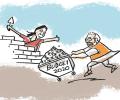
The Budget has relaxed a few safe harbour rules that aim to make it easier for fund managers overseeing offshore India-focused funds to relocate to the country.

Target prices around Rs 400 suggest a significant upside.

One of the key concerns of foreign investors is how the general anti-avoidance rule would apply in case an investor is availing benefits under double taxation avoidance agreement.

Decoding four important provisions in the Finance Bill 2018.
 © 2026 Rediff.com - Advertise with us - Disclaimer - Privacy Policy - Sitemap - Feedback - About us - Terms of use - Grievances