
'It is a gradual process of saying we want to have all the decisions across business sectors available in India as well.'

The demand environment is expected to improve over the next three quarters, aided by a recovery in demand from the construction sector, following release of payments to contractors after elections.

According to the Icra report, earnings before interest, tax, depreciation and amortisation margin of its sample declined by 44 basis points on a YoY basis and 23 basis points on a quarter-on-quarter basis to 16.6 per cent.
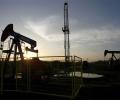
There are about 23 oil refineries in India with a combined capacity of 230 million tonnes per annum.

The model is loaded with various safety features including six air bags, anti-lock braking system with brake assist, dynamic stability control, including dynamic traction control, cornering brake control, among others.

It came on the back of tepid dispatches in the March quarter as consumer sentiment took a knocking, owing to uncertainty ahead of the general election.
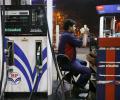
Petrol and diesel prices were hiked by 60 paisa per litre on Monday, for the second day in a row, as State-owned oil firms reverted to daily price revisions after an 83-day hiatus. Petrol price in Delhi was hiked to Rs 72.46 per litre from Rs 71.86 on Sunday, while diesel rates were increased to Rs 70.59 a litre from Rs 69.99, according to a price notification of state oil marketing companies.

Sebi might come out with a regulatory framework for issuance of 'green' bonds

The company, which unveiled its compact multi-purpose vehicle Triber in India, is bringing the MPV only in petrol engine option as part of the strategy even as it prepares to introduce electric vehicles in the near future.

Retail sales of overall vehicles in India grew by 15.28 per cent to 2,11,20,441 units in 2022 led by record sales of passenger vehicles and tractors, Federation of Automobile Dealers Associations (FADA) said on Thursday. In 2021, total retail sales of vehicles in India were at 1,83,21,760 units, FADA said in a statement. Two-wheelers retail sales stood at 1,53,88,062 units last year, a growth of 13.37 per cent from 2021 when sales stood at 1,35,73,682 units.

The ongoing elections and overall subdued market sentiment continue to affect the sales momentum

Passenger vehicle wholesales in India increased by 17 per cent in the second quarter of the current fiscal year as buying sentiment improved and companies stocked up to cater to enhanced demand in the festive season, auto industry body SIAM said on Friday. According to the latest data by the Society of Indian Automobile Manufacturers (SIAM), passenger vehicles sales in the July-September quarter increased to 726,232 units from 620,620 units in the same period last year. Similarly, two-wheeler sales during the September quarter this fiscal rose marginally to 46,90,565 units as compared with 46,82,571 units in the same period last fiscal. However, commercial vehicles sales saw a dip of 20.13 per cent at 133,524 units in the quarter under review as compared with 167,173 units in July-September 2019.

Only five of India's top 20 car models have seen a reduction in wait times over the past year.

'These measures should be in place throughout the year in order to bring down AQI levels to 100 or below'

The panel suggested the cess for BS-IV and BS-V fuels should accrue to the Oil Industry Development Board

Be it the name, the design and communication campaign and the engagement processes being imagined between the brand and its buyers, the company is casting its cars in a new mould, reports T E Narasimhan.

A steady climb in volumes has helped the company double its market share in the segment to 5 per cent in the first six months of the financial year from the year-ago period and it has now set its sights on a 10 per cent share in the next two years.
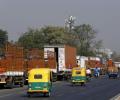
The industry said if the policy was announced, it would have taken 28 million vehicles bought before March 2005 off the road.

Delhi Chief Minister Arvind Kejriwal announced that primary schools will be closed from Saturday in view of spike in pollution levels in the national capital.

The first half of 2019-20 will be under pressure, since prices are expected to go up by Rs 7,000-8,000 at a time when sentiment is poor.

While the share of diesel vehicles sales in the overall passenger car industry has already fallen sharply, sales of CNG vehicles have shown a compound annual growth rate of 15.5 per cent over the past five years.

Two-wheeler sales, however, declined 21.4 per cent to 14,13,378 units last month, as compared to 17,98,201 units in November 2019. Commercial vehicle sales also slipped 31.22 per cent to 50,113 units, as against 72,863 units a year ago. Similarly, three-wheeler sales fell 64.98 per cent to 24,185 units last month, from 69,056 units in the year-ago period. Tractor sales, however, grew by 8.47 per cent to 49,313 units last month, against 45,462 units in the same month last year.

Stalling the introduction of better emission standards is based on specious logic, especially in a country that has 13 of the world's most polluted cities.

MSI chairman R C Bhargava said auto sector would like to see GST benefits linked to greener/cleaner cars. The government gave tax cut on EVs but hybrid should be given duty cut. There should be tax cut on CNG vehicles.

For deciding which vehicles are to be scrapped, the setting up of fitness centres and regulating them would be a humongous task.
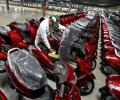
'Currently, scooters contribute to one third of the total domestic two-wheeler market and it continues to grow.' 'That is why many new models are being launched in this category.'
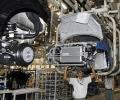
Maruti being the market leader with a disproportionately high share of the passenger car market helped its component makers grow as an industry all these years and hence, the exit from a segment is a jolt if not a big setback.

India is, indeed, particularly vulnerable to this menace.

The Pune-based company sells the Platina and CT brands in the entry-level - 100-110cc - segment.

The company aims to follow the government's push for environment-friendly vehicles by driving in models with green technologies.

Responding to a question on the issue of felling trees in Mumbai's Aarey forest, in which the Supreme Court has restrained authorities from cutting anymore trees, Javadekar told the reporters that he would not like to comment on a sub judice matter.
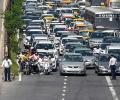
The lockdown in Maharashtra will have a catastrophic impact on April sales, as dealers will not be able to realise the potential of festivities like Ugadi, Gudi Padwa, Baisakhi and Poila Boishakh.

Even as domestic passenger car sales declined 29.4 per cent between April and August this year, exports grew 6.5 per cent, partially cushioning the blow from slowing sales.

'It is going to be extremely rapid and anybody who is not there, be it investor, manufacturer, supplier, will miss out.'

The five-year (2015-16 to 2020-21, or FY21) compound annual growth rate (CAGR) of the overall auto industry is now negative at 2 per cent, against 5.7-per cent growth it saw in the previous five years (from 2010-11 to 2015-16).

US-based $40-billion industrial goods giant Honeywell has just launched its 16th plant, a hydrocracker unit with application in oil refining, in India. The two years of Modi government have been full of optimism and energy, Anant Maheshwari, president, Honeywell India, and Steve Gimre, managing director, UOP India, tell Sudheer Pal Singh.

However, notable absentees from the expo will be Honda, Toyota, Ford, BMW, Audi, Lexus, Volvo and Jaguar Land Rover along with two-wheeler majors Hero MotoCorp, Bajaj Auto and TVS Motor Co.

The automaker said that production at the Renault Nissan Alliance Plant, where Nissan, Renault and Datsun brands are manufactured, had gone up by 15 per cent and was expected to increase further on the back of increasing export orders.

The figures are encouraging for the auto industry amid apprehension that due to higher cost and lack of fuel availability, cars with stricter emission standards may not be popular in initial stages. Automakers had even cited this confusion as one of the reasons for dwindling car sales in India, reports Arindam Majumder.

The company, which sells every second car in the domestic market, said it expected production and sales to grow between 4 per cent and 8 per cent for the financial year started in April.
